How to Make Aluminum Dross Reduction, Utilization and Harmless Treatment
How to Make Aluminum Dross Reduction, Utilization and Harmless Treatment
Aluminum dross is an unavoidable byproduct of aluminum smelting, melting, and recycling.
As global aluminum production continues to rise, the amount of aluminum dross generated each year also increases.
For aluminum producers, recyclers, and downstream processors, dross is both a resource and a liability.
It contains valuable metallic aluminum, but it also carries chemical reactivity, toxicity risks, and disposal challenges.
The key question is no longer whether aluminum dross should be treated, but how to reduce it at the source, recover as much value as possible, and treat the remaining waste in a safe and environmentally responsible way.
This article discusses aluminum dross reduction, comprehensive utilization, and harmless treatment from a practical, process-oriented perspective.
1. What Is Aluminum Dross?
Aluminum dross is a solid residue formed on the surface of molten aluminum during melting, refining, alloying, and casting.
When aluminum is exposed to air at high temperature, it oxidizes rapidly, forming a layer of aluminum oxide.
This oxide layer traps molten aluminum, fluxing agents, and other impurities, gradually thickening into dross.
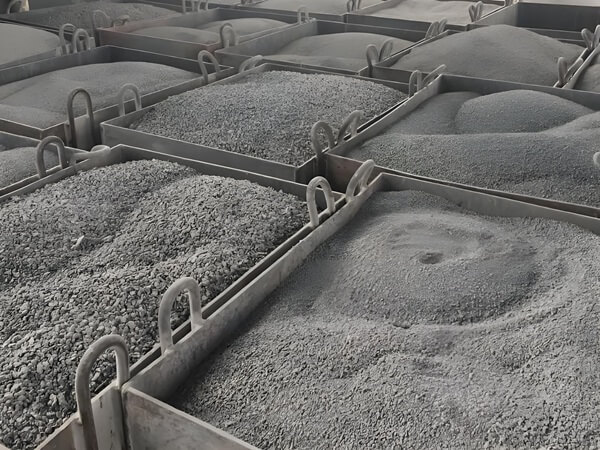
From a physical standpoint, aluminum dross appears as a gray, white, or black granular or lumpy material. Its temperature can remain very high immediately after removal from the furnace, sometimes exceeding 700°C. Chemically, aluminum dross is complex and variable.
Typical components include:
Metallic aluminum (Al)
Aluminum oxide (Al₂O₃)
Aluminum nitride (AlN)
Aluminum carbide (Al₄C₃)
Magnesium oxide, silicon oxide, calcium compounds
Chlorides and fluorides from fluxes
Trace heavy metals
Aluminum dross is commonly divided into two categories:
Primary aluminum dross, produced during primary aluminum smelting and alloy production. It usually contains a higher percentage of metallic aluminum.
Secondary aluminum dross, produced during secondary aluminum recycling and remelting.
It often contains lower aluminum content and higher salt and impurity levels.
This variability is one of the main reasons aluminum dross treatment must be analyzed on a case-by-case basis.
2. Aluminum Dross Sources
Aluminum dross is generated at multiple points along the aluminum production and recycling chain.
The main sources include:
2.1 Primary Aluminum Smelting
In electrolytic aluminum production, dross forms during alloying, holding, and casting steps.
While the amount is relatively small compared to total output, the aluminum content is often high, making recovery economically attractive.
2.2 Aluminum Alloy Melting and Casting
Foundries that produce aluminum alloys generate dross during melting, degassing, grain refining, and holding.
Improper furnace design or poor process control can significantly increase dross formation.
2.3 Secondary Aluminum Recycling
Recycling operations that remelt aluminum scrap, such as used beverage cans, automotive parts, and mixed scrap, generate large volumes of dross.
Secondary dross often contains salts from fluxes and higher levels of oxides and nitrides.
2.4 Refining and Fluxing Operations
Salt flux injection, rotary furnace processing, and refining steps all contribute to dross formation, especially when flux usage is excessive or poorly controlled.
Understanding the source of aluminum dross is essential because it directly affects composition, hazard level, and suitable treatment methods.
3. Value and Hazard of Aluminum Dross
3.1 Value of Aluminum Dross
Despite being labeled as waste, aluminum dross contains recoverable value:
Metallic Aluminum Recovery Depending on the source, aluminum content can range from 5% to over 60%. Recovering this aluminum reduces raw material costs and energy consumption.
Alumina and Aluminum Compounds Aluminum oxide and related compounds can be used as raw materials in cement, refractories, abrasives, and ceramics.
Industrial Additives Processed dross can serve as a steel-making deoxidizer, desulfurizing agent, or slag conditioner.
Chemical Products Through further processing, aluminum dross can be converted into aluminum sulfate, polyaluminum chloride, and other water treatment chemicals.
3.2 Hazards of Aluminum Dross
At the same time, aluminum dross poses serious environmental and safety risks:
Reactivity with Water Aluminum nitride reacts with water to produce ammonia gas. Aluminum carbide reacts to form methane. Both reactions create safety and odor problems.
Salt Leaching Chlorides and fluorides can leach into soil and groundwater, causing long-term environmental contamination.
Dust and Fine Particles Fine dross particles are easily airborne and can pose respiratory hazards.
Thermal Hazards Fresh dross can retain high temperatures and may ignite or react violently if mishandled.
Balancing value recovery with hazard control is the core challenge of aluminum dross management.
4. Aluminum Dross Reduction
The most effective way to deal with aluminum dross is to reduce its generation in the first place.
Source reduction not only saves material but also lowers downstream treatment costs.
4.1 Source Reduction Measures
Pre-Processing of Raw Materials
Use clean, dry, and well-sorted aluminum scrap.
Remove oils, coatings, and moisture before charging.
Preheat the scrap to reduce thermal shock and oxidation.
Optimized Melting Process
Control the melting temperature and holding time.
Avoid overheating molten aluminum.
Minimize unnecessary exposure to air.
Flux Injection Control
Use appropriate flux types and quantities.
Avoid excessive salt flux usage.
Optimize injection methods to reduce aluminum entrapment.
Covering Agents
Apply effective covering agents to protect the melt surface.
Use low-reactivity, low-ash materials.
Proper Furnace Design
Design furnaces with reduced turbulence.
Improve sealing to limit air infiltration.
Use energy-efficient burners and control systems.
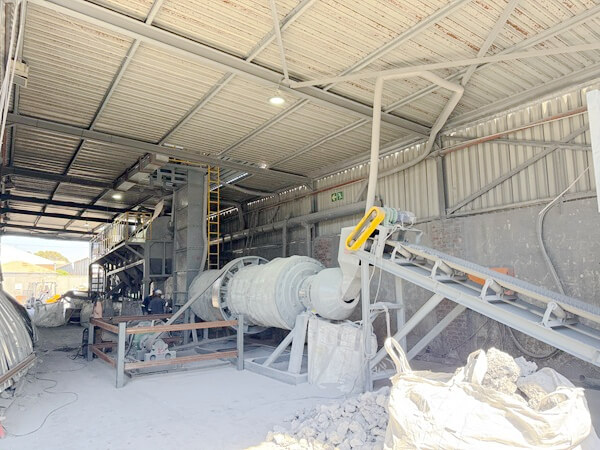
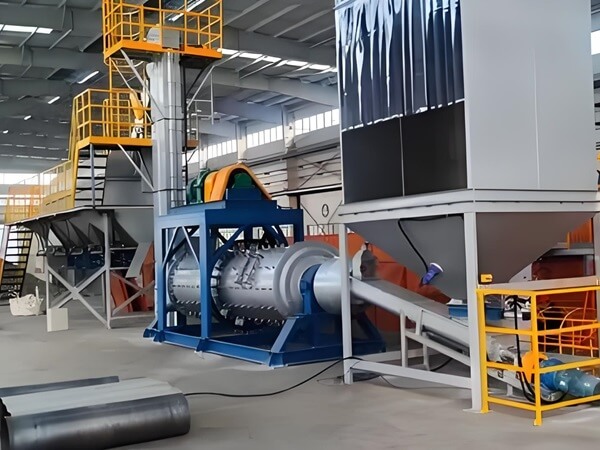
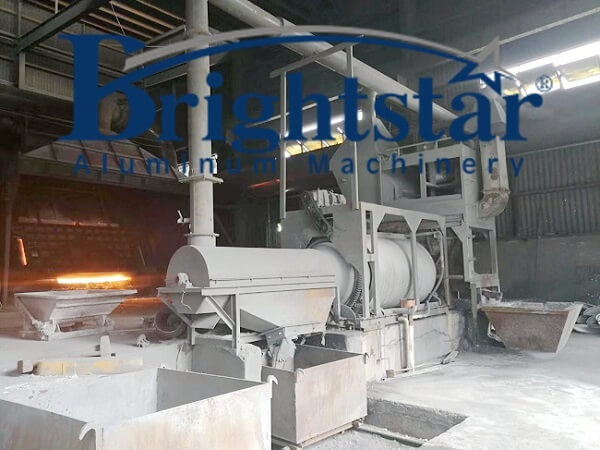
4.2 Aluminum Dross Processing to Extract Aluminum
Even with good source reduction, dross cannot be eliminated entirely.
Efficient processing is required to recover metallic aluminum:
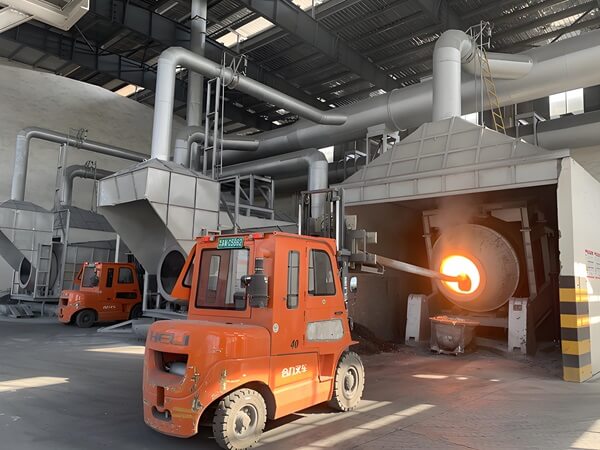
Hot Dross Processing
Rapid processing while the dross is still hot reduces oxidation and improves aluminum recovery.
Convert reactive compounds into more stable oxides.
Control off-gas through proper combustion and filtration.
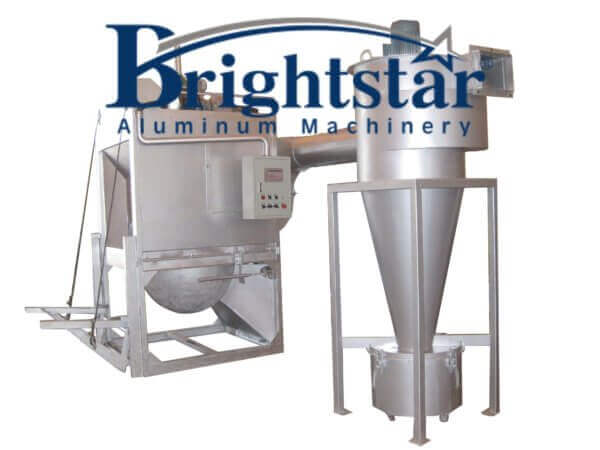
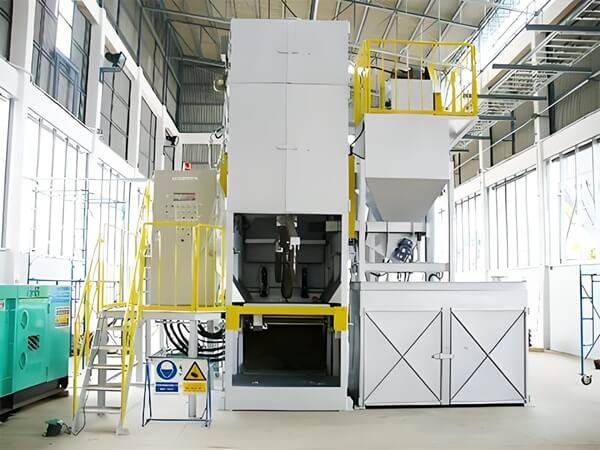
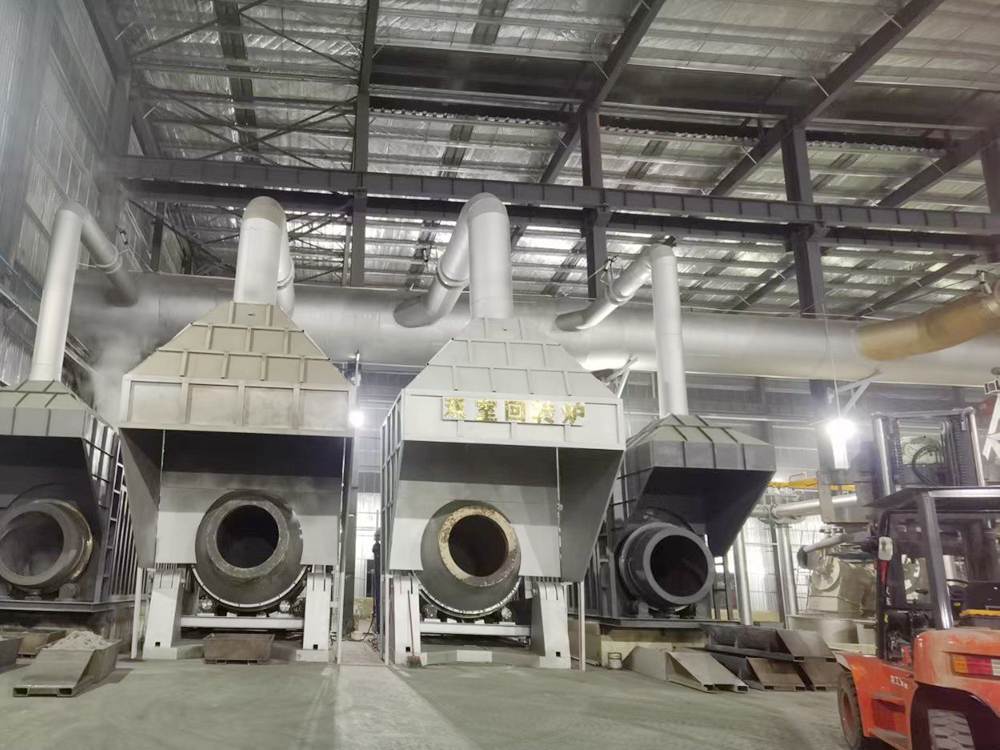
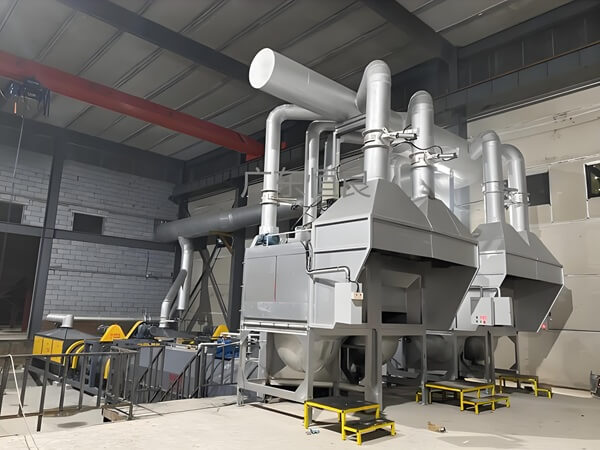
Calcining Furnace with Baghouse Dust Collector
Stabilize aluminum oxide and nitrides.
Remove volatile salts and impurities.
Collect fine dust safely using baghouse systems.
Dry-processed materials can be used as:
*Cement raw materials
*Brick and block additives
*Refractory material components
*Steelmaking fluxes and deoxidizers
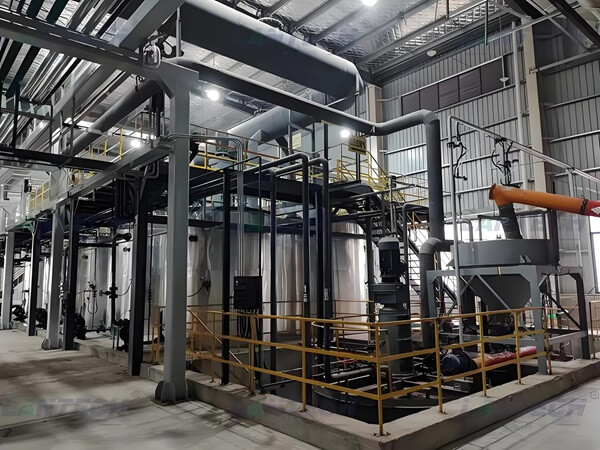
5.2 Wet Processing Technical Path
Wet processing involves chemical reactions and leaching, offering higher purity products but requiring strict wastewater management.
Aluminum Extraction
Controlled leaching to dissolve aluminum compounds.
Separation and purification of aluminum salts.
Product Conversion
Production of aluminum sulfate for water treatment.
Preparation of polyaluminum chloride coagulants.
Recovery of alumina for industrial use.
Wet processing allows higher-value outputs but demands careful control of ammonia release, wastewater treatment, and residue management.
6. Aluminum Dross Harmless Treatment
Not all aluminum dross can be economically utilized.
Harmless treatment focuses on eliminating reactivity and toxicity so that remaining residues can be safely stored or reused.
6.1 Eliminating Reactivity
Thermal stabilization to decompose aluminum nitride and carbide.
Controlled oxidation to convert reactive aluminum into stable oxides.
Aging or conditioning under controlled humidity and temperature.
6.2 Eliminating Toxicity
Salt removal or immobilization.
Heavy metal stabilization using additives.
pH adjustment to prevent harmful leaching.
6.3 Tail Gas and Water Treatment
Tail Gas Treatment
Capture ammonia, hydrogen, and dust.
Use scrubbers, thermal oxidizers, and baghouse filters.
Monitor emissions continuously.
Water Treatment
Neutralize alkaline wastewater.
Remove dissolved salts and metals.
Recycle treated water where possible.
6.4 Waste Dross Utilization
Stabilized residues can be:
Used as construction fill materials
Incorporated into cement kilns
Used as road base material under controlled conditions
The objective is zero hazardous waste discharge and minimal landfill dependency.
Conclusion
Achieving effective utilization and sustainability in aluminum dross recycling remains a complex challenge. Aluminum dross is neither purely waste nor purely resource.
Its dual nature requires a balanced approach that combines source reduction, efficient aluminum recovery, comprehensive utilization, and strict harmless treatment.
Due to differences in raw materials, production processes, and treatment routes, the composition of aluminum dross varies widely.
As a result, recycling and utilization methods must be selected based on detailed composition analysis rather than a one-size-fits-all approach.
To address specific aluminum dross compositions, processing companies must first understand the environmental hazards involved and adopt appropriate harmless treatment technologies.
Next, they should conduct a functional assessment to determine recyclability and utilization potential, whether for metallic aluminum, alumina, aluminum sulfate, or industrial additives such as desulfurizing agents.
Finally, local market conditions must be considered to define feasible recovery pathways and end-use applications.
Only by integrating technical feasibility, environmental safety, and economic reality can companies develop low-investment, high-efficiency, and clean end-to-end aluminum dross treatment solutions.
Improving utilization efficiency is not just an operational goal.
It is a necessary step toward reducing environmental pressure and building a more sustainable aluminum industry.
Majored in electromechanical engineering, served in aluminum extrusion for 8 years, aluminum equipment for 16 years, currently working as a sales engineer at Brightstar Aluminum Machinery. Rich experience in aluminum extrusion equipment and melting and dross processing fields.