Aluminum Alloy Melt Processing Technology and Modern Applications
Aluminum Alloy Melt Processing Technology and Modern Applications
Melt treatment of aluminum alloys is a core link in the aluminum processing industry chain, directly determining the internal quality, mechanical properties, and service life of castings or profiles.
As a key link between raw material smelting and final forming, melt treatment eliminates harmful defects such as hydrogen and non-metallic inclusions in the melt through a series of processes, including degassing, inclusion removal, composition homogenization, and grain refinement, optimizing the alloy microstructure and providing high-quality melt for subsequent processing.
This article systematically describes the technical principles, key process steps, core equipment, and current industrial application status of aluminum alloy melt treatment, focusing on analyzing the technical difficulties and innovation directions of recycled aluminum melt treatment, providing a reference for the industry’s technological upgrading and high-quality development.
Keywords: Aluminum alloy; Melt-Treatment of Aluminum; Degassing; Inclusion Removal; Recycled Aluminum; Process Optimization
1. Introduction
Aluminum alloys, with their superior properties such as low density, high specific strength, corrosion resistance, and ease of processing, have been widely used in high-end manufacturing fields such as automobiles, aerospace, 3C electronics, and new energy.
With the advancement of the “dual-carbon” policy and the demand for industrial upgrading, the market’s quality requirements for aluminum alloy products are becoming increasingly stringent.
Not only do they need to meet higher mechanical performance indicators, but they also face extreme requirements for controlling internal defects (such as porosity and inclusions).
The quality of the aluminum alloy melt directly determines the performance of the final product.
Untreated aluminum melt typically contains 0.15-0.5 ml/100g Al of hydrogen gas, as well as non-metallic inclusions such as oxides, nitrides, and carbides.
These defects can lead to problems such as porosity, cracks, and inclusions in castings, severely reducing product yield and service life.
Melt treatment of aluminum alloys refers to the entire process of removing harmful gases and inclusions, adjusting alloy composition, and optimizing melt fluidity from the melt after smelting and before casting or forming, through a series of physical, chemical, or physicochemical methods.
Its core objectives are to reduce the hydrogen content in the melt to below 0.1 ml/100g Al, control the size of non-metallic inclusions to within 20 μm, and achieve uniform alloy composition distribution and stable melt performance.
As a “key process for quality improvement” in aluminum processing, the sophistication of melt treatment technology directly reflects a company’s core competitiveness.
Especially in the recycled aluminum industry, due to the complex composition and high impurity content of raw materials, melt treatment technology is a core support for overcoming the bottleneck of high-end recycled aluminum production.
This article will start from the technical principles, break down the key process steps of melt treatment in detail, introduce mainstream equipment types and application scenarios, analyze the current technical challenges facing the industry, and explore future development trends, providing a comprehensive reference for the research and application of aluminum alloy melt treatment technology.

2. Technical Principles and Core Objectives of Aluminum Alloy Melt Treatment
2.1 Technical Principles
Harmful defects in molten aluminum primarily originate from the smelting process: hydrogen is mainly generated through the reaction of molten aluminum with water vapor and combustion products of grease in the furnace atmosphere.
Its solubility decreases significantly with decreasing temperature, and it easily precipitates during solidification, forming pores.
Non-metallic inclusions mainly originate from oxide scale introduced from the raw materials, furnace lining corrosion products, and refining agent residues.
These inclusions disrupt the continuity of the alloy, becoming stress concentration sources and reducing the material’s strength, toughness, and corrosion resistance.
The technical principles of molten aluminum alloy treatment are based on two core elements: “separation” and “optimization.”
Through physical or chemical means, gases and inclusions are separated from the molten aluminum. Simultaneously, through composition adjustment and microstructure control, the physicochemical properties of the melt are optimized.
Specifically, the degassing process utilizes the density difference, solubility change, or chemical reaction between the gas and the melt to separate hydrogen from the melt;
The impurity removal process uses adsorption, flotation, and other actions to aggregate tiny inclusions into larger particles, making them easier to separate and remove.
The composition homogenization and grain refinement are achieved by adding alloying elements and grain refiners to adjust the melt composition distribution and solidification structure, thereby improving material properties.
2.2 Core Objectives
The ultimate goal of aluminum alloy melt treatment is to provide a “clean, uniform, and stable” high-quality melt for subsequent forming processes.
Specifically, this can be divided into the following three points:
2.2.1. Gas Content Control:
Reduce the hydrogen content in the melt to 0.05-0.1 ml/100g Al (adjusted according to product grade requirements) to avoid hydrogen precipitation during solidification and the formation of porosity defects;
2.2.2. Inclusion Removal:
Remove non-metallic inclusions larger than 10 μm from the melt, reducing the total amount of inclusions to the specified standard (e.g., high-end aerospace castings require an inclusion area fraction ≤0.05%);
2.2.3. Performance Optimization:
Improve melt fluidity through composition homogenization, reducing filling resistance during casting; improve solidification structure through grain refinement, thereby enhancing the mechanical and machinability of the final product.
3. Key Process Steps in Aluminum Alloy Melt Treatment
Aluminum alloy melt treatment is a complex process involving multiple coordinated steps.
Core processes include degassing, inclusion removal, composition adjustment, grain refinement, and melt holding.
Each step is interconnected and requires precise control based on the alloy type, raw material characteristics, and product requirements.
3.1 Degassing:
Eliminating the “Hidden Killer” Hydrogen
Degassing is one of the most crucial processes in melt treatment. Its purpose is to remove dissolved hydrogen from the molten aluminum, preventing porosity defects in the casting.
Hydrogen is a “hidden killer” affecting the quality of aluminum alloys—the solubility of hydrogen in molten aluminum is approximately 0.4 ml/100g Al at 760℃, but only 0.001 ml/100g Al at room temperature.
This sharp decrease in hydrogen solubility during solidification leads to the precipitation of a large number of bubbles, forming diffusely distributed pores that severely affect the material’s density and mechanical properties.
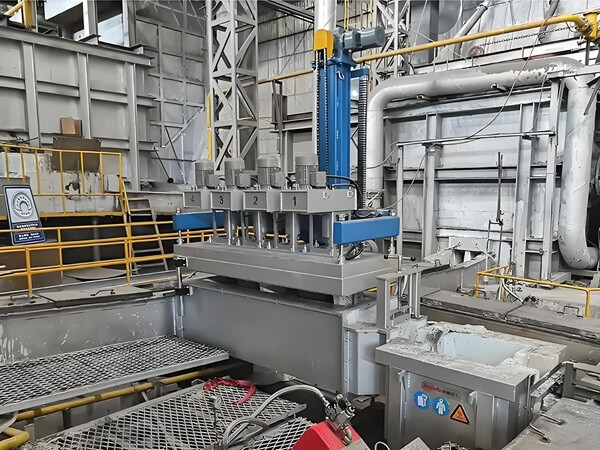
3.1.1 Degassing Principle
The core principle of the degassing process is “gas replacement” or “bubble flotation”: Inert gases (such as argon (Ar) or nitrogen (N₂) that do not react with the aluminum melt are introduced into the molten aluminum, forming microbubbles.
As these bubbles rise in the melt, they adsorb hydrogen gas from the melt.
When the bubbles reach the surface and burst, the hydrogen gas is released into the atmosphere, thus achieving the degassing effect.
Furthermore, some active gases (such as Cl₂) can react chemically with the hydrogen gas in the melt to generate HCl gas, further enhancing the degassing effect.
3.1.2 Mainstream Degassing Processes
Rotary Degassing:
This is currently the most widely used degassing technology in industrial production.
This process uses a motor-driven rotating shaft to rotate a graphite rotor at high speed (typically 300-600 r/min), injecting argon or nitrogen gas into the molten aluminum through the rotor’s pores, forming uniformly distributed microbubbles (approximately 1-3 mm in diameter).
The high-speed rotating rotor not only breaks the gas into fine bubbles but also stirs the melt, increasing the contact area and time between the bubbles and the melt.
Degassing efficiency can reach 60%-80%, reducing hydrogen content to 0.05-0.1 ml/100g Al.
This process has advantages such as stable degassing effect, simple operation, and minimal contamination of the melt, making it suitable for large-scale production of various aluminum alloys.
Static Degassing:
Inert gas is uniformly introduced into the bottom of the melt through a permeable brick or porous plug, and the bubbles rise slowly to achieve degassing.
This process has simple equipment and low cost, but the degassing efficiency is relatively low (about 40%-50%), and it is suitable for the production of ordinary castings where the hydrogen content requirement is not high.
Vacuum Degassing:
This method places molten aluminum in a vacuum environment, using the vacuum conditions to reduce the partial pressure of hydrogen at the surface of the melt, causing hydrogen to rapidly precipitate out.
This process has extremely high degassing efficiency (up to 90% or more), reducing the hydrogen content to below 0.03 ml/100g Al, making it suitable for high-end aluminum alloy products in aerospace and other industries.
However, vacuum degassing equipment requires significant investment, consumes a lot of energy, and is complex to operate, limiting its application in general industrial production.
3.1.3 Key Control Parameters
The effectiveness of degassing depends on the coordinated control of several parameters:
Gas type: Argon is chemically stable and does not react with molten aluminum, making it the most commonly used degassing gas.
Nitrogen has a lower cost, but may react with molten aluminum at high temperatures to form AlN inclusions, requiring strict temperature control
Chlorine has good degassing effect but is toxic, requiring supporting environmental protection equipment.
Gas flow rate: Too low a flow rate will result in insufficient bubble quantity and low degassing efficiency; too high a flow rate will cause molten metal splashing, increasing the risk of oxidation.
It is typically controlled at 0.5-2 m³/h (adjusted according to furnace capacity).
Rotor speed: Higher speed results in better gas breakup and more uniform bubble distribution, but excessively high speeds can cause air entrainment in the melt. It is typically controlled at 300-600 r/min.
Processing time: Insufficient processing time will lead to incomplete degassing; too long a processing time will increase melt temperature drop and the risk of oxidation. It is typically 15-30 minutes.
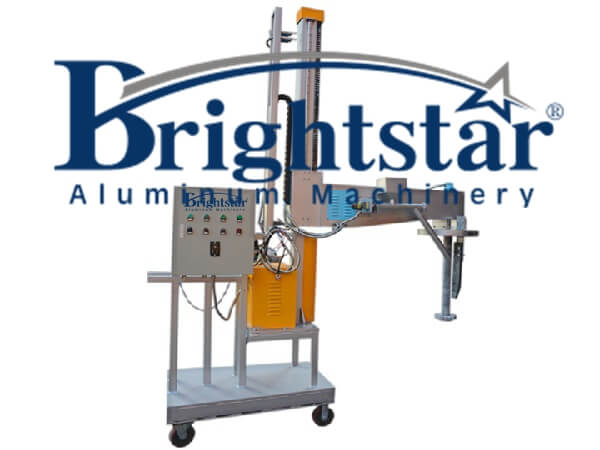
3.2 Inclusion Removal: Purifying the Melt Environment
Inclusion removal is the process of removing non-metallic inclusions from molten aluminum.
These inclusions mainly include oxides such as Al₂O₃, MgO, and SiO₂, as well as carbides and nitrides, typically ranging in size from 5 to 100 μm.
The presence of inclusions disrupts the continuity of the aluminum alloy, leading to defects such as cracks and inclusions in castings, reducing the material’s strength, toughness, and corrosion resistance, and significantly impacting the forming performance of subsequent processing (such as rolling and extrusion).
3.2.1 Inclusion Removal Principle
The core principle of impurity removal technology is “adsorption-flotation”: using the adsorption effect of refining agents or filter media, tiny inclusions in the melt are adsorbed onto the surface, forming larger particles.
These larger particles are then removed by flotation or intercepted and separated by filter media.
Based on the different impurity removal methods, it can be divided into two main categories: refining agent impurity removal and filtration impurity removal.
3.2.2 Mainstream Impurity Removal Processes
Refining Agent Removal: Solid or gaseous refining agents are added to the molten aluminum, and impurities are removed through the physicochemical reaction between the refining agent and inclusions.
Refining agents are generally classified into chloride-type (e.g., NaCl-KCl), fluoride-type (e.g., Na₃AlF₆), and composite refining agents (e.g., NaCl-KCl-Na₃AlF₆).
Their mechanisms of action include:
Adsorption: The slag formed after the refining agent melts has a large specific surface area, which can adsorb tiny inclusions in the melt;
Chemical Reaction: Some refining agents can react chemically with inclusions to generate easily floating composite compounds. For example, Na₃AlF₆ can react with Al₂O₃ to form NaAlO₂, which is easy to separate and remove.
Refining agents are a simple and low-cost method for removing impurities, suitable for the production of various aluminum alloys.
However, their removal efficiency is limited, particularly for small inclusions (≤10μm).
Filtration Removal: This method utilizes the interception effect of filter media to separate and remove inclusions from the melt, and is currently the most effective deep impurity removal technology.
Filter media mainly include ceramic foam filters, ceramic tube filters, and fiber filters, with ceramic foam filters being the most widely used.
Its working principle is as follows: when molten aluminum passes through a porous ceramic foam filter, inclusions are intercepted by the filter’s pores, while the molten aluminum continues to flow through the pores, thus achieving purification.
The pore size of ceramic foam filters is typically 30-60 ppi (pores per inch).
Smaller pore sizes result in higher filtration accuracy but also greater resistance.
The appropriate pore size must be selected based on the melt flow rate and inclusion content.
This process can effectively remove inclusions ≥10μm in size, with a removal efficiency of over 90%, significantly improving melt cleanliness and making it suitable for the production of high-end aluminum alloy castings and profiles.
3.2.3 Key Control Parameters
Refining Agent Selection: Select appropriate refining agents according to the alloy type.
For example, avoid using chlorine-containing refining agents for magnesium-aluminum alloys to prevent the formation of MgCl₂ and subsequent volatilization loss.
Refining Agent Dosage: Insufficient dosage will result in poor impurity removal, while excessive dosage will increase slag and contaminate the melt.
The dosage is typically 0.1%-0.5% of the melt mass.
Filtration Temperature: Too low a filtration temperature will lead to poor melt flowability and easy clogging of the filter; too high a temperature will increase the risk of melt oxidation.
The temperature is typically controlled at 700-750℃.
Filtration Speed: Too high a speed will prevent effective interception of inclusions, while too slow a speed will affect production efficiency.
The speed is typically controlled at 0.5-1.5 m/min.
3.3 Composition Adjustment: Precise Control of Alloy Properties
Composition adjustment is the process of adding alloying elements or adjusting their content in molten aluminum according to product requirements, so that the melt composition meets the standard requirements.
The types and contents of alloying elements directly determine the mechanical properties, corrosion resistance, and processing properties of aluminum alloys.
For example, the A356.2 alloy requires a Si content of 6.5%-7.5%, a Mg content of 0.25%-0.45%, and a Sr content of 0.015%-0.035%.
Precise control of these element contents is crucial to ensuring product quality.
3.3.1 Composition Adjustment Methods
Alloy Ingot Addition Method:
The desired composition of the intermediate alloy ingot (such as Al-Si, Al-Mg, Al-Sr intermediate alloy) is added to the melt, and composition homogenization is achieved through melting and stirring.
This method is simple to operate, provides precise composition control, and is suitable for large-scale production, but the intermediate alloy ingot is relatively expensive.
Wire Addition Method: Alloy wire (such as aluminum-strontium wire, aluminum-titanium-boron wire) is continuously fed into the melt using a wire feeder.
The wire melts rapidly in the melt, achieving composition adjustment.
This method offers high precision and complete reaction, effectively avoiding the burning loss and segregation of alloy elements.
It is particularly suitable for adding easily burnable elements (such as Sr and Mg) and is widely used in high-end aluminum alloy production.
Powder Addition Method: Alloy powder (such as Ti powder and B powder) is injected into the melt using inert gas to achieve composition adjustment.
This method is suitable for adding small amounts of elements, but the powder is easily oxidized, requiring strict control of the operating environment.
3.3.2 Key Control Parameters
Alloy element burn-off rate: Some alloying elements (such as Sr, Mg, Zn) are easily oxidized and burned off at high temperatures.
The amount added needs to be adjusted according to the burn-off rate.
For example, the burn-off rate of Sr is usually 30%-50%, so it needs to be added in excess to ensure that the final content meets the standard.
Stirring uniformity: After adding alloying elements, mechanical stirring or gas stirring is required to ensure uniform composition and avoid segregation.
The stirring time is usually 5-10 minutes.
Composition detection: The composition of the melt is detected in real time using a spectrometer (such as a direct-reading spectrometer).
The amount added is adjusted according to the detection results to ensure that the composition meets the standard requirements.
3.4 Grain Refinement:
Optimizing Solidification Structure Grain refinement is a process that involves adding grain refiners to molten aluminum to refine the alloy’s solidification structure through heterogeneous nucleation.
The grain size of aluminum alloys directly affects their mechanical properties—fine grains significantly improve the material’s strength, toughness, and plasticity, while also improving the crack resistance and machinability of castings.
Unrefined aluminum alloys typically have grain sizes of several hundred micrometers, while after grain refinement, the grain size can be reduced to below 50 μm.
3.4.1 Grain Refinement Principle
The core principle of grain refinement is “heterogeneous nucleation”: the tiny particles (such as TiAl₃ and TiB₂) generated by the decomposition of grain refiners in the melt can act as nucleation sites during the solidification of molten aluminum, resulting in the formation of a large number of fine grains rather than a few coarse grains.
These nucleation sites have a lattice constant similar to that of aluminum, reducing the nucleation work and promoting the nucleation process, thereby achieving grain refinement.
3.4.2 Mainstream Grain Refining Agents and Processes
Al-Ti-B (Al-Ti-B) Grain Refining Agent:
This is currently the most widely used grain refining agent, typically containing 5% Ti and 1% B, or 3% Ti and 0.15% B.
Its refining mechanism is as follows: the Al-Ti-B refining agent decomposes in the melt to produce TiAl₃ and TiB₂ particles.
TiAl₃ acts as the nucleation core, while TiB₂ promotes the dispersed distribution of TiAl₃, further enhancing the refining effect.
This refining agent is suitable for most aluminum alloys, with a significant refining effect, reducing the grain size to 30-50 μm.
Al-Ti-C (Al-Ti-C) Grain Refining Agent:
Suitable for aluminum alloys containing elements such as Zr and Cr (these elements react with B to form TiB₂-ZrB₂ composite compounds, reducing the refining effect).
Its refining mechanism is similar to that of Al-Ti-B, but the addition of carbon improves the stability of the refining agent and prolongs the effective refining time.
Refining agent addition process:
Typically, wire rod addition or ingot addition methods are used, with an addition amount of 0.1%-0.3% of the melt mass.
After addition, it needs to be stirred evenly to ensure uniform distribution of the refining agent in the melt. The refining time is usually 5-10 minutes.
3.4.3 Key Control Parameters
Refining Agent Selection: Select a suitable refining agent according to the alloy type.
For example, Al-Ti-C refining agent should be used for aluminum alloys containing Zr and Cr.
Dosage Control: Too little refining agent will result in poor refining effect, while too much will lead to refining agent residue, forming inclusions and affecting material properties.
Processing Temperature: The decomposition and nucleation process of the refining agent is sensitive to temperature and is usually controlled at 720-750℃.
Too high a temperature will cause the refining agent to fail, while too low a temperature will affect the dissolution and dispersion of the refining agent.
3.5 Melt Holding:
Stabilizing Melt Properties Melt holding is a process that maintains the treated molten aluminum at a constant temperature in a holding furnace to ensure stable melt flow and properties, preparing it for subsequent casting or molding.
After degassing, impurity removal, composition adjustment, and grain refinement, the melt needs to be held at a constant temperature in the holding furnace to allow residual micro-inclusions to rise further, while maintaining a uniform melt temperature to avoid affecting molding quality due to temperature fluctuations.
3.5.1 Insulation Principle
The holding furnace maintains a stable internal temperature through heating devices (such as resistance heating or gas heating), while reducing heat loss through the insulation effect of the furnace lining.
During the insulation process, residual micro-inclusions in the melt will slowly float to the surface under gravity, forming aluminum dross, which can be removed by skimming.
Simultaneously, the melt temperature is homogenized, preventing uneven fluidity caused by localized temperature differences.
3.5.2 Key Control Parameters
Holding Temperature: Determined according to alloy type and forming process, usually 10-20℃ higher than the pouring temperature.
For example, the holding temperature of A356.2 alloy is usually 720-740℃.
Holding Time: Too long a holding time will lead to melt oxidation and loss of alloy elements, while too short a time will affect the floating of inclusions. Usually 30-60 minutes.
Furnace gas: Use inert gas protection (such as argon) or reducing gas (such as CO₂+CO) to reduce melt oxidation and avoid the formation of new oxide inclusions.
4. Core Equipment for Aluminum Alloy Melt Treatment
The effectiveness of aluminum alloy melt treatment is closely related to the performance of the equipment. Different processes require different core equipment, the following introduces the most commonly used key equipment in industrial production:
4.1 Degassing Equipment
Rotary Degasser: Primarily composed of a graphite rotor, a rotary drive system, a gas supply system, and a control system.
The graphite rotor is made of high-purity graphite, resistant to high temperatures and aluminum molten corrosion;
The rotary drive system allows for precise speed control (0-1000 r/min);
The gas supply system is equipped with a flow controller to ensure stable gas flow;
The control system enables automated control of speed, flow rate, and processing time.
Some high-end devices can also be linked with component detection equipment to achieve closed-loop control.
Vacuum Degasser: Primarily composed of a vacuum furnace body, a vacuum pumping system, a heating system, and a control system.
The vacuum furnace body employs a sealed structure, capable of withstanding high vacuum levels (typically 10-100 Pa);
The vacuum pumping system utilizes a vacuum pump assembly to quickly achieve the required vacuum level;
The heating system maintains the melt temperature, preventing excessive temperature drop during the holding process;
The control system enables automated control of vacuum level, temperature, and processing time.
4.2 Impurity Removal Equipment
Ceramic Foam Filter (CFF): Primarily composed of ceramic foam filter plates, a filter box, and a temperature control system.
The ceramic foam filter plates are made of Al₂O₃-SiO₂-ZrO₂ composite material, which is resistant to high temperatures and corrosion, with a pore size of 10-50 ppi.
The filter box is made of steel with an inner insulation material to ensure stable melt temperature during filtration.
The temperature control system maintains the temperature inside the filter box through a heating device to prevent the melt from cooling down too quickly and reducing its fluidity.
Refining Agent Injector: This mainly consists of a spray gun, a refining agent supply system, a gas supply system, and a control system.
The spray gun is made of high-temperature resistant alloy material, allowing it to penetrate deep into the bottom of the melt to spray the refining agent.
The refining agent supply system can precisely control the amount of refining agent added.
The gas supply system provides the spraying power, ensuring that the refining agent is evenly dispersed in the melt.
The control system can automatically control the amount added and the spraying speed.
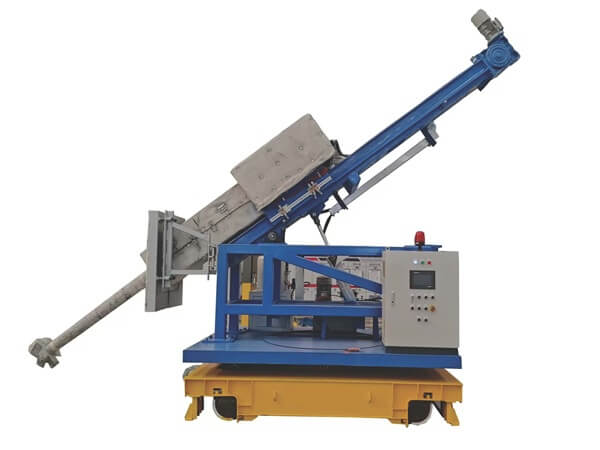
4.3 Composition Adjustment and Grain Refinement Equipment
Wire Feeder: Mainly composed of a wire feeding mechanism, drive system, guide mechanism, and control system.
The wire feeding mechanism adopts a roller design to achieve stable wire feeding; the drive system uses a servo motor, and the wire feeding speed is precisely adjustable (0.1-5m/min);
The guide mechanism ensures that the wire is accurately fed into the melt;
The control system can realize automated control of wire feeding speed and wire feeding length, and some equipment can also be linked with a spectrometer to automatically adjust the wire feeding speed according to the composition detection results.
Master Alloy Charger: This mainly consists of a charging mechanism, a weighing system, and a control system.
The charging mechanism uses a robotic arm or conveyor belt design to automatically charge master alloy ingots;
The weighing system precisely controls the amount added, with an error of ≤±1%; the control system can automatically calculate and add the required master alloy ingots based on the melt quality and composition requirements.
4.4 Thermal Insulation Equipment
Resistance Holding Furnace: Primarily composed of the furnace body, resistance heating elements, insulation layer, and control system.
The furnace body is made of steel and lined with refractory material; the resistance heating elements are made of nickel-chromium alloy, offering high heating efficiency and long lifespan;
The insulation layer is made of ceramic fiber, providing excellent insulation and effectively reducing energy consumption; the control system enables precise temperature control (error ≤ ±5℃).
Gas Holding Furnace: Primarily composed of the furnace body, burner, insulation layer, and control system.
The burner employs high-efficiency combustion technology, ensuring complete combustion and low energy consumption;
The insulation layer is similar to that of a resistance furnace; the control system enables automated control of temperature and combustion efficiency, making it suitable for large-scale production.
5. Technical Challenges and Innovation Directions in Recycled Aluminum Melt Processing
5.1 Technical Challenges
Recycled aluminum, as an important component of the circular economy, has advantages such as resource conservation, low energy consumption, and low carbon emissions.
However, the complex composition and high impurity content of recycled aluminum raw materials (such as large fluctuations in the content of elements like Fe, Si, and Mn) pose numerous challenges to melt processing:
Impact of Impurity Elements: Recycled aluminum typically has a high Fe content, which combines with Al to form the brittle Al₃Fe phase, reducing the material’s toughness and plasticity.
The Si content fluctuates greatly, affecting the alloy’s fluidity and mechanical properties, necessitating melt treatment to neutralize or remove impurities.
High Gas and Inclusion Content: Recycled aluminum raw materials often have oil stains, oxide scale, and other impurities on their surface.
During smelting, large amounts of hydrogen gas and non-metallic inclusions are easily generated, making degassing and impurity removal significantly more difficult than with virgin aluminum.
Various materials sources: Recycled aluminum raw materials come from a wide range of sources with significant compositional differences, leading to frequent fluctuations in melt composition.
This necessitates frequent adjustments to the amount of alloying elements added, increasing the difficulty of composition control.
5.2 Innovation Directions
To overcome the technical bottlenecks in recycled aluminum melt processing and promote the high-end development of recycled aluminum, a series of innovative technologies and solutions have emerged in the industry:
Multi-Impurity Synergistic Removal Technology: Developing highly efficient composite impurity removers that can simultaneously remove metallic impurities such as Fe and Si, as well as non-metallic inclusions.
For example, by adding elements such as Ca and Mg to form low-melting-point compounds with Fe, which are then removed through flotation.
Intelligent Melt Processing System: Integrating online component detection, gas detection, inclusion detection equipment, and automated processing equipment to achieve closed-loop control of “detection-adjustment-processing” and precisely control melt quality.
Green and Energy-Saving Melt Processing Technology: Developing low-temperature melt processing technology to reduce energy consumption and alloy element burn-off; employing waste heat recovery systems to improve energy utilization; developing environmentally friendly refining agents to reduce pollutant emissions.
Precise Control Technology for 100% Recycled Aluminum Melts: Addressing the large fluctuations in the composition of 100% recycled aluminum, developing an adaptive component adjustment system.
Through big data analysis, establishing a correlation model of “raw material composition – processing parameters – melt quality” to achieve stable control of melt quality.
6. Conclusion and Outlook
Melt treatment of aluminum alloys is a core link in improving the quality and efficiency of the aluminum processing industry, and its technological level directly determines product quality and market competitiveness.
This article systematically elaborates on the technical principles, key process steps (degassing, inclusion removal, composition adjustment, grain refinement, and melt holding), core equipment, and industrial applications of aluminum alloy melt treatment.
It also analyzes the technical difficulties and innovation directions of recycled aluminum melt treatment.
Currently, with the continuous improvement of aluminum alloy quality requirements in high-end manufacturing and the in-depth implementation of the “dual carbon” policy, aluminum alloy melt treatment technology is developing towards intelligence, greening, and precision.
In the future, key technological breakthroughs are needed in the following areas:
First, developing efficient and low-cost multi-impurity synergistic removal technologies to overcome the bottleneck of high-end recycled aluminum;
Second, constructing intelligent melt processing systems to achieve fully automated control of the “detection-adjustment-processing” process;
Third, developing green and energy-saving technologies to reduce energy consumption and carbon emissions in the melt processing process;
And fourth, strengthening basic research to deeply explore the behavioral mechanisms of gases and inclusions in the melt, providing theoretical support for technological innovation.
The continuous innovation and application of aluminum alloy melt processing technologies will drive the aluminum processing industry towards high-quality, green, and high-end development, providing strong support for the upgrading of the automotive, aerospace, and new energy sectors, and contributing to the achievement of “dual carbon” goals and the development of a circular economy.
Reference:
[1]王英,吕学财.铸造铝合金熔体处理工艺性分析[J].河南理工大学学报:自然科学版, 2007, 26(6):4.DOI:10.3969/j.issn.1673-9787.2007.06.021.
[2]陈建春. (2011). #i{铝合金变质,细化,合金化材料及铝熔体物理净化材料的设计,工艺及应用研究}. (Doctoral dissertation, 武汉大学).
[3]万兵兵,陈凌,陈维平.再生铸造铝熔体净化处理技术研究[C]//2018年第九届中国压铸、挤压铸造、半固态加工年会 、粤港澳大湾区高端轻合金材料结构件产业创新与发展峰会暨中德铸造技术交流高峰论坛.;中国机械工程学会;;中国兵工学会;;, 2018.
[4]赵炳怡.纳米TiC/Ti细化剂的制备及其对Al-Cu-Mg合金组织和力学性能的影响[D].华中科技大学[2026-01-25].
[5]傅高升,陈文哲,陈鸿玲,等.铝熔体高效净化的理论及净化处理技术的现状分析[J].机电技术, 2003, 26(B09):8.DOI:10.3969/j.issn.1000-8365.2004.04.027.
[6]曹建峰.熔体净化在连续铸轧中的应用与探讨[J].铝加工, 2000, 23(5):6.DOI:CNKI:SUN:LJGO.0.2000-05-002.
More Information I Want To Know
 Principles, processes and energy efficiency improvement paths of aluminum melting
- UBC recycling line for aluminum ingot
- Seven things your competitors know about aluminum scrap pretreatment process
- Vietnam customer aluminum dross machine delivery
- Say goodbye to iron scrap in molten aluminum and hello to a high-quality aluminum casting product
- The reasonable and high efficiency aluminium extrusion production line layout and flow chart