Full process analysis of aluminum melting technology guide
Full process analysis of aluminum melting technology guide
Aluminum alloys, as the most widely used lightweight metal material in modern industry, have become indispensable core structural materials in aerospace, automotive manufacturing, rail transportation, and electronics industries due to their low density, high specific strength, excellent casting performance, and recyclability.
Aluminum melting, as the starting point of the entire industrial chain, is a crucial link determining the quality, mechanical properties, and yield of ingots/castings.
This article systematically elucidates the core purpose, characteristics, and methods of aluminum melting, deeply analyzes the physical and chemical processes involved, breaks down the smelting process flow and key control points in detail, and summarizes the technical characteristics and development trends of aluminum melting in light of modern industrial needs, providing industry practitioners with a technical reference that combines theoretical depth with practical guidance.
1. Overview of Aluminum Melting
1.1 The Core Purpose of Melting
Aluminum melting is not simply a “heating and melting” process.
Its essence lies in using a series of physical and chemical methods to transform solid aluminum and alloying elements into a liquid melt with uniform composition, high purity, and suitable temperature, providing qualified raw materials for subsequent processing steps such as casting, rolling, and extrusion.
Its core purpose can be summarized in the following four points:
⭐Achieving Alloying and Composition Control:
Through precise proportioning and uniform mixing, the aluminum matrix and alloying elements (such as Si, Mg, Cu, Mn, Zn, etc.) are fully dissolved to form an alloy melt with a specific chemical composition and microstructure.
This is fundamental to ensuring the alloy’s mechanical properties, corrosion resistance, and machinability.
⭐Removing Impurities and Purifying the Melt:
Dissolved gases (mainly hydrogen), non-metallic inclusions (such as Al₂O₃, SiO₂), and harmful impurity elements (such as Na, Ca, P, etc.) are removed from the melt, fundamentally preventing fatal defects such as porosity, slag inclusions, looseness, and cracks in the casting.
⭐ Regulating Melt Temperature and Fluidity:
The melt is heated to a suitable casting temperature to ensure good fluidity and filling capacity, while avoiding problems such as oxidation loss, increased gas absorption, and coarse grains caused by overheating.
⭐Ensure the uniformity and stability of the melt:
By stirring, letting it stand, and other means, eliminate component segregation and temperature gradients inside the melt, and ensure that the melt has stable performance throughout the casting process, thereby obtaining a product with uniform structure and consistent performance.
1.2 Significant Characteristics of Aluminum Melting
Compared to the melting of ferrous metals such as steel, aluminum melting possesses unique physicochemical properties, which determine the complexity and specificity of its process control:
※Strong Oxidizing Property:
Aluminum is a chemically reactive metal that readily reacts with oxygen in the air at high temperatures, forming a dense Al₂O₃ oxide film.
While this film protects the internal metal at room temperature, it continuously breaks down and regenerates at the high temperatures of smelting, forming numerous fine oxide inclusions that severely affect the quality of the melt.
※Susceptibility to Hydrogen Absorption:
Hydrogen is the only gas that can dissolve in molten aluminum in large quantities.
Its solubility increases sharply with increasing temperature, but decreases sharply upon solidification.
This “sudden change in solubility” means that undegassed melts readily release hydrogen gas during solidification, forming porosity and loose defects.
※Alloying elements are prone to burn-off:
Many commonly used alloying elements (such as Mg, Li, Na, etc.) are highly chemically reactive and easily react with oxygen, nitrogen, and hydrogen at high temperatures, leading to burn-off.
This not only increases raw material costs but also alters the actual composition of the alloy, affecting its final performance.
※Sensitivity to impurities:
Aluminum alloys are highly sensitive to trace impurity elements (such as Na, Ca, P, Pb, etc.).
Even extremely low concentrations can cause problems like “sodium embrittlement” and “phosphorus embrittlement,” significantly reducing the alloy’s plasticity and toughness, and even leading to product scrap.
※Melt viscosity and flowability:
Aluminum alloy melts have low viscosity and good flowability, which is beneficial for casting filling.
However, this also makes inclusions and gases more easily suspended in the melt, making them difficult to remove and placing higher demands on the refining process.
1.3 Mainstream Melting Methods
Aluminum melting methods can be mainly divided into three categories based on heating methods, energy types, and process characteristics: flame melting, induction melting, and resistance melting.
These different melting methods differ significantly in equipment structure, applicable scenarios, and melting efficiency.
Therefore, the selection must comprehensively consider factors such as production scale, alloy type, and quality requirements.
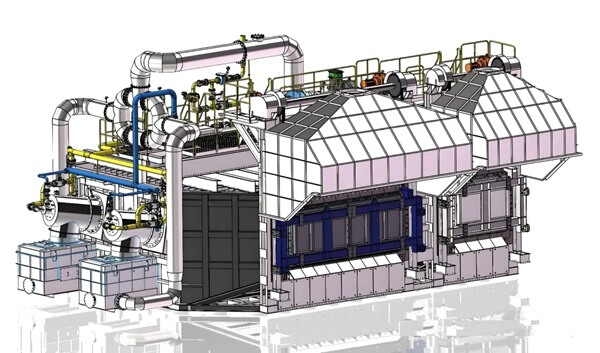
Flame melting is a melting method that uses a high-temperature flame generated by the combustion of fuels (such as natural gas, liquefied petroleum gas, heavy oil, etc.) as a heat source.
Its core advantages lie in the wide availability of fuels, relatively low equipment investment and operating costs, and large single-furnace capacity, making it very suitable for large-scale, continuous production needs.
However, direct flame contact with the melt can lead to localized overheating, increasing oxidation loss; simultaneously, its thermal efficiency is relatively low.
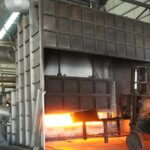
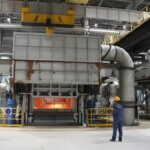
Reverberatory furnace melting is currently the most widely used melting method.
The charge is added from the top or side door of the furnace, and fuel (such as natural gas, heavy oil, or coal gas) burns inside the furnace.
The charge is melted by the radiant heat from the flames and furnace walls.
Induction melting is a method of melting aluminum alloys using the principle of electromagnetic induction.
Its significant advantages include extremely fast heating speed, significantly shortened melting cycle, and greatly improved thermal efficiency.
Under the action of electromagnetic force, the melt generates a stirring effect, resulting in more uniform composition and low oxidation loss rate.
However, induction melting equipment has relatively high investment costs, and the capacity of a single furnace is typically small.
Resistance melting uses electrical energy as a heat source, transferring heat to the furnace charge through a resistance heating element, thereby melting.
Precise temperature control within the furnace ensures the stability of the melting process.
Resistance melting produces melts with high purity and low oxidation loss, but its small furnace capacity limits its application in large-scale industrial production.
2. Physical and Chemical Effects in the Melting Process
Aluminum melting is a complex multiphase reaction process in which physical changes and chemical reactions are intertwined and jointly determine the final quality of the melt.
2.1 Main Physical Functions
※ Melting and Solidification:
The furnace charge absorbs heat, transforming from a solid to a liquid state.
During this process, the melting point of pure aluminum is 660℃, while the melting point of aluminum alloys decreases due to the addition of alloying elements, forming a temperature range where solid and liquid coexist (i.e., the solidification range).
The melting rate depends on the heating power, the shape of the furnace charge, and the temperature distribution within the furnace.
※Diffusion and Convection:
After alloying elements dissolve in the molten aluminum, composition homogenization is achieved through molecular diffusion and melt convection.
Electromagnetic stirring and mechanical stirring in furnaces are both used to enhance convection, accelerate diffusion, and shorten the time for composition homogenization.
※Gas Dissolution and Precipitation:
The dissolution of hydrogen in molten aluminum follows Westerner’s Law ([H] = K·√PH₂), meaning that solubility is proportional to the square root of the hydrogen partial pressure.
When the melt cools or the hydrogen partial pressure decreases, the dissolved hydrogen precipitates as bubbles.
※Formation and Flotation of Inclusions:
Fine Al₂O₃ inclusions formed after the oxide film ruptures mainly exist in a suspended state in the melt.
According to Stokes’ law, the flotation rate of an inclusion is proportional to the square of its radius.
Therefore, fine submicron-sized inclusions are difficult to float on their own and must be aggregated and grown through refining methods.
2.2 Main chemical reactions
※Oxidation Reaction:
This is the most important chemical reaction in the smelting process.
Oxidation of aluminum: 4Al + 3O₂ → 2Al₂O₃;
Oxidation of alloying elements: 2Mg + O₂ → 2MgO; 4Li + O₂ → 2Li₂O.
These reactions not only cause the loss of alloying elements, but the resulting oxides also become non-metallic inclusions.
※Hydrogen Absorption Reaction:
Hydrogen mainly comes from the reaction of water vapor in the furnace gas with the molten aluminum: 2Al + 3H₂O(g) → Al₂O₃ + 6[H]
The generated [H] dissolves in the molten aluminum and is the main source of hydrogen in the melt.
※Refining Reaction:
In the refining process, refining agents react chemically with the melt to achieve the purpose of degassing and removing impurities.
For example, when using chlorine-containing fluxes:
3Cl₂ + 2Al → 2AlCl₃(g)
AlCl₃(g) + 3[H] → Al + 3HCl(g)
The generated AlCl₃ and HCl gases rise as bubbles, carrying away dissolved hydrogen and adsorbed inclusions.
※Furnace lining erosion reaction:
The high-temperature melt reacts with the furnace lining material (such as SiO₂):
4Al + 3SiO₂ → 2Al₂O₃ + 3Si
This not only erodes the furnace lining, shortening its lifespan, but also increases silicon content in the melt, altering the alloy composition.
3. Aluminum melting process flow
A complete aluminum melting process typically includes the following core stages, each with strict operating procedures and quality control requirements.
3.1 Charge Preparation and Pretreatment
The charge is the source of melt quality, and its pretreatment is crucial.
※Charge Classification:
New charge, recycled charge (chips, scrap, etc.), and alloying elements (master alloys) should be sorted and stacked separately to avoid mixing.
Recycled charge should be used according to its composition and cleanliness.
※Purification Treatment:
The charge must be dry, free of oil and rust.
Damp charge introduces moisture, exacerbating hydrogen absorption; oil decomposes at high temperatures, also producing hydrogen and carbonaceous inclusions.
Recycled charge needs to be cleaned to remove surface oxide scale and contaminants.
※Batching Calculation:
Based on the chemical composition standards of the target alloy grade, accurately calculate the proportions of various charges.
The burn-off rate of alloying elements must be considered during calculation to ensure that the final melt composition is within the standard range.
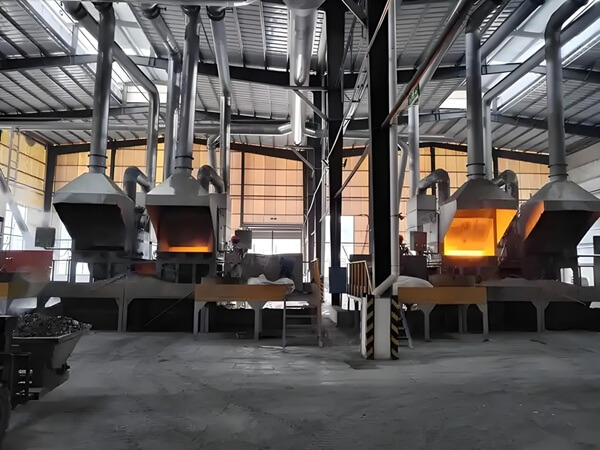
3.2 Charging and Melting
※Charging Sequence:
To improve melting efficiency and reduce burn-off, the general principle is to “start with lighter materials, then heavier ones; start with smaller materials, then larger ones; start with more difficult materials, then easier ones.”
First, charge in large pieces of new material and recycled material.
After they melt and form a molten pool, and a bottom layer of molten material is formed, add easily burnable alloying elements (such as Mg) and finer furnace charge.
※Melting Control:
In the initial stage of melting, use low-temperature, slow heating to avoid violent deflagration and splashing of the furnace charge.
Once the molten pool has formed, the heating power can be appropriately increased to accelerate melting.
The entire process should be shortened as much as possible to reduce the contact time between the melt and air.
3.3 Composition Adjustment and Homogenization
※Alloying:
After the furnace charge has basically melted, add the preheated alloying elements or master alloys to the molten pool.
For easily burnable elements, add them when the melt temperature is slightly lower and intensify stirring to ensure rapid dissolution.
※Stirring:
Stirring is crucial for ensuring uniform composition.
Mechanical or electromagnetic stirring should be continuous for a sufficient time to ensure consistent composition throughout the melt.
※Sampling and Analysis:
After homogenization, take samples from different depths of the molten pool for rapid spectral analysis.
Based on the analysis results, precisely adjust the alloy composition until it meets the requirements.
3.4 Melt Refining and Purification
This is the core process that determines melt quality, primarily involving degassing and slag removal.
※Degassing:
Commonly used methods include inert gas injection (Ar/N₂) with flux feeder, fluxing, and vacuum degassing.
The principle is to reduce the partial pressure of hydrogen in the melt, promoting the diffusion and precipitation of dissolved hydrogen.
※Slag Removal:
By adding refining agents, fine oxide inclusions are adsorbed and polymerized, then float to the surface with bubbles or slag.
After refining, slag must be thoroughly removed to prevent inclusions from being re-entered into the melt.
Aluminum dross and slag can be recovered using an aluminum dross machine, improving recovery rates and increasing profits.
3.5 Holding and Slag Removal
After refining, the melt needs to be settling for a period of time (usually 15-25 minutes) to allow residual microbubbles and fine inclusions to rise fully.
Disturbing the melt during settling is strictly prohibited.
After settling, use a preheated, dry skimming tool to remove all slag from the surface thoroughly.
3.6 Temperature Control and Casting
※Temperature Measurement:
After slag removal, accurately measure the melt temperature.
The temperature should be controlled within 50-70℃ above the alloy liquidus line to ensure good fluidity.
※Heat Holding:
Before casting, the melt should be held at the target temperature for a short time to eliminate temperature gradients.
※Casting:
Casting should be performed smoothly and continuously to avoid melt splashing and secondary oxidation, ensuring a dense casting structure.
4. Technical Characteristics and Development Trends of Modern Aluminum Melting
With the increasing demands on aluminum alloy material performance from high-end equipment manufacturing, modern aluminum melting technology exhibits the following significant characteristics and development trends:
⭐ Refined and Intelligent Control:
Utilizing advanced equipment such as online hydrogen analyzers, spectrometers, and temperature sensors, real-time monitoring and closed-loop control of the smelting process are achieved.
The application of automated batching systems and intelligent stirring systems significantly improves process stability and product consistency.
⭐Green and Environmentally Friendly:
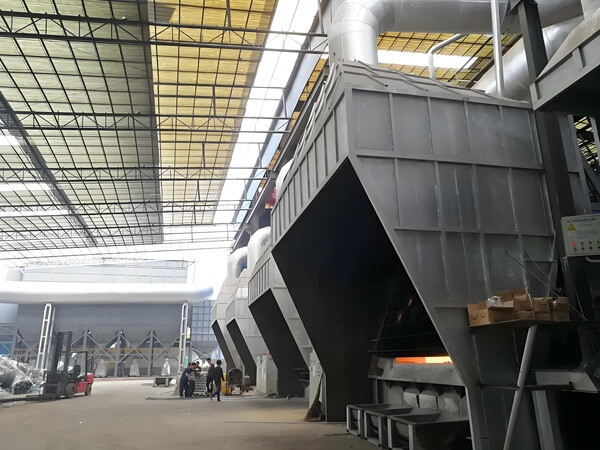
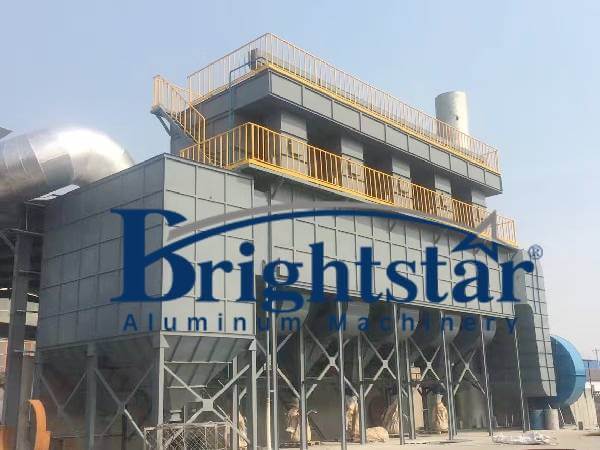
Eliminating high-pollution and high-energy-consumption traditional processes and promoting the use of low-NOx combustion technology, waste heat recovery systems, and high-efficiency baghouse dust removal equipment.
Simultaneously, vigorously developing recycled aluminum technology to increase waste aluminum recovery rates, reduce dependence on primary aluminum, and achieve energy conservation and emission reduction.
⭐High Purity and High Performance:
To meet the needs of aerospace, new energy vehicles, and other fields, a series of efficient purification technologies have been developed, such as rotary jet refining, filtration technology (ceramic filter plates), and electromagnetic purification.
These technologies have achieved unprecedented levels of hydrogen content and inclusion levels in the melt, resulting in aluminum alloy materials with higher strength and toughness.
⭐Short process and integration:
Integrating smelting, casting, and even subsequent heat treatment and processing steps into a single production line reduces intermediate steps and material transfers, improves production efficiency, and reduces the risk of cost and quality fluctuations.
5. Conclusion:
Aluminum melting is a comprehensive technology integrating materials science, thermodynamics, kinetics, and engineering practice.
From charge preparation to final casting, every step has a decisive impact on melt quality.
For industry practitioners, a deep understanding of the physicochemical principles of the smelting process, strict adherence to the process flow, and precise control of various process parameters are fundamental guarantees for producing high-quality aluminum alloy products.
At the same time, we should keep up with technological development trends, actively embrace new concepts and technologies of intelligent and green processes, continuously improve the technological level of aluminum melting, and contribute to the aluminum melting industry.
Reference:
1.吴树森, 万里, 安萍. 铝、镁合金熔炼与成形加工技术[M]. 北京: 机械工业出版社, 2012.
2.唐剑 等. 铝合金熔炼与铸造技术(第2版)[M]. 北京: 冶金工业出版社, 2022.
3. Liu G Y, Ren Y S, Ma W H, et al. Recent advances and future trend of aluminum alloy melt purification: A review[J]. Journal of Materials Research and Technology, 2024: 4647-4662.
4. 王立娟, 张万金, 吴欣凤. 变形铝合金熔炼与铸造[M]. 长沙: 中南大学出版社, 2010.
5. 原紫云, 方晓刚, 逯丁炜, 等. Al-Mn/A356双熔体混熔铸造铝合金的组织与性能研究[J]. 热加工工艺, 2026, 55(2): 163-169.
More Information I Want To Know
 Principles, processes and energy efficiency improvement paths of aluminum melting
- Energy consumption analysis and energy saving measures in melting process
- Problem interpretation and solutions in aluminum scrap melting process
- Cost control measures for recycling and utilization of aluminum scrap
- Cost Control Measures in Aluminum Melting Process
- Application of electromagnetic stirring technology in aluminum melting industry