
Innovative Aluminum Melting Technologies for Energy saving, environmental sustainability, cost reduction and efficiency improvement
Innovative Aluminum Melting Technologies for Energy saving, environmental sustainability, cost reduction and efficiency improvement
1. Introduction
As an important nonferrous metal, aluminum is widely used in modern industry.
The technical level and equipment performance of its melting process are crucial to the development of the entire aluminum processing industry.
With the increasing global requirements for energy conservation and environmental protection and the increasing market competition, aluminum melting companies are facing multiple pressures to reduce energy consumption, reduce pollution emissions, and improve production efficiency and product quality.
Innovative aluminum melting equipment has emerged and has become the key to solving these problems.
This article will deeply explore the principles, advantages and practical application cases of innovative aluminum melting equipment in energy conservation, environmental protection, cost reduction and efficiency improvement, aiming to provide a reference for the technical upgrading and sustainable development of the aluminum smelting industry.
2. Problems with traditional aluminum melting equipment
High energy consumption
Traditional aluminum melting furnaces mostly use resistance heating or gas combustion, which has the problem of low energy conversion efficiency.
For example, during the resistance heating process, a large amount of electrical energy will be converted into heat energy and dissipated into the surrounding environment.
While the combustion efficiency of traditional gas furnaces can usually only reach 60% – 70%, and a large amount of heat is discharged into the atmosphere with flue gas, resulting in a huge waste of energy.
According to statistics, the energy consumption of traditional aluminum melting process per ton of aluminum is about 800 – 1200 kWh or 70-100 cubic meters of natural gas, which makes the energy cost of aluminum melting factories high.
Too much metal burnout
During the traditional melting process, since the aluminum liquid is exposed to high temperature and oxidizing atmosphere for a long time, oxidation reaction is prone to occur, resulting in metal burnout.
Metal burnout not only causes waste of raw materials and increases production costs, but also affects the chemical composition and quality stability of the aluminum liquid.
Generally speaking, the metal burnout rate of traditional aluminum melting equipment is between 1.5% and 3%.
If it is not handled properly, the burnout rate may be even higher.
Low production efficiency
The structure and process design of traditional aluminum melting equipment are relatively backward, resulting in long melting cycles and low production efficiency.
For example, the loading and unloading methods of some old-fashioned melting furnaces are cumbersome and require manual operation, which is not only labor-intensive but also time-consuming;
At the same time, the temperature distribution in the furnace is uneven, which makes the melting speed of aluminum materials inconsistent, further prolonging the melting time.
The low production efficiency cannot meet the market’s growing demand for aluminum products, and also limits the economic benefits of enterprises.
Serious environmental pollution
Traditional aluminum melting process will produce a large amount of waste gas, aluminum dross and dust and other pollutants.
The waste gas contains harmful substances such as sulfur dioxide, nitrogen oxides, smoke and dust, which cause serious pollution to the atmospheric environment;
The aluminum dross contains harmful substances such as heavy metals. If not handled properly, it will pollute the soil and water;
The dust will harm the health of operators.
With the increasingly stringent environmental protection regulations, traditional aluminum melting factories are facing huge environmental pressure.
3. Innovative energy-saving principles and technologies for aluminum melting equipment
3.1 Efficient combustion technology
Regenerative combustion technology
Regenerative combustion technology is a highly efficient combustion technology widely used in innovative aluminum melting equipment.
Its principle is to use the regenerator to store heat during the combustion process, and then transfer the stored heat to the cold air in the exhaust stage, so that the cold air is preheated to a high temperature before entering the combustion chamber to participate in the combustion.
This can significantly increase the temperature of the combustion air, make the fuel burn more fully, and improve the combustion efficiency.
At the same time, since the exhaust temperature is greatly reduced, the heat loss is reduced, thereby achieving the purpose of energy saving.
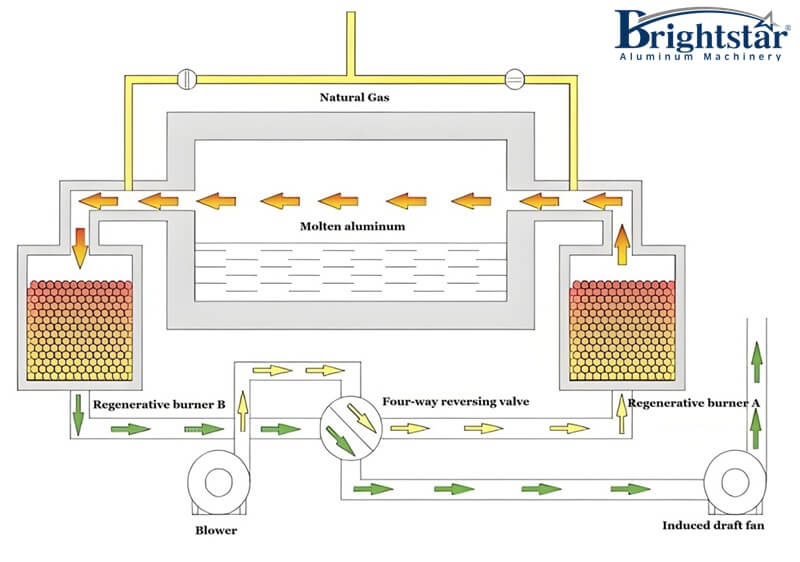
According to relevant data, the aluminum melting furnace using regenerative combustion technology can increase its combustion efficiency to more than 90%, and the exhaust temperature can be reduced to below 150°C.
Compared with traditional gas furnaces, the energy saving effect can reach 30% – 40%.
Oxygen-fuel combustion technology
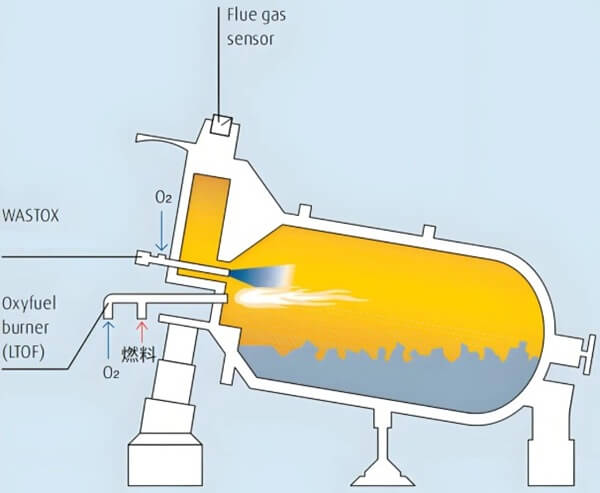
Oxygen-enriched combustion technology is to add oxygen to the combustion air to increase the oxygen concentration, thereby improving the combustion conditions and increasing the combustion efficiency.
In the aluminum melting process, oxygen-enriched combustion can make the fuel fully burn at a lower excess air coefficient, reducing the heat loss caused by excess air.
At the same time, due to the increase in combustion temperature, the melting speed of aluminum material is accelerated, the melting time is shortened, and the energy consumption is further reduced.
Generally speaking, when the oxygen concentration in the combustion air is increased to 25% – 30%, the energy consumption of the aluminum melting furnace can be reduced by 10% – 20%.
3.2 Residual heat recovery technology
Air preheater
Air preheater is a common residual heat recovery equipment, which uses the heat of high-temperature flue gas discharged from the aluminum melting furnace to preheat the air required for combustion.
Through the air preheater, the cold air is heated to a certain temperature before entering the combustion chamber, which increases the enthalpy of the combustion air and reduces fuel consumption.
At the same time, the flue gas temperature decreases after passing through the air preheater, reducing the heat emission loss.
The heat exchange efficiency of the air preheater can usually reach 70% – 80%, which can effectively improve the energy utilization rate of aluminum melting equipment.
Residual heat power generation system
For some large aluminum melting factories, residual heat power generation systems can be used to recycle the residual heat generated during the melting process.
The residual heat power generation system converts the heat of high-temperature flue gas into steam through a residual heat boiler, and then uses the steam to drive a steam turbine to generate electricity. This not only realizes the secondary utilization of residual heat, but also the generated electricity can be used internally by the enterprise, reducing the enterprise’s electricity costs.
The application of residual heat power generation systems can increase the energy utilization rate of aluminum melting factories by 10% – 15%, with significant energy-saving effects.
3.3 New furnace structure design
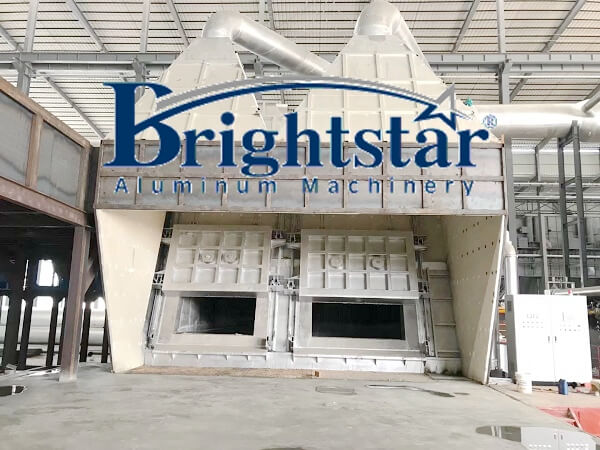
Double-chamber melting furnace
The double-chamber melting furnace is a new type of aluminum melting furnace structure, which divides the melting process into two chambers: the melting chamber and the refining chamber.
In the melting chamber, the aluminum material is first melted quickly, and then the molten aluminum liquid is transferred to the refining chamber for refining treatment.
The advantage of this structural design is that the melting chamber and the refining chamber can control the temperature and atmosphere separately, which improves the melting efficiency and the quality of aluminum liquid.
At the same time, due to the reduced heat exchange between the melting chamber and the refining chamber, the energy consumption is reduced.
Compared with the traditional single-chamber melting furnace, the energy consumption of the double-chamber melting furnace can be reduced by 15%-25 %, and the metal burnout rate can also be reduced by 0.5%-1 %.
Round bottom furnace
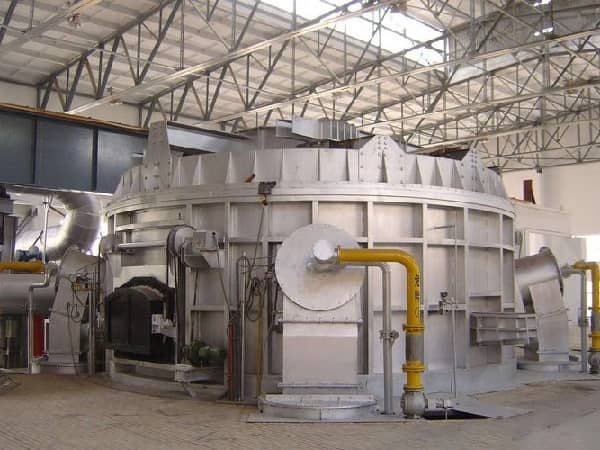
The design of the round bottom furnace makes the furnace gas circulation more uniform, the temperature distribution in the furnace more consistent, and avoids the occurrence of local overheating and overburning.
Reasonable burner configuration further strengthens the furnace gas circulation, improves the heat transfer efficiency, and enables the aluminum material to melt quickly and evenly.
This structural feature of the round bottom furnace not only improves the product quality, but also extends the service life of the furnace, while reducing energy consumption to a certain extent.
According to actual application cases, the energy consumption of aluminum melting equipment using a round bottom furnace can be reduced by 10% – 15% compared with traditional rectangular furnaces.
4. Environmental advantages of innovative aluminum melting equipment
4.1 Reduce exhaust gas emissions
Low-nitrogen combustion technology
The low-nitrogen combustion technology used in innovative aluminum melting equipment reduces the generation of nitrogen oxides (NOx) by optimizing the burner structure and combustion process.
For example, the use of technical means such as staged combustion and flue gas recirculation makes the oxygen distribution in the combustion process more reasonable and inhibits the generation reaction of NOx.
Low-nitrogen combustion technology can reduce the NOx emission concentration of aluminum melting furnaces by 50% – 70%, meeting increasingly stringent environmental emission standards.
High-efficiency desulfurization and dust removal technology
In terms of waste gas treatment, the innovative aluminum melting equipment is equipped with high-efficiency desulfurization and dust removal devices.
Common desulfurization technologies include wet desulfurization and dry desulfurization, which can effectively remove sulfur dioxide (SO₂) from waste gas;
While dust removal equipment uses baghouse dust collector, electrostatic dust collectors, etc., which can efficiently capture smoke and dust in waste gas.
After desulfurization and dust removal treatment, the emission concentration of SO₂ and smoke in aluminum melting waste gas can be reduced by more than 90%, greatly reducing pollution to the atmospheric environment.
4.2 Reduce amount of aluminum dross generated
Innovative aluminum melting equipment reduces the amount of aluminum dross generated by optimizing the melting process and improving the metal recovery rate.
For example, the use of advanced melt processing technology can more effectively remove impurities in aluminum liquid and reduce the amount of aluminum dross generated due to excessive impurities.
At the same time, some innovative equipment also has the function of aluminum dross recycling, such as an integrated aluminum dross processing system and hot aluminum dross processing machine to further recover and extract aluminum from aluminum dross, reducing the discharge of aluminum dross.
Compared with traditional equipment, innovative aluminum melting equipment can reduce the amount of waste slag generated by 30% – 50%, achieving efficient utilization of resources and reduction of waste.
4.3 Reduce dust pollution
Innovative aluminum melting equipment focuses on the optimization of sealing and ventilation and dust removal systems in design, reducing the escape of dust.
The equipment uses furnace doors, pipe connections and other components with good sealing performance to prevent dust from leaking into the workshop environment during the production process.
At the same time, the ventilation and dust removal system can collect and treat the dust in the workshop in a timely and effective manner to ensure that the air quality in the workshop meets the occupational health standards.
In addition, some equipment is also equipped with a dust humidification device to humidify the collected dust and avoid secondary dust pollution.
Through these measures, innovative aluminum melting equipment can reduce the dust concentration in the workshop by more than 80%, improving the working environment of operators.
5. The role of innovative aluminum melting equipment in reducing costs and increasing efficiency
Reduce energy costs
Innovative aluminum melting equipment has significantly reduced energy consumption by adopting efficient combustion technology and residual heat recovery technology.
Take an aluminum processing enterprise as an example, the traditional gas smelting furnace used by the enterprise consumed 90 cubic meters of natural gas per ton of aluminum and produced 20,000 tons of aluminum products annually, with very high energy costs.
Later, the enterprise replaced it with innovative melting equipment that uses regenerative combustion technology and residual heat recovery system.
The natural gas consumption per ton of aluminum was reduced to 55 cubic meters, saving 700,000 cubic meters of natural gas annually.
According to the natural gas price at that time, the fuel cost can be saved by 2.8 million CNY per year.
The reduction in energy costs directly improves the economic benefits of the enterprise.
Reduce raw material loss
Innovative aluminum melting equipment effectively reduces the metal burnout rate by optimizing the furnace structure and improving the melting process.
For example, the metal burnout rate of the traditional melting equipment used by a certain enterprise is 2.5%,
but after adopting the new double-chamber melting furnace, the metal burnout rate is reduced to 1.5%.
Based on the annual production of 10,000 tons of aluminum products by the enterprise, the metal burnout can be reduced by 100 tons per year.
According to the market price of aluminum ingots, the raw material cost can be saved by 1.6 million CNY per year.
In addition, because the innovative equipment can better control the chemical composition and quality stability of the aluminum liquid, it reduces the waste of raw materials caused by product quality problems and further reduces production costs.
Improve production efficiency
The advanced design and automated control system of innovative aluminum melting equipment have improved production efficiency.
For example, some innovative melting equipment adopts automatic feeding and discharging systems, which greatly shortens the loading and discharging time;
At the same time, the optimized furnace structure and efficient combustion system accelerate the melting speed of aluminum materials and shorten the melting cycle.
The traditional equipment used by an aluminum melting factory originally had a melting time of 8 hours per furnace and could only produce 3 furnaces per day;
After replacing it with innovative equipment, the melting time per furnace was shortened to 5 hours, and 5 furnaces could be produced per day, with a production efficiency increase of 66.7%.
The improvement in production efficiency means that the company can produce more products in the same time, increasing the company’s sales revenue.
Reduce labor costs
Innovative aluminum melting equipment has a high degree of automation, which reduces manual operation links and thus reduces labor costs.
For example, some equipment is equipped with automated feeding, dross removal, refining and other systems.
Operators only need to monitor and operate in the control room, without frequent manual operations in high temperature and harsh environments.
After using innovative equipment, an aluminum processing company reduced the number of operators in the melting workshop from 20 to 10.
Based on the labor cost of 60,000 CNY per person per year, the labor cost can be saved by 600,000 CNY per year.
Conclusion
Innovative aluminum melting equipment has shown significant advantages in energy conservation, environmental protection, cost reduction and efficiency improvement by adopting a series of innovative technologies such as efficient combustion technology, residual heat recovery technology, and new furnace structure design.
These equipment not only reduces energy consumption and the emission of pollutants such as waste gas, aluminum dross, and dust, but also reduces the loss of raw materials, improves production efficiency and product quality, and reduces labor costs, bringing huge economic and social benefits to aluminum melting factories.
With the continuous advancement and innovation of science and technology, it is believed that more and more advanced aluminum melting equipment will emerge in the future, driving the aluminum melting industry to develop in a more green, efficient and sustainable direction.
Aluminum melting factories should actively pay attention to and adopt innovative equipment and technologies, and continuously improve their competitiveness to meet the needs of market and social development.
More Information I Want To Know
 How to improve production efficiency of calcining furnace for aluminum dross?
- How to Make Aluminum Dross Reduction, Utilization and Harmless Treatment
- A comprehensive comparison of premixed and diffuse combustion systems of aluminum melting furnace
- Energy consumption analysis and energy saving measures in melting process
- Aluminum Dross Machine and Aluminum Dross Cooler Successfully Delivered to Indian Customer
- Cost Control Measures in Aluminum Melting Process