
Principles, processes and energy efficiency improvement paths of aluminum melting
Principles, processes and energy efficiency improvement paths of aluminum melting
Aluminum, with its excellent properties such as low density, high specific strength, corrosion resistance, and easy processing, is increasingly being used in the automotive, aerospace, rail transportation, and electronic communications sectors.
Melting, a core step in aluminum production, directly determines the alloy’s compositional uniformity, purity, mechanical properties, and production efficiency, and plays a crucial role in reducing energy consumption, pollution, and costs.
This article focuses on the core objectives of aluminum melting, systematically explaining mainstream melting methods, their underlying mechanisms, and standardized operating procedures.
It also analyzes the operating mechanism of reverberatory melting furnaces and proposes strategies for improving smelting efficiency from the perspectives of technology, equipment, and processes.
This article provides a reference for achieving efficient and green aluminum melting.
1. The Core Purpose of Aluminum Melting
Aluminum melting is more than simply “melting metal.” Rather, it involves optimizing the quality and quantity of raw metal through physical and chemical processes, ultimately providing high-quality melt for subsequent casting and processing.

Its core objectives can be summarized in the following four aspects:
1.1 Melting and refining Metal Raw Materials
The primary task of melting is to heat solid raw materials such as aluminum ingots, aluminum scrap, and master alloys above their melting point, transforming them into a uniform liquid melt.
Aluminum’s melting point is approximately 660°C, but the actual melting temperature must be adjusted to 700-760°C based on the alloy’s composition (such as the proportions of elements like silicon, magnesium, and copper) to ensure good melt fluidity.
Furthermore, through processes such as stirring and holding, component segregation in the melt is eliminated, ensuring a uniform distribution of alloying elements.
For example, when producing Al-Si cast aluminum alloys, temperature and stirring rate must be controlled to prevent silicon from forming a coarse eutectic structure, thereby ensuring consistent mechanical properties in the subsequent castings.
1.2 Removing Harmful Impurities and Gases from the Melt
During the melting process, aluminum melt easily absorbs hydrogen (primarily from moisture in the charge and water vapor in the furnace gas) and is mixed with non-metallic inclusions (such as oxides, nitrides, carbides, and dust, oil residue, and other impurities introduced by the charge).
Hydrogen can cause defects such as porosity and shrinkage in castings, reducing the material’s strength and sealing properties.
Non-metallic inclusions can disrupt the melt’s continuity, causing cracks, inclusions, and other problems.
Therefore, degassing and slag removal processes are required during the melting process to control the hydrogen content to below 0.15mL/100gAl and the inclusion content to within the specified microscopic range to ensure melt purity.
1.3 Precise Control of Alloy Composition
Based on product performance requirements, alloying elements such as silicon, magnesium, copper, manganese, and zinc must be precisely added during the smelting process.
This composition adjustment allows for customized aluminum alloy properties.
For example, adding magnesium improves the strength and corrosion resistance of aluminum alloys, while adding silicon improves melt fluidity, making it suitable for the production of complex castings.
During the melting process, composition monitoring is performed in real time through methods such as spectral and chemical analysis.
The content of each element is controlled within strict tolerances (typically within 0.05%-0.1%) to prevent substandard product performance due to composition fluctuations.
1.4 Reducing Energy Consumption and Pollution
Efficient melting requires minimizing energy consumption (e.g., electricity and fuel) while meeting melt quality requirements, while also reducing emissions of pollutants such as flue gas, dust, and waste residue.
Traditional melting processes consume 30%-40% of the total energy consumption in aluminum alloy production.
Optimizing smelting technology can effectively reduce energy consumption per unit product and minimize emissions of greenhouse gases such as CO₂ and SO₂, as well as harmful gases, meeting the industry’s green development needs.
2. Mainstream Aluminum Melting Methods and Characteristics
Depending on the heating method, energy source, and process characteristics, aluminum melting methods can be divided into three categories: flame melting, induction melting, and resistance melting.
These methods differ significantly in equipment structure, applicable scenarios, and melting efficiency.
Therefore, the appropriate choice should be made based on production scale, alloy type, and quality requirements.
2.1 Flame Melting
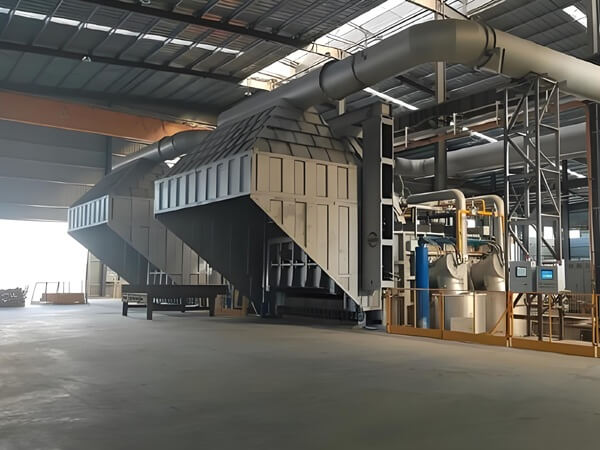
Flame melting uses a high-temperature flame generated by the combustion of a fuel (natural gas, liquefied petroleum gas, heavy oil, etc.) as a heat source, heating the charge through radiation and convection.
It is currently the most widely used aluminum alloy melting method in industry.
Key equipment includes reverberatory melting furnaces and tilting flame furnaces.
Flame melting’s core advantages include: a wide range of fuel sources, low equipment investment and operating costs, large single-furnace capacity (up to 5-50 tons), suitable for large-scale, continuous production; relatively uniform temperature distribution within the furnace, and flexible control of the melting temperature by adjusting combustion parameters.
However, its disadvantages are also significant: direct flame contact with the melt can easily lead to localized overheating, increasing oxidative burn losses (typically 2%-5%); CO₂ and H₂O in the furnace gas can exacerbate hydrogen absorption by the melt; low thermal efficiency (typically 30%-45%), and relatively high energy consumption.
2.2 Induction Melting
Induction melting utilizes the principle of electromagnetic induction.
An induction coil generates an alternating magnetic field, creating eddy currents within the metal charge, leading to self-heating and melting.
The primary equipment used is an induction melting furnace (categorized as Power Frequency, Intermediate Frequency (IF) , and high frequency(HF)).
Induction melting features include rapid heating, short melting cycles (20%-30% shorter than flame melting), and high thermal efficiency (up to 60%-75%).
The electromagnetic force stirs the melt, resulting in uniform composition and low oxidation losses (only 0.5%-1.5%).
The furnace is compact, requires minimal floor space, and is easily automated.
However, induction melting equipment requires high investment and a single furnace capacity is relatively small (typically ≤5 tons).
It is therefore suitable for the production of small to medium-sized batches of high-precision aluminum alloy.
2.3.Resistance Melting
Resistance melting uses electricity as a heat source, transferring heat to the charge via a resistance heating element (such as graphite or metal resistance wire) to achieve melting.
Its main advantages include precise control of the furnace temperature (temperature differentials can be controlled within ±5°C), a stable melting process, high melt purity, and minimal oxidation and burnout.
The equipment is simple in structure and easy to operate, making it suitable for laboratory and small-batch melting of specialty aluminum alloys (such as high-purity aluminum-lithium alloys).
However, resistance melting suffers from slow heating rates, high energy consumption, and small single furnace capacity (generally ≤1 ton), making it difficult to meet the needs of large-scale industrial production.
3. Basic Mechanisms of Aluminum Melting
Aluminum melting is a complex process involving heat transfer, mass transfer, chemical reactions, and phase changes.
Its core mechanism can be summarized as three interrelated stages: heat transfer, melt purification, and alloying.
3.1 Heat Transfer Mechanism: Energy Conversion from Solid to Melt
The essence of melting is the transfer of heat from a heat source to the charge, gradually raising the charge temperature above its melting point and converting it into a melt.
Heat transfer occurs primarily through three methods:
Radiative heat transfer: In flame melting, the high-temperature flame and furnace walls transfer heat to the charge surface through radiation, primarily raising the charge temperature.
In induction melting, eddy currents generated by the induction coil directly heat the metal interior, a process known as “internal heating,” with radiative heat transfer serving only as a supplement.
Convective heat transfer: High-temperature gases within the furnace (such as flue gases from flame combustion) contact the charge surface through convection, transferring heat to the charge.
After the melt is formed, convection (natural or forced) further promotes uniform heat distribution within the melt.
Conduction heat transfer: Molecular collisions transfer heat from high-temperature areas to low-temperature areas within the charge, gradually raising the overall charge temperature.
In resistance melting, heat from the resistance heating element is primarily transferred to the charge through conduction.
Heat transfer efficiency depends on the temperature of the heat source, the thermal conductivity of the charge, the contact area between the charge and the heat source, and the insulation performance of the furnace.
For example, breaking up bulk charge into smaller particles can increase the contact area with the heat source, accelerate heat transfer, and shorten the melting time.
3.2 Melt Purification Mechanism: The Core Process for Removing Gases and Inclusions
Melt purification is a critical step in smelting, and its mechanisms can be categorized into two types: degassing and deslagging.
Degassing Mechanism: Hydrogen in aluminum melt exists primarily in atomic form (H), and its solubility increases with increasing temperature and decreases with decreasing pressure.
A commonly used degassing method in industry is bubble flotation: an inert gas (such as argon or nitrogen) or a reactive gas (such as chlorine) is injected into the melt through a rotating nozzle, forming a large number of fine bubbles.
As the bubbles rise, hydrogen atoms in the melt diffuse to the bubble surface and combine into H₂ molecules, which escape from the melt surface with the bubbles, thereby reducing the hydrogen content.
Alternatively, vacuum degassing reduces the surface pressure of the melt, reducing the solubility of H₂ and allowing it to escape, making it suitable for high-precision aluminum alloy smelting.
Deslagging Mechanism: Non-metallic inclusions are mostly oxides (such as Al₂O₃) with a density lower than that of the melt, and are primarily removed through the “adsorption-separation” principle.
Adding a refining agent (such as a mixture of sodium chloride and potassium chloride) to the melt forms a low-melting-point slag, which has a lower surface tension than the melt and can absorb inclusions.
Stirring ensures full contact between the slag and the melt, allowing the adsorbed slag to float to the surface of the melt, forming a “aluminum dross,” which is then removed by skimming.
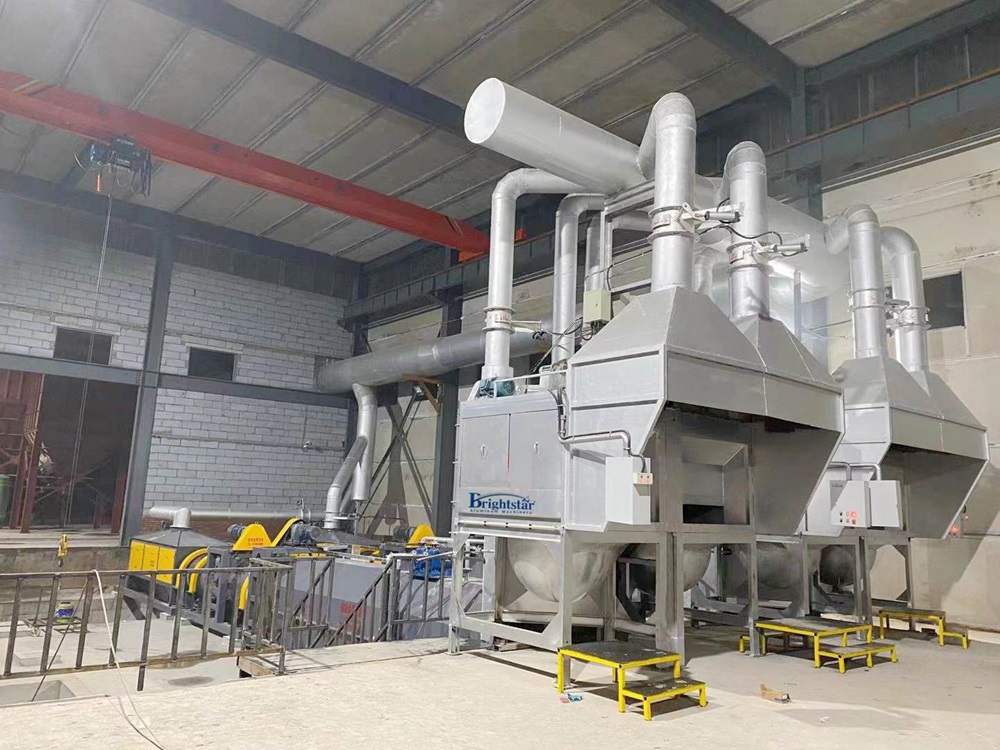
Aluminum dross can be processed with an aluminum dross machine to extract more than 90% aluminum from hot aluminum dross.
Alternatively, filtration (such as through ceramic filter plates) can remove larger inclusions (≥10μm) from the melt through physical interception.
3.3. Alloying Mechanism: Dissolution and Uniform Distribution of Alloying Elements
Alloying is the process of incorporating alloying elements into the aluminum melt and achieving uniform distribution by adding intermediate alloys (such as Al-Si, Al-Mg, and Al-Cu alloys) or pure metals.
Its core mechanism is “dissolution-diffusion”:
Dissolution: The added alloying elements or intermediate alloys melt in the high-temperature melt, forming fine droplets.
These droplets come into contact with the aluminum melt and gradually dissolve, forming a uniform alloy melt.
The dissolution rate depends on the temperature (higher temperatures lead to faster dissolution), the affinity of the alloying elements for aluminum (stronger affinity leads to easier dissolution), and the intensity of stirring (stirring accelerates droplet dispersion and increases contact area).
Diffusion: The dissolved alloying elements migrate through the melt via molecular diffusion, ultimately achieving uniform distribution.
The diffusion rate is dependent on temperature, concentration gradient, and stirring intensity—stirring breaks down concentration boundary layers in the melt, accelerating diffusion and preventing localized compositional segregation.
For example, when producing 6061 aluminum alloy (containing Mg and Si elements), it is necessary to add Al-Si master alloy first, and then add pure Mg after it is completely dissolved.
Stirring is used to evenly diffuse the Mg and Si elements, and finally spectral analysis is used to confirm that the composition meets the standards.
4. Standardized Operational Procedures for Aluminum Melting
Aluminum melting operations must adhere to strict process specifications to ensure stable melt quality and safe and efficient production.
A typical melting process can be divided into eight steps: materials preparation, charging, melting, refining, dross removal, composition adjustment, holding and casting.
4.1 Materials Preparation
Materials Selection and Proportioning: Based on the target alloy composition, select qualified aluminum ingots, scrap aluminum (which must be sorted and screened to remove oil, paint, and impurities), and master alloy.
Calculate the appropriate charge amounts for each type of charge according to the process recipe.
The scrap aluminum addition ratio should generally not exceed 50% to prevent impurity accumulation that could affect melt quality.
Materials Pretreatment: Surface oxide scale should be removed from the aluminum ingots.
Scrap aluminum should be cleaned (to remove oil), crushed (large pieces of scrap aluminum should be broken into smaller pieces ≤ 200mm), and dried (to remove moisture and prevent hydrogen generation during smelting).
The master alloy should be preheated to 100-200°C to prevent splashing caused by large temperature differences when the melt is added.
4.2 Charging
Charging should follow the principle of “light first, heavy later, small first, large later,” and layered charging:
First, lay a layer of small charging materials or recycled material on the furnace bottom as a “base charge” to reduce the impact of subsequent charges on the furnace bottom.
Add aluminum ingots and scrap aluminum in sequence, placing large pieces of charge in the middle layer to avoid direct contact with the furnace walls or heating elements.
Add the master alloy after most of the charge is melted to prevent it from melting prematurely and floating on the surface, where it will oxidize and burn.
The charge volume should be controlled to 80%-90% of the rated furnace capacity, leaving sufficient space for melt stirring and refining.
4.3 Melting
Start the furnace and adjust the heating parameters according to the melting method (fuel flow and air ratio for flame melting, current frequency and power for induction melting), gradually increasing the temperature.
After the charge begins to melt, regularly monitor the melting process.
Once a certain amount of melt has formed, stir the charge appropriately to accelerate the sinking and melting of the unmelted charge and avoid “bridging” (charge bridging within the furnace, where the lower melt cannot heat the upper charge).
During the melting process, control the heating rate to avoid localized overheating (generally ≤10°C/min) and reduce oxidation and hydrogen absorption.
4.4 Refining
Refining is a key step in removing gases and inclusions from the melt.
It is typically performed after the melt is completely melted and at a temperature of 720-740°C:
Gas Refining: Inert gas (argon purity ≥99.99%) is injected into the melt through a rotating nozzle at a flow rate of 0.5-1.0 L/min·t.
The nozzle should be inserted 2/3-3/4 of the melt depth, and the rotation speed should be 300-500 rpm. The refining time is 15-20 minutes.
Refining with Refining Agent: Refining agent is added at a rate of 0.3%-0.5% of the melt weight. The refining agent is evenly dispersed in the melt through stirring.
After melting, the refining agent forms a slag that absorbs inclusions and causes them to float upward.
The refining time is 10-15 minutes.
Maintain a slight positive pressure in the furnace during refining to prevent air from being drawn into the melt, which could intensify oxidation and hydrogen absorption.
4.5 Aluminum Dross Skimming
After refining, wait until the aluminum dross has fully risen to the surface of the melt.
Use a slag rake to thoroughly remove the aluminum dross.
Aluminum dross skimming should be done from the inside out, gently scraping and slowly scraping to avoid stirring the melt, which could cause secondary hydrogen absorption or reintroduction of inclusions.
Aluminum dross must be promptly removed from the furnace to prevent it from remelting and contaminating the melt.
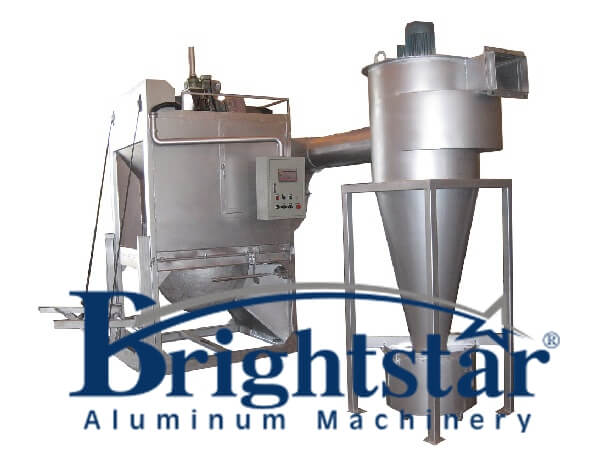
Apply the aluminum dross recovery machine to reclaim more than 90% aluminum from the skimmed aluminum dross in hot status, which can increase the aluminum recovery rate and the profit.
4.6 Composition Adjustment
After dross skimming, samples are taken from different locations of the melt using a sampling spoon and the alloy composition is determined using a spectrometer.
If the content of a particular element is low, the required amount must be calculated and the appropriate intermediate alloy or pure metal added to the melt after preheating.
Stir thoroughly and resample until the composition meets the standard.
4.7 Holding
After the composition is adjusted to meet expectations, lower the melt temperature to the casting temperature (generally 680-720°C) and allow it to rest for 10-15 minutes.
This holding period allows any minor inclusions in the melt to float upward, while also ensuring a uniform melt temperature and stable flowability during pouring.
During this holding period, turn off the heating device and cover the melt with an insulator (such as graphite powder) to minimize surface oxidation.
4.8 Casting
After the holding period, open the furnace outlet and slowly casting the melt into the mold or continuous casting machine.
Maintain a uniform pouring speed (typically 100-350 mm/min) to avoid excessive casting, which can cause air entrainment and insufficient pouring, or excessive cooling, which can affect fluidity.
After casting, clean the furnace to remove any remaining slag and scale from the walls, preparing for the next melting cycle.
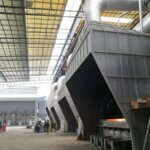
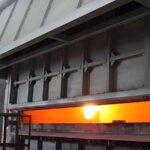
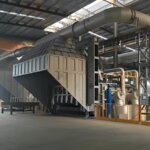
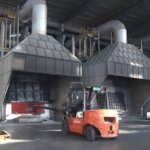
5. The Functioning Mechanism of a Reflective Melting Furnace:
A reflective melting furnace is a core piece of equipment for flame smelting.
It’s so named because the charge is heated by reflected heat from the furnace roof and walls, rather than directly contacting the flame.
It’s widely used in large-scale aluminum melting.
Its structure primarily comprises the furnace body (shell, refractory lining), combustion system (burners, fuel supply piping), exhaust system (flue duct, chimney), charging port, liquid outlet, and slag removal port.
Its functioning mechanism can be categorized into three aspects: heating, charge movement, and melt control.
5.1 Heating Mechanism: Radiation-Driven Heat Transfer
The core heating method of a reflective melting furnace is “indirect radiation heating.”
The specific process is as follows:
Fuel (such as natural gas) and air are mixed and combusted in the burner, generating a high-temperature flame of 1500-1800°C.
The flame flows along the furnace roof toward the exhaust port, without directly contacting the charge (which is located at the furnace bottom, and the flame moves in the air above it).
The high-temperature flame transfers heat through radiation to the refractory materials (such as high-alumina bricks and corundum bricks) in the furnace roof and walls, raising the temperature of the furnace roof and walls to 1200-1400°C.
The heated furnace roof and walls act as “secondary radiation sources,” radiating heat to the charge surface.
Simultaneously, convection heat transfer from the flame also transfers some heat to the charge, gradually heating and melting the charge.
The advantage of this heating method is the uniform temperature distribution within the furnace, avoiding localized overheating and oxidation damage to the charge caused by direct flame heating.
Furthermore, the heat storage effect of the refractory materials stabilizes the furnace temperature, reducing the impact of temperature fluctuations on melt quality.
5.2 Material Movement Mechanism: Synergy of Natural Convection and Forced Agitation
Material movement within a reverberatory melting furnace is primarily achieved through natural convection and forced agitation:
Natural Convection: During melting, the bottom portion of the melt, heated by the furnace floor and characterized by a higher temperature and lower density, moves upward.
The upper portion, with its lower temperature and higher density, moves downward, creating a natural convection cycle that promotes heat transfer and uniform composition.
Forced Agitation: Once the melt reaches a certain depth, a stirrer (such as a graphite stirring paddle) inserted into the melt initiates forced agitation, typically at a rate of 50-100 rpm.
Forced agitation disrupts the melt’s concentration and temperature boundary layers, accelerating the dissolution and diffusion of alloying elements while promoting the buoyancy of gases and inclusions, thereby enhancing refining efficiency.
Furthermore, reverberatory melting furnaces are typically designed with a tilting furnace body.
After melting, the furnace body can be tilted to facilitate liquid discharge and slag removal, streamlining the process.
5.3 Melt Control Mechanism: Precise Temperature and Atmosphere Control
The reverberatory melting furnace achieves precise control of furnace temperature and atmosphere through the synergistic effect of the combustion system and exhaust system:
Temperature Control: The flame temperature is controlled by adjusting the fuel flow rate and air ratio at the burner (the air-fuel ratio is generally 1.05-1.15).
Simultaneously, the flue damper adjusts the exhaust volume and controls the furnace pressure (generally a slight positive pressure of 5-10 Pa) to reduce the inflow of cold air from outside and stabilize the furnace temperature.
A thermocouple thermometer is installed in the furnace to monitor the melt temperature in real time and provide feedback to the control system for automatic regulation.
Air Control: The air-fuel ratio is controlled to ensure complete fuel combustion, reducing reducing gases such as CO and H₂ in the furnace gas (to prevent over-reduction of the melt) and unburned hydrocarbons (to prevent the formation of carbon inclusions).
Furthermore, the slight positive pressure prevents the ingress of air from outside, reducing the O₂ and H₂O content in the furnace gas, and minimizing the risk of melt oxidation and hydrogen absorption.
More Information I Want To Know
 Full process analysis of aluminum melting technology guide
- Cost Control Measures in Aluminum Melting Process
- Aluminum Alloy Melt Processing Technology and Modern Applications
- Energy consumption analysis and energy saving measures in melting process
- Application of electromagnetic stirring technology in aluminum melting industry
- How to minimize aluminum dross generation in the melting