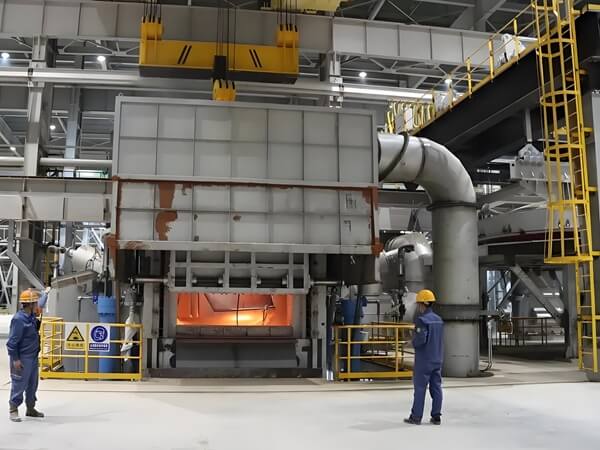
Problem interpretation and solutions in aluminum scrap melting process
Problem interpretation and solutions in aluminum scrap melting process
Problems and Solutions During the Melting Stage of Aluminum Scrap
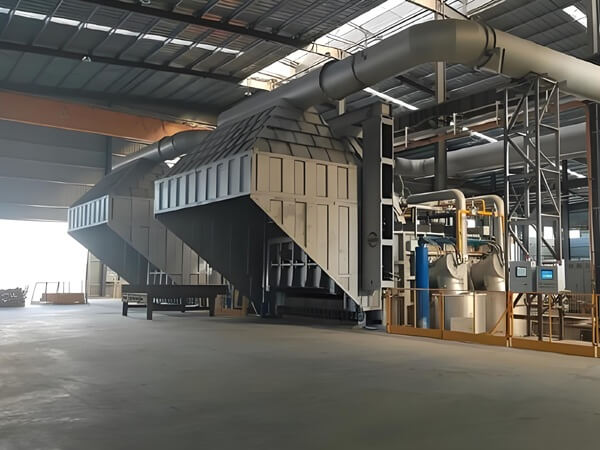
1. Frequent Spattering During Scrap Aluminum Charging
Problem Explanation: Violent spattering during scrap aluminum charging is primarily caused by excessive oil, moisture, or volatile impurities adhering to the scrap aluminum surface.
These substances rapidly evaporate under the high-temperature furnace heat, expanding dramatically and breaking through the surface of the molten aluminum, causing spatter.
Additionally, excessive amounts of aluminum charged to the furnace at once can lead to localized accumulation, preventing heat transfer.
This causes the outer layer of aluminum to melt first, while impurities within the inner layer are concentrated and released, further causing spattering.
Spattering not only causes aluminum loss but can also damage the furnace structure and endanger the safety of operators.
Solution: First, pre-treat the scrap aluminum and remove surface oil and moisture through high-temperature baking.
The baking temperature should be controlled at 120-150℃ and last for 2-3 hours.
Second, use a batch-by-batch method, with the amount added each time not exceeding 30% of the furnace capacity to ensure that the aluminum is evenly heated.
At the same time, set a protective baffle at the furnace mouth to reduce splashing and regularly clean the residue at the bottom of the furnace to avoid local reactions caused by impurity accumulation.
2. Slow melting of aluminum scrap and high energy consumption
Problem Explanation: Slow melting and high energy consumption are often due to the complex shape of the scrap aluminum (e.g., a mixture of large extruded sections and fine aluminum chips), resulting in uneven heating.
Large scrap aluminum has low heat transfer efficiency and requires a long time to melt; fine aluminum chips tend to accumulate, forming “bridges” and hindering heat transfer.
Furthermore, improper furnace temperature settings or insufficient heat supply due to aging heating elements can prolong melting time and increase energy consumption.
Solution: Sorting and crushing the scrap aluminum, cutting large extruded sections into pieces smaller than 50 cm, and compressing the fine aluminum chips into blocks can improve heating uniformity.
Optimizing the furnace temperature profile: Initially heating at 800-850°C for rapid heating, then lowering the temperature to 700-750°C for a sustained period after the aluminum begins to melt.
Regularly inspect heating elements and replace any aging components.
Adding an electromagnetic stirrer to the furnace bottom to accelerate heat transfer can improve melting efficiency by over 20%.
3. Excessive dross appears on the surface of the molten aluminum during melting.
Problem Explanation: Excessive dross is primarily caused by oxidized impurities (such as aluminum oxide and iron oxide) in the scrap aluminum reacting with the molten aluminum during melting, forming high-melting-point complex oxides.
If the melting temperature is too high (above 760°C), the molten aluminum oxidizes faster, generating more aluminum dross.
Furthermore, impurities such as sand, plastic, and other impurities in the scrap aluminum decompose or burn at high temperatures, further increasing the amount of dross.
Excessive dross reduces the purity of the molten aluminum and affects subsequent alloying.
Solution: Strictly control the melting temperature between 700-750°C to reduce oxidation of the molten aluminum.
During the scrap aluminum pretreatment stage, remove ferromagnetic impurities and sand through magnetic separation and screening.
Add an appropriate amount of deslagging agent (such as a mixture of hexachloroethane and sodium chloride, at a concentration of 0.5-1% by weight of the molten aluminum) during melting to promote dross cohesion and separation.
Clean the dross every 30 minutes to ensure a clean surface.
Process the dross with the aluminum dross machine to extract most of the aluminum from the dross to increase the recovery rate and profit.
4. Mixing different grades of scrap aluminum into a melt leads to compositional confusion.
Problem Explanation: Scrap aluminum sources are complex.
Mixing different grades (such as 6-series and 7-series aluminum alloys) into a melt can cause significant fluctuations in the content of alloying elements (such as magnesium, silicon, and zinc) in the molten aluminum, exceeding the target alloy composition range.
For example, zinc from a 7-series aluminum alloy mixed with a 6-series aluminum alloy can reduce the corrosion resistance of the product.
Excessive silicon from a 6-series aluminum alloy mixed with a 5-series aluminum alloy can increase brittleness, ultimately affecting product performance.
Solution: Establish a scrap aluminum classification and recycling system, separating scrap by grade (e.g., 1-series, 3-series, 6-series, and 7-series).
Confirm the composition through spectral analysis before melting.
If minor mixing occurs, perform a post-melting analysis.
Based on the results, adjust the composition by adding pure metals or intermediate alloys. For example, if the zinc content is too high, add an appropriate amount of aluminum-silicon alloy to dilute it.
If the silicon content is insufficient, add ferrosilicon alloy to ensure that the content of each element meets the target grade standard.
5. Localized overheating of the molten aluminum during melting.
Problem Explanation: Localized overheating manifests as temperatures exceeding 800°C in some areas of the furnace, while temperatures in other areas are below 800°C.
This is primarily due to uneven distribution of the furnace’s heating elements or a malfunctioning stirring mechanism, resulting in poor convection of the molten aluminum.
Overheating can exacerbate the loss of alloying elements in the molten aluminum (for example, magnesium is volatile at high temperatures), promote grain size, and reduce the fluidity of the molten aluminum, potentially leading to defects such as shrinkage cavities and cracks during subsequent casting.
Solution: Regularly inspect the furnace heating system to ensure even power distribution of the heating elements.
Enable the stirring mechanism to maintain continuous convection of the molten aluminum, controlling the stirring speed to 30-50 rpm.
Install multiple temperature sensors in the furnace to monitor the temperature of different areas in real time.
If localized overheating is detected, adjust the heating power promptly.
If necessary, pause heating and add a small amount of cold aluminum to balance the temperature.
Alloying Process Problems and Solutions
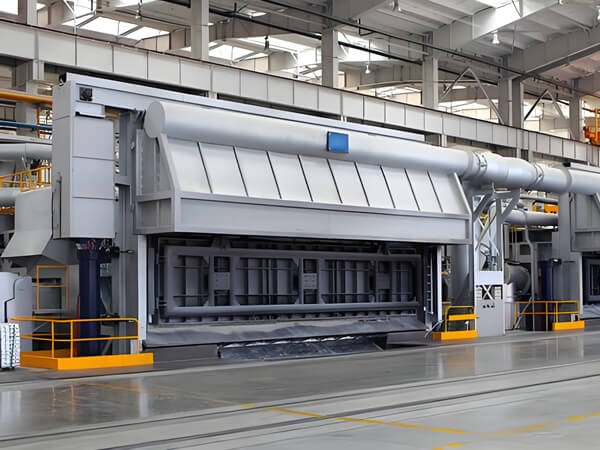
6. Slow Dissolution and Uneven Distribution After Addition of Alloying Elements
Problem Explanation: If metal elements (such as magnesium, silicon, and copper) are added in large chunks during the alloying process or added directly to the surface of the molten aluminum, they will float on the surface due to differences in specific gravity (e.g., magnesium has a lower specific gravity than aluminum), making them difficult to dissolve into the molten aluminum.
This results in slow dissolution and uneven distribution.
For example, silicon has a high melting point (1410°C).
If added directly without pretreatment, undissolved silicon particles can easily form in the molten aluminum, causing hard spot defects in subsequent products.
Solution: Form alloying elements into small chunks or use intermediate alloys (such as aluminum-silicon alloys or aluminum-copper alloys) to reduce dissolution resistance.
Use a dedicated feeding device to add the alloying elements from the center of the molten aluminum to prevent floating.
Increase stirring after addition and extend the stirring time to 15-20 minutes.
Confirm the uniformity of element distribution through sampling and testing to ensure that the alloy composition deviation is within ±0.1%.
7. Excessive alloying element burnout increases costs.
Problem Explanation: Alloying element burnout primarily occurs when alloying elements react with oxygen at high temperatures to form oxides (such as magnesium oxide and copper oxide).
The burnout rate of easily oxidized elements such as magnesium and zinc can reach 10-15%.
Excessive melting temperatures, prolonged exposure of the molten aluminum to air, or excessive air entrainment during stirring can exacerbate this burnout.
Burnout not only increases raw material consumption but also makes composition adjustment difficult, impacting production stability.
Solution: Strictly control the molten aluminum temperature between 720-740°C to reduce the oxidation reaction rate.
Before adding elements, cover the molten aluminum surface with an inert gas (such as nitrogen) or flux (such as sodium fluoride) to isolate the aluminum from air.
Use vacuum melting or a semi-enclosed furnace to minimize contact between the molten aluminum and air.
Increase the element addition amount in advance based on the burnout rate (for example, add 1.1-1.2 times the theoretical requirement for magnesium).
Rapid analysis and timely addition can minimize cost losses.
8. Sudden decrease in aluminum fluidity after alloying
Problem Explanation: Decreased aluminum fluidity manifests as slow filling speeds during pouring, which can easily lead to underfilling.
This is primarily due to an imbalance in alloying element ratios (e.g., excessive silicon content can form a high-melting-point eutectic) or the presence of numerous fine oxide inclusions in the aluminum, which hinder its flow.
Furthermore, rapid cooling after alloying, with the aluminum temperature below 700°C, can also lead to increased viscosity and decreased fluidity.
Solution: Adjust the alloying element ratios through spectral analysis to ensure that elements such as silicon and magnesium are within the optimal range (e.g., 6061 alloy silicon content should be controlled at 0.4-0.8%, magnesium 0.8-1.2%).
Perform secondary refining, adding refining agents to remove oxide inclusions.
If the temperature is too low, reheat to 720-730°C while maintaining stirring to prevent localized cooling.
This can restore the aluminum fluidity.
9. Large amounts of harmful gases are generated during the alloying process.
Problem explanation: Using raw materials with high hydrogen content (such as damp master alloys) during alloying, or allowing the molten aluminum to swirl and entrain air during the addition process, can generate harmful gases such as hydrogen and carbon monoxide.
Hydrogen’s solubility in molten aluminum increases with temperature, and it precipitates during cooling, forming pores.
Carbon monoxide is derived from the combustion of organic impurities, which not only pollutes the environment but also poses a safety hazard.
Solution: Dry the master alloy (at 120°C for 4 hours) to remove moisture.
Add alloying elements slowly to avoid violent swirling of the molten aluminum.
Install an exhaust gas collection device at the top of the furnace to direct harmful gases into a combustion tower for treatment.
Perform degassing immediately after alloying to reduce the hydrogen content of the molten aluminum to below 0.15ml/100g.
10. Alloy composition still fails to meet specifications after multiple adjustments.
Problem Explanation: Repeated adjustments to the alloy composition often result in out-of-spec testing or improper adjustment methods.
For example, sampling and testing without sufficient stirring after adding elements can result in unrepresentative samples.
Alternatively, the element burnout patterns may be neglected, leading to incorrect calculations of the addition amount.
Furthermore, residual aluminum from previous batches left in the furnace may not be completely removed, and mixing with the new aluminum can interfere with the composition, making adjustments difficult.
Solution: Use an online spectrometer to monitor composition in real time and shorten testing cycles.
Stir for at least 20 minutes after adding elements before sampling to ensure uniformity.
Establish an element burnout database to accurately calculate the addition amount based on the burnout rates for different elements, temperatures, and times.
Thoroughly clean the furnace before each batch to avoid cross-contamination.
If necessary, employ this process (retaining a small amount of qualified aluminum as a base material) to improve composition stability.
Degassing Process Problems and Solutions
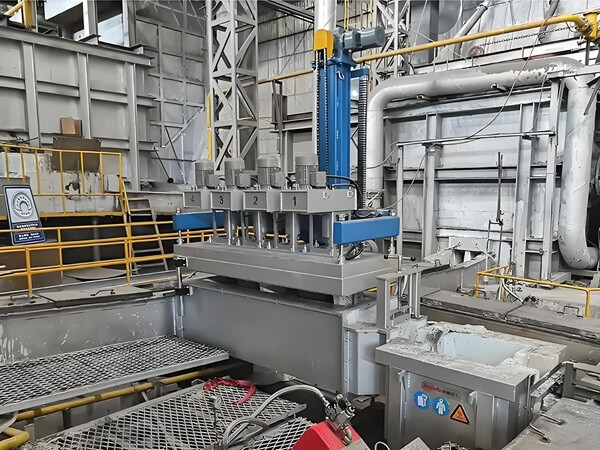
11. Hydrogen Content in Molten Aluminum Still Exceeds Standard After Degassing
Problem Explanation: Hydrogen content exceeding 0.2 ml/100 g after degassing is primarily due to decreased degassing efficiency (e.g., clogged rotary nozzles, insufficient nitrogen purity) or insufficient degassing time.
Hydrogen primarily originates from moisture in the raw materials, combustion of oil, and the reaction of air vapor with high-temperature molten aluminum.
If degassing is incomplete, hydrogen can precipitate during casting, causing defects such as pinholes and air holes.
Solution: Regularly clean the degassing system’s rotary nozzles to ensure unimpeded nitrogen flow;
Use high-purity nitrogen with a purity of ≥99.99% to avoid the introduction of impurities;
Extend the degassing time to 15-20 minutes and increase the nitrogen flow rate (calculated based on the weight of the molten aluminum, 0.5-1 L/min·t);
Test the hydrogen content using the vacuum solidification method after degassing.
Repeat the degassing cycle if it does not meet the standard.
12. Aluminum Molten Temperature Drops Significantly During Degassing.
Problem Explanation: A drop of more than 50°C in aluminum molten temperature during degassing is often caused by a large temperature difference between the degassing device and the aluminum molten metal (e.g., a cold nozzle inserted directly into hot aluminum molten metal) or excessive nitrogen flow, which removes a significant amount of heat.
Excessively low temperatures can reduce the fluidity of the aluminum molten metal, affecting subsequent casting.
They also reduce the solubility of hydrogen in the aluminum molten metal, hindering degassing.
Solution: Preheat the nozzle to 300-400°C before degassing to minimize the temperature difference.
Control the nitrogen flow rate within a reasonable range to avoid excessive cooling.
If the temperature drops too rapidly, activate the furnace heating system to add heat to maintain the aluminum molten metal temperature between 710-730°C to ensure a balance between degassing effectiveness and fluidity.
13. Bubble inclusions in the molten aluminum after degassing.
Problem explanation: If the nitrogen pressure during degassing is too high (over 0.5 MPa) or the nozzle aperture is too small, the nitrogen bubbles formed in the molten aluminum will be too large and unable to float up and escape in time.
Remaining nitrogen bubbles will be trapped in the molten aluminum, forming inclusions.
These bubbles will develop into cracks during the subsequent rolling process, reducing the mechanical properties of the product.
Solution: Adjust the nitrogen pressure to 0.2-0.3 MPa.
Use a nozzle with an aperture of 2-3 mm to ensure that the bubble diameter is 1-3 mm to facilitate buoyancy.
Optimize the nozzle insertion depth (positioned in the middle of the molten aluminum) and rotation speed (150-200 rpm) to ensure even bubble distribution and sufficient contact with the molten aluminum.
After degassing, let the nozzle stand for 5-10 minutes to allow any remaining bubbles to float to the surface.
14. Increased slag on the aluminum melt surface during degassing.
Problem Explanation: During degassing, the rotating nozzle agitates the aluminum melt, increasing its contact area with air and accelerating oxidation, generating new aluminum dross.
If the nitrogen contains oxygen (of insufficient purity), it will also react with the aluminum melt to form aluminum oxide inclusions.
Excessive slag will adhere to the surface of the bubbles, hindering hydrogen escape and reducing degassing efficiency.
Solution: Use high-purity nitrogen (oxygen content ≤ 5ppm) to reduce oxidation reactions.
During degassing, cover the aluminum melt surface with a small amount of refining agent (such as cryolite) to isolate it from air.
After degassing, promptly clean the surface slag to prevent it from re-entering the aluminum melt.
15. Large variations in hydrogen content in different areas of the molten aluminum.
Problem Explanation: After degassing, testing revealed that the hydrogen content in different areas of the molten aluminum varied by more than 0.05 ml/100 g.
This is primarily due to uneven stirring in the degassing device or poor convection within the furnace, resulting in uneven hydrogen distribution.
For example, the molten aluminum in the corners of the furnace is not adequately stirred, resulting in poor degassing and high hydrogen content.
Solution: Check the degassing device’s stirring range to ensure coverage across the entire furnace cross-section.
Adjust the nozzle position so it’s in the center of the furnace to ensure uniform stirring.
Extend the degassing time to 10 minutes to reduce hydrogen content variations through diffusion.
Conduct multi-point sampling and testing to ensure that the hydrogen content in all areas meets the standard.
Difficulties and Solutions in the Refining Process
16. A large number of fine inclusions remain in the molten aluminum after refining.
Problem Explanation: Fine inclusions (such as aluminum oxide and silicon carbide) remaining after refining are primarily caused by improper refining flux selection or insufficient refining time.
Weak refining flux affinity for inclusions prevents effective adsorption of impurities, or insufficient stirring prevents sufficient contact between the refining flux and the molten aluminum, leading to incomplete inclusion removal.
These inclusions can reduce the fatigue strength of the aluminum and form crack sources during subsequent processing.
Solution: Use a composite refining flux (such as a mixture of sodium chloride, potassium chloride, and cryolite in a 3:3:4 ratio) to improve its adsorption capacity for inclusions.
Increase the refining flux dosage to 1-1.5% of the molten aluminum weight and extend the refining time to 20-30 minutes.
Increase stirring to ensure even dispersion of the refining flux in the molten aluminum and improve reaction efficiency.
Utilize a filtration device (such as a ceramic filter plate) to further remove fine inclusions, achieving a filtration accuracy of less than 20μm.
17. Refining flux floats in the molten aluminum and is difficult to dissolve.
Problem Explanation: Floating refining flux is primarily caused by a low specific gravity (for example, the specific gravity of pure sodium chloride is 2.16, which is less than the specific gravity of molten aluminum, 2.7) or by incomplete crushing into fine particles (over 5mm in size), preventing the flux from sinking and fully reacting with the molten aluminum.
Floating refining flux not only wastes raw materials but also forms a crust on the surface of the molten aluminum, hindering heat transfer.
Solution: Crush the refining flux into particles of 2-3mm in size to increase surface area.
Mix with a small amount of aluminum powder (in a 10:1 ratio) to increase the overall specific gravity and promote sinking.
Inject the refining flux deep into the molten aluminum using nitrogen to ensure full contact and reaction.
18. Carbon accumulation in molten aluminum after refining
Problem explanation: Carbon accumulation occurs when the carbon content in the molten aluminum exceeds 0.02%.
This occurs when carbon-containing refining agents (such as graphite powder) or degassing agents (such as hexachloroethane) are used.
These agents decompose at high temperatures to produce carbon, which then dissolves into the molten aluminum.
Excessive carbon content can cause black spots during anodizing, affecting the surface quality.
Solution: Use carbon-free refining agents (such as fluoride-based) instead of carbon-containing agents.
Control the amount of hexachloroethane added (no more than 0.3%) and ensure sufficient decomposition;
Sample and test the carbon content after refining.
If the carbon content exceeds the limit, add a small amount of aluminum-titanium alloy (0.1-0.2%) to remove the carbon through the reaction of titanium and carbon to form TiC precipitation.
19. Aluminum molten viscosity increases significantly during refining.
Problem explanation: Increased aluminum molten viscosity and poor fluidity during refining are often caused by excessive refining flux addition or low temperatures, which prevents some refining flux from fully melting, resulting in solid particles suspended in the molten aluminum and increasing flow resistance.
Furthermore, high-melting-point compounds (such as Na₃AlF₆) generated during refining can also increase aluminum molten viscosity.
Solution: Strictly control the amount of refining flux added to no more than 1.5% of the molten aluminum weight;
Maintain the molten aluminum temperature between 720-740°C to ensure complete melting of the refining flux;
Allow the molten aluminum to stand for 10 minutes after refining to allow solid particles to settle to the bottom of the furnace and reduce suspended impurities.
20. Significant Fluctuations in Molten Aluminum Composition After Refining
Problem Explanation: Deviating from target alloying element contents after refining is primarily due to chemical reactions between refining agents and alloying elements (e.g., fluoride reacts with magnesium to form MgF2), resulting in element burnout;
or the introduction of impurity elements (e.g., calcium and sodium) into the refining agent, contaminating the molten aluminum.
For example, using a refining agent containing sodium can cause the sodium content in the molten aluminum to exceed the standard, leading to “sodium embrittlement” during subsequent processing.
Solution: Select a refining agent that is highly inert to alloying elements (e.g., avoid using fluoride-based refining agents for alloys with high magnesium content);
Conduct a refining agent composition test before use to ensure that impurity element content meets the standard (calcium ≤ 0.01%, sodium ≤ 0.001%);
Promptly test the alloy composition after refining and, if necessary, make additional adjustments to ensure compliance with standard requirements.
Conclusion
Many of the difficult issues encountered during scrap aluminum melting are closely related to raw material pretreatment, process parameter control, and equipment status.
By optimizing pretreatment processes, precisely controlling temperature and time, rationally selecting auxiliary materials, and strengthening equipment maintenance, these issues can be effectively resolved, improving the purity and stability of molten aluminum and providing high-quality billets for subsequent processing.
A comprehensive testing and feedback mechanism must be established during production, allowing for dynamic process adjustments based on actual conditions to ensure efficient and stable production.
More Information I Want To Know
 The comprehensive treatment process of secondary aluminum dross and economic benefit analysis
- Turn aluminum dross into a wonder with aluminum dross processing system
- Aluminium scrap recycling
- All information you need to know about aluminum melting furnace
- Cost Control Measures in Aluminum Melting Process
- Aluminum melting regenerative combustion system