A Comprehensive Analysis of Skimming, Furnace Cleaning and Furnace Washing Processes in Aluminum Melting
A Comprehensive Analysis of Skimming, Furnace Cleaning and Furnace Washing Processes in Aluminum Melting
Aluminum melting is a core process in the aluminum processing industry.
Its process control directly determines the purity of the molten aluminum, the stability of its chemical composition, and the final mechanical properties, surface quality, and yield of the aluminum product.
In the entire melting process, routine skimming, deep furnace cleaning, and furnace washing are three key furnace cleaning and purification operations.
Although all three fall under the category of impurity removal and cleaning, their application scenarios, operational purposes, implementation procedures, and technical parameters differ significantly.
They correspond to three core stages in the melting process: routine skimming, periodic deep furnace cleaning, and thorough purification after alloy conversion/furnace maintenance.
This article will provide a comprehensive analysis of these three processes, covering their core objectives, specific operational steps, quantified technical parameters, key process points, and precautions, offering technical references for the standardized and refined management of aluminum melting production.
1. Aluminum melting standard skimming process
Standard dross removal is the most frequent and basic purification operation in the aluminum alloy melting process.
It runs through multiple core stages such as raw material melting, composition adjustment, refining and settling.
It is a routine furnace surface dross cleaning process and is the first line of defense to ensure the basic purity of the molten aluminum.
It is also a key means to maintain melting efficiency.
1.1 The core purpose of ordinary skimming
1.1.1. Removing dross to improve the purity of molten aluminum:
During the melting process of aluminum alloy raw materials, molten aluminum undergoes an oxidation reaction with oxygen, water vapor, and furnace gases in the air, generating a large amount of dross mainly composed of aluminum oxide (Al₂O₃).
Simultaneously, impurities such as mud, oil, and rust in the raw materials also float on the surface of the molten aluminum.
If not removed in time, the dross will be drawn into the interior of the molten aluminum during stirring and heating, forming non-metallic inclusions.
This leads to defects such as porosity, inclusions, and cracks in subsequent ingot castings, significantly reducing the mechanical properties of the aluminum.
Ordinary skimming can quickly remove the dross, block the dross entrapment channels, and ensure the purity of the molten aluminum.
1.1.2 Reducing aluminum melt loss and improving metal recovery rate:
Aluminum dross is not entirely composed of oxides; it usually contains a large number of liquid aluminum beads.
If these beads remain in the furnace for a long time, they will continue to oxidize and burn off, resulting in metal loss.
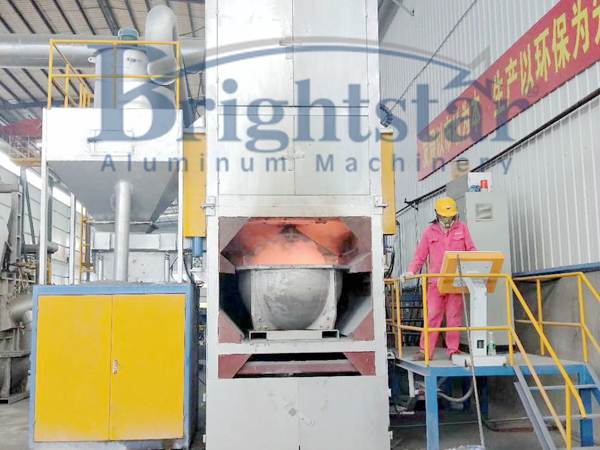
Timely skimming and recovering aluminum from aluminum dross with an aluminum dross machine can effectively reduce unnecessary aluminum melt loss, improve metal recovery rate, and lower production costs.
1.1.3 Optimizing melting heat transfer efficiency and stabilizing furnace temperature:
Dross, due to its loose texture and extremely poor thermal conductivity, forms an insulating layer on the surface of molten aluminum, hindering heat transfer and resulting in slower heating, increased energy consumption, and uneven temperature distribution within the furnace.
Removing the dross exposes the molten aluminum surface directly, allowing for smoother heat transfer, faster attainment of the target melting temperature, shorter melting cycles, and reduced gas/electricity consumption.
1.1.4 To create clean conditions for subsequent processes
The skimming is performed before processes such as composition adjustment, refining, sampling, and casting.
This avoids dross interfering with the uniform melting of alloying elements and the full reaction of refining agents.
It also ensures the accuracy of sampled components and prevents dross from mixing into the molten aluminum and affecting subsequent refining and settling effects
1.2 The specific operating procedure for ordinary skimming is as follows
Ordinary dross skimming should follow the principles of “preheating tools, applying slagging agents, gentle skimming, and aluminum and dross separation.”
Violent stirring of the molten aluminum should be avoided throughout the process to prevent secondary oxidation and the introduction of dross.
The specific steps are as follows:
1.2.1 Tool Preheating and Preparation:
Before dross skimming, preheat specialized tools such as graphite slag removers and stainless steel slag rakes in the furnace opening for 2-3 minutes to remove surface moisture and dampness.
This prevents cold tools from contacting hot molten aluminum, which could cause splashing and sudden cooling, and also prevents moisture from entering the furnace and increasing hydrogen content.
Simultaneously, prepare dry slagging agent and an aluminum dross trolley and check the furnace ventilation and exhaust systems.
1.2.2. Temperature Control
After the aluminum melt is completely melted, control the temperature at 710-750℃ (adjust slightly according to the alloy grade.
710-730℃ for pure aluminum and 6-series aluminum alloys, and 730-750℃ for high-alloy aluminum alloys).
Within this temperature range, the aluminum melt has moderate fluidity, and aluminum dross is loose and easy to remove.
If the temperature is too low, the dross will be sticky and difficult to separate, and if the temperature is too high, it will aggravate the oxidation and burning loss of the aluminum melt.
1.2.3 Apply slagging agent
Evenly apply a slagging agent (mainly composed of cryolite, zinc chloride, fluoride composites, etc.) along the surface of the molten aluminum, controlling the application amount to 0.3%-0.5% of the total mass of the molten aluminum.
The slagging agent reacts with the alumina slag, disrupting the slag-aluminum interface, causing aluminum beads trapped in the slag to precipitate.
Simultaneously, it causes the dispersed dross to agglomerate, forming a loose, easily removable slag layer, preventing the molten aluminum from being lost with the slag during removal.
1.2.4 Slag Gathering and Removal:
After applying the additive, let it stand for 1-2 minutes to allow the slag to fully gather.
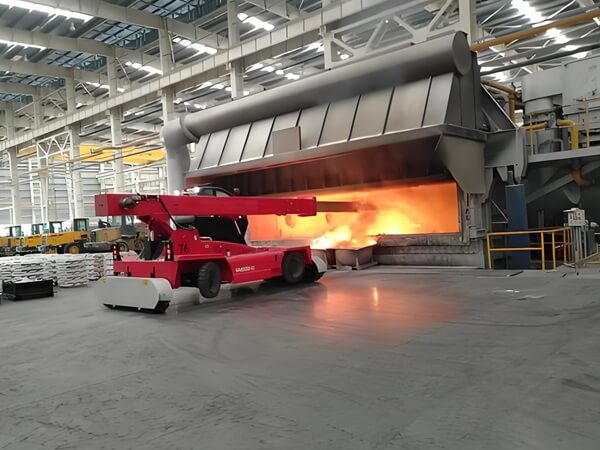
Then, using a preheated skimming tool, slowly gather the dross along the furnace walls towards the center of the furnace opening.
The movements should be gentle and steady; avoid vigorous, agitation to prevent the slag from sinking into the molten aluminum.
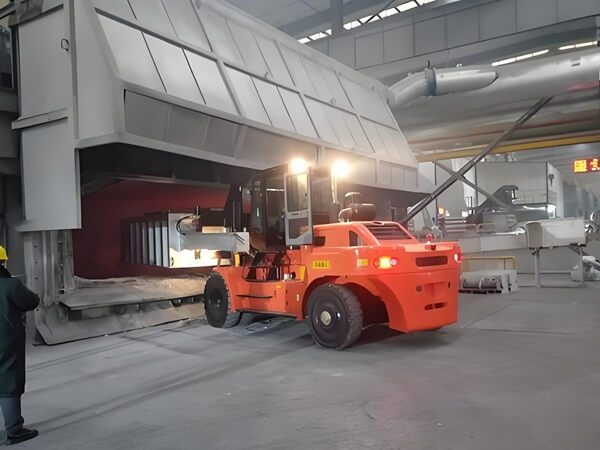
Once gathered, carefully remove the clumps of slag into the aluminum dross trolley. Z
Repeat this process 2-3 times until the surface of the molten aluminum is free of visible slag and a bright, clean surface is exposed.
1.2.5. After skimming processing
After aluminum dross skimming is completed, the aluminum dross trolley should be promptly transferred to the dross machine or designated storage area, the skimming tools should be cleaned and returned to the designated location.
If refining or composition adjustment is required later, the next process can be carried out immediately.
If it needs to be left to hold, a small amount of covering agent can be sprinkled on the surface of the molten aluminum to prevent secondary oxidation.
1.3 Quantitative technical parameters of ordinary dross skimming
Parameter Category
Specific Indicator
Note
Operation temperature
710-750℃
Depending on the alloy grade, the temperature for high-magnesium aluminum alloys should be appropriately lowered by 5-10℃.
Slagging agent dosage
0.3%-0.5% of the total mass of molten aluminum
Take the upper limit when it is rainy season or when there are many impurities in the raw materials.
Tool preheating time
2-3 seconds
Ensure the tool temperature is close to the temperature of the molten aluminum.
Skimming frequency
2-3 times per batch
Once each during the middle of melting, before alloying, and after refining.
Thickness of slag layer after skimming
≤15mm
There was no residual slag on the furnace surface, and the surface of the molten aluminum was bright.
Aluminum content in dross
≤15%
Reduce metal loss through the subsequent aluminum dross recycling process
Single furnace skimming time
5-8 minutes
Avoid keeping the furnace open for extended periods to reduce heat loss and oxidation.
1.4 Key points of the ordinary aluminum dross skimming process:
It is strictly forbidden to use unheated iron tools to directly contact molten aluminum to avoid iron contamination of the molten aluminum.
Keep the furnace door half open during aluminum dross skimming to reduce air entering the furnace and causing secondary oxidation.
Try to avoid touching the furnace lining when removing slag to prevent damage to the refractory material of the furnace wall.
For high magnesium aluminum alloys, a sodium-free slagging agent should be used to prevent sodium embrittlement.
2. Cleaning process of aluminum melting furnace
The furnace deep cleaning is a periodic deep cleaning operation in aluminum melting production.
It is a core process for furnace maintenance and deep impurity removal.
Unlike ordinary aluminum dross skimming for surface cleaning, the deep cleaning furnace needs to thoroughly remove deposited slag, refractory material spallings, and long-term residual metal impurities from the furnace bottom, furnace walls, and furnace corners.
It is suitable for furnace cleaning after multiple continuous production cycles and is key to ensuring the service life of the furnace and the long-term stability of the quality of molten aluminum.
2.1 Core Purpose of the Cleaning Furnace
2.1.1. Removing Stubborn Slag from the Furnace and Preventing Impurity Accumulation:
Ordinary aluminum dross only cleans the surface of molten aluminum.
During long-term melting, some denser inclusions and incompletely removed slag will deposit at the bottom of the furnace, bonding with the furnace lining at high temperatures to form a hard slag layer.
A large amount of slag will also adhere to the furnace walls and corners.
This slag cannot be removed by ordinary skimming and will continuously contaminate the molten aluminum in subsequent furnaces, leading to excessive inclusion content and fluctuations in chemical composition.
The cleaning furnace can completely remove these stubborn slags, preventing the long-term accumulation of impurities.
2.1.2. Repairing Furnace Lining Condition and Extending Furnace Lifespan:
Long-term accumulation of slag in the furnace will compress and erode the refractory lining, causing it to crack and peel off.
This not only reduces the furnace’s insulation performance and increases energy consumption but also allows refractory material debris to mix into the molten aluminum, forming new impurities.
By cleaning slag with the cleaning furnace, the condition of the furnace lining can be checked in a timely manner, and minor peeling areas can be repaired, preventing further damage to the furnace lining and extending the service life of the melting furnace.
2.1.3 To ensure stable aluminum molten metal composition and reduce quality fluctuations
After multiple batches of continuous production, residual alloy components and impurities accumulate in the furnace, causing subsequent batches of aluminum molten metal to deviate from standards.
This is especially true for workshops producing multiple grades of aluminum alloys, where impurities from the slag can continuously seep into the molten metal, leading to excessive composition.
A thorough furnace cleaning can completely remove residual impurities, ensuring the stability and consistency of the aluminum molten metal composition in each batch.
2.1.4. Optimizing furnace space and improving smelting efficiency:
Slag buildup on the furnace bottom and walls occupies the effective furnace volume, reducing the amount of charge per batch.
Simultaneously, the slag layer hinders heat transfer, reducing heating efficiency.
After a thorough furnace cleaning, the effective furnace space is restored, heat transfer efficiency is improved, the melting cycle can be shortened, and energy consumption per unit product can be reduced.
2.2 The specific operating procedure for the cleaning furnace is as follows:
The cleaning furnace operation must be carried out after the furnace has been shut down and all molten aluminum has been drained.
It is more difficult than ordinary aluminum dross skimming and requires proper furnace cooling and safety precautions.
The specific steps are as follows:
2.2.1. Furnace Shutdown and Cooling:
After pouring the current batch of molten aluminum, stop heating, shut down the combustion system, and completely drain the remaining molten aluminum from the furnace to avoid any residue.
Allow the furnace temperature to naturally drop to 500-600℃ (too high a temperature can burn operators, too low a temperature will cause slag to harden and become difficult to remove).
Open the furnace door and ventilation openings to ensure air circulation within the furnace, and implement high-temperature and dust protection measures.
2.2.2. Preliminary Cleaning of Surface Dross:
First, use ordinary skimming tools to clean the remaining surface slag inside the furnace, removing loose slag adhering to the furnace opening and upper furnace walls.
This creates conditions for subsequent deep cleaning and prevents large pieces of slag from falling and affecting the cleaning of slag deposits at the furnace bottom.
2.2.3 Slag Softening Treatment:
Evenly spread a layer of powdered furnace cleaning flux on the slag-covered areas of the furnace bottom and walls.
The amount spread should be 0.8%-1.2% of the slag-covered area.
Simultaneously, briefly raise the furnace temperature to above 800℃ and hold for 15-20 minutes to soften and loosen the hardened slag, reducing the difficulty of removal and preventing damage to the furnace lining during removal.
2.2.4. Deep Slag Removal:
After the slag has softened, use specialized tools such as a triangular shovel and a long-handled hammer to first remove the slag around the furnace walls, then clean the slag deposited at the furnace bottom.
Pay special attention to cleaning areas prone to slag accumulation, such as furnace corners, aluminum tapholes, and near burners, ensuring the furnace lining surface is completely exposed and free of residual slag and impurities.
During the cleaning process, be gentle and avoid forcefully striking the furnace lining to prevent refractory material from falling off.
2.2.5. Furnace Lining Inspection and Repair
After slag removal, thoroughly inspect the furnace lining surface.
Repair and smooth any minor cracks or peeling with refractory mortar of the same material.
If the lining is severely damaged, production must be suspended for professional repair; production must not continue with a damaged lining.
2.2.6. Furnace Cleaning and Preheating
Use a vacuum cleaner and broom to thoroughly clean the furnace of any slag and refractory debris removed, ensuring no residue remains.
Close the furnace door and slowly preheat the furnace to 600-700℃ for 1-2 hours to remove moisture before starting the next batch of production.
2.3 Quantitative technical parameters of the furnace cleaning
Parameter
Specific quantitative indicators
Note
Cleaning Period
Ordinary products are produced in 5-15 batches continuously, while special products are produced in 1-3 batches.
Adjustments are made based on the impurity content of the raw materials and the alloy grade; higher impurity content results in a shorter production cycle.
Operation temperature
Initial cooling: 500-600℃; slagging and softening: ≥800℃; subsequent preheating: 600-700℃.
Strictly control the temperature gradient to avoid cracking of the furnace lining due to sudden cooling and heating.
Flux dosage for furnace cleaning
Slag coverage area: 0.8%-1.2%
When the slag becomes hard, take the max limit.
Slagging softening and heat preservation time
15-20 minutes
Ensure the sludge is completely loose
Residual slag thickness in furnace lining
≤2mm
The furnace lining surface is smooth and free of obvious protrusions or slag.
Single furnace cleaning time
2-3 hours
Includes the entire process of cooling, cleaning, and preheating.
Furnace lining repair standards
Cracks ≤1mm wide and peeling area ≤5cm² can be repaired on-site.
Furnace shutdown and major overhaul required if standards are exceeded.
2.4 Key points of the furnace cleaning process:
The furnace cleaning must be carried out after all the molten aluminum has been drained from the furnace. It is strictly forbidden to operate with molten aluminum in the furnace.
During the cleaning process, personal protective equipment should be worn, including high-temperature resistant gloves, protective masks, and dust masks.
The cleaning flux must be dry and free of lumps to avoid moisture and failure.
The cleaned slag must be stored separately.
Recyclable aluminum slag should be specially treated, and refractory waste should be disposed of according to hazardous waste standards.
After the furnace cleaning, the furnace should be preheated with an empty furnace to prevent moisture in the furnace from causing hydrogen absorption and porosity defects in the molten aluminum.
3. Furnace washing process
Furnace washing is the most thorough furnace purification operation in aluminum alloy smelting.
It is a mandatory process under special circumstances and is mainly used in scenarios such as alloy grade conversion, after new/intermediate/major furnace repairs, restarting a furnace after a long-term shutdown, and before producing high-purity aluminum alloys.
By flushing and dissolving residual impurities and heterogeneous alloy components in the furnace with molten aluminum, the furnace body is 100% clean, eliminating alloy mixing and impurity contamination.
It is a core process to ensure the quality of high-end aluminum materials and special aluminum alloys.
3.1 The core purpose of furnace washing
3.1.1. Thoroughly remove residual alloys from the furnace to prevent mixing of components.
When a production workshop changes alloy grades, especially from high-alloy aluminum alloys to pure aluminum, low-alloy aluminum alloys, or from aluminum alloys containing trace elements (such as Sr, Na, Mg) to aluminum alloys sensitive to impurities, residual alloy components from the previous furnace can seep into the new furnace’s molten aluminum, leading to excessive composition and substandard alloy performance.
Furnace washing can completely dissolve and remove residual alloys using specialized cleaning materials, achieving zero composition within the furnace.
3.1.2. Purifying Deep-Seated Impurities in Furnace to Meet High-Purity Production Requirements:
Newly repaired or overhauled melting furnaces often retain refractory dust and construction impurities inside the lining.
Furnaces that have been shut down for extended periods easily absorb dust and moisture.
When producing high-purity aluminum alloys for aerospace and electronics, extremely high impurity content is required, and ordinary slag removal and furnace cleaning cannot completely remove trace impurities.
Furnace washing, through repeated flushing with molten aluminum, removes deep-seated impurities and trace harmful elements from the furnace body, meeting the purity requirements for high-end aluminum production.
3.1.3. Removing Moisture-Absorbing Gases from the Furnace and Reducing the Hydrogen Content in Molten Aluminum:
After furnace maintenance or long-term shutdown, the refractory lining absorbs a large amount of water vapor from the air.
This water vapor decomposes into hydrogen during smelting, which, when dissolved in the molten aluminum, can cause porosity and pinhole defects in the ingots.
During furnace washing, the high-temperature molten aluminum dries the furnace lining and removes moisture.
Simultaneously, the washing process refines and removes hydrogen from the furnace, reducing the hydrogen content in the subsequent molten aluminum.
3.1.4. Inspect the furnace body’s sealing performance to ensure production safety.
After a new or major overhaul, the furnace body can be inspected for the quality of the furnace lining, the sealing performance of the furnace door, and the unobstructed flow of aluminum outlets through the high temperature and molten material washing process.
This allows for the timely detection of potential safety hazards such as leaks and cracks, preventing accidents such as molten aluminum leakage and furnace body damage during formal production.
3.2 Specific operating procedures for furnace cleaning
The furnace cleaning operation consists of four core stages: pre-treatment of the large-scale furnace washing, melting of aluminum washing charge, furnace flushing, and slag removal. It is essential to strictly adhere to the principle of “cleaning before washing, multiple rinsings, and thorough slag removal” to ensure the effectiveness of the furnace cleaning.
The specific steps are as follows:
3.2.1. Pre-treatment of Furnace Cleaning
Before furnace washing, a thorough large-scale furnace cleaning operation must be completed.
Following the large-scale furnace cleaning procedure, all slag and impurities inside the furnace must be removed, furnace lining defects repaired, debris swept away, and the furnace preheated to 600℃ to dry out moisture.
Preventing impurities from interfering with the furnace washing effect is a prerequisite for the furnace washing process.
3.2.2. Melting of furnace washing charge
Use pure aluminum ingots or recycled low-alloy materials of the same series as the furnace washing charge (the use of raw materials for production is prohibited).
The amount of furnace washing charge should not be less than 20%-40% of the furnace’s rated capacity (40% for newly repaired or overhauled furnaces, and 20% for ordinary alloy conversion).
Load the furnace washing charge into the furnace in batches, close the furnace door, and heat to 800-850℃ to ensure that the furnace washing charge is completely melted and forms a uniform molten aluminum.
3.2.3. High-Temperature Stirring and Furnace Flushing:
After the molten aluminum reaches 800-850℃, hold it at that temperature for 20-30 minutes.
Thoroughly stir the molten aluminum using a stirring tool, repeating the stirring at least three times, with 20-30 minute intervals between each stirring.
During stirring, ensure the molten aluminum fully flushes all parts of the furnace, including the bottom, walls, and corners, dissolving any residual impurities and dissimilar alloy components.
After stirring, add a small amount of refining agent to refine and degas the molten aluminum.
Let it stand for 10 minutes, then remove any surface slag.
3.2.4. Multiple Furnace Washing and Draining:
A single furnace wash cannot achieve a thorough purification effect; the process of “charging-melting-stirring-slag removal-draining” must be repeated 2-3 times.
After each furnace washing, the molten aluminum in the furnace must be completely drained, with no residue.
The molten aluminum from the first furnace wash should be discarded or cast into scrap ingots.
The molten aluminum from the second and third furnace washes can be used as raw materials for low-grade aluminum materials, but is strictly prohibited from being used in the production of qualified products.
3.2.5. Furnace body treatment after cleaning:
After the last washing and draining of the molten aluminum, close the furnace door, raise the furnace temperature to 700℃ and hold for 1 hour to further dry the moisture in the furnace lining, and then cool down to the target melting temperature before loading new materials to produce formal products.
3.3 Quantitative technical parameters of furnace washing
Parameter
Specific quantitative indicators
Note
Application
Alloy conversion, furnace body renovation/overhaul, long-term shutdown (≥24h), high-purity aluminum production
Mandatory process, cannot be omitted
Furnace washing material usage
20%-40% of the furnace’s rated capacity
For newly built/overhauled furnaces and high-purity production, 40% is allocated.
Furnace washing temperature
800-850℃
Higher than conventional smelting temperature, enhancing impurity dissolution ability.
Number of stirring times
Each batch should consist of ≥3 cycles, with an interval of 20-30 minutes between each cycle.
All-round flushing of the furnace body
Furnace washing times
2-3 furnaces
Newly repaired/overhauled furnaces and high-impurity furnaces require 3 furnace cycles.
Standards for residual impurities after furnace washing
The impurity content of the aluminum melt sample is ≤0.05%.
Meets the purity requirements of the alloy to be produced.
Single furnace washing time
3-4 hours
Includes melting, stirring, and furnace discharge processes.
Furnace lining drying temperature
700℃, keep for 1 hour
Thoroughly remove moisture from the furnace
3.4 Key points of furnace washing process:
The furnace washing material must be pure aluminum or low-impurity recycled material.
The use of alloy raw materials intended for production is strictly prohibited to avoid premature contamination of the furnace body.
The furnace washing temperature must be strictly controlled between 800-850℃.
Too low a temperature will not effectively dissolve residual impurities, while too high a temperature will exacerbate damage to the furnace lining.
Each furnace washing must completely drain the molten aluminum to prevent residue.
During the furnace washing process, proper waste gas treatment is essential; gases volatilized from slag removal agents and refining agents must be discharged through the exhaust system.
After furnace washing, samples must be taken to test the purity of the molten aluminum; formal production can only commence after the purity meets the standards.
4. Comparison of Core Differences in Three Processes and Recommendations for Production Control
4.1 Core Differences in skimming, furnace Cleaning, and Furnace Washing
Process Name
Application
Purpose
Depth
Frequency
Temperature Control
Skimming
Normalization of the entire melting process
Remove surface dross and optimize heat transfer
Surface dross removal
2-3 times per batch
710-750℃
Cleaning
Continuous production followed by periodicity
Remove slag and repair furnace lining
Deep Slagging Cleaning Inside the Furnace
5-15 batches once
500-600℃(cleaning)≥800℃(Softening)
Washing
Alloy conversion, furnace body maintenance
Thorough purification to prevent mixing
Furnace body comprehensive deep purification
Implement on demand for special scenarios
800-850℃
4.2 Production Control Recommendations:
*Tiered Implementation, Clear Responsibilities:
Routine production primarily involves ordinary skimming to ensure the basic purity of each furnace of molten aluminum; periodic large-scale furnace cleaning is conducted to maintain furnace operating conditions; furnace washing must be performed during alloy conversion and furnace maintenance to eliminate potential quality hazards.
These three processes are not interchangeable.
*Precise Parameter Control:
Strictly adhere to quantified parameters, especially core indicators such as temperature, agents dosage, and furnace washing frequency, avoiding arbitrary adjustments.
Establish a process parameter record sheet to achieve full traceability.
*Raw Material and Auxiliary Material Control:
Select low-impurity aluminum alloy raw materials to reduce slag and slag formation; slag removal agents, furnace cleaning agents, and furnace washing materials must meet industry standards, be dry and free of impurities, and avoid introducing new contaminants.
*Professional Personnel Training:
Operators must be proficient in the operational points and safety regulations of the three processes, understand the applicable scenarios of different processes, and prevent aluminum contamination, furnace damage, and safety accidents caused by improper operation.
5. Conclusion
The ordinary skimming, furnace cleaning, and furnace washing are core purification processes in aluminum alloy melting that are progressive and complementary.
Ordinary skimming strengthens the quality defense line for daily production, furnace cleaning maintains the long-term stable operation of the furnace, and furnace washing ensures ultimate purity in special scenarios.
In aluminum alloy melting production, only by accurately grasping the core objectives of these three processes, standardizing operating procedures, strictly implementing quantitative parameters, and implementing them in stages according to production scenarios can we effectively improve the purity and compositional stability of molten aluminum, reduce energy consumption and metal loss, extend the service life of the furnace, and ultimately achieve efficient and stable production of high-quality aluminum alloys, meeting the quality requirements of aluminum materials in different fields.
As the aluminum alloy industry develops towards high-end and refined products, the standardization and intelligent management of these three processes will become the core direction for future melting technology upgrades, and is of great significance for promoting the high-quality development of the aluminum processing industry.
Majored in electromechanical engineering, served in aluminum extrusion for 8 years, aluminum equipment for 16 years, currently working as a sales engineer at Brightstar Aluminum Machinery. Rich experience in aluminum extrusion equipment and melting and dross processing fields.