What is calcining process of rotary kiln for aluminum dross?
What is calcining process of rotary kiln for aluminum dross?
The rotary kiln calcining process for aluminum dross transforms hazardous waste into high-value-added products, achieving the dual goals of harmless treatment and resource utilization of aluminum dross.
High-temperature dynamic processing thoroughly decomposes harmful substances, producing high-quality raw materials such as α-Al₂O₃, thus promoting the green transformation of the aluminum industry and representing a key practice in the circular economy.
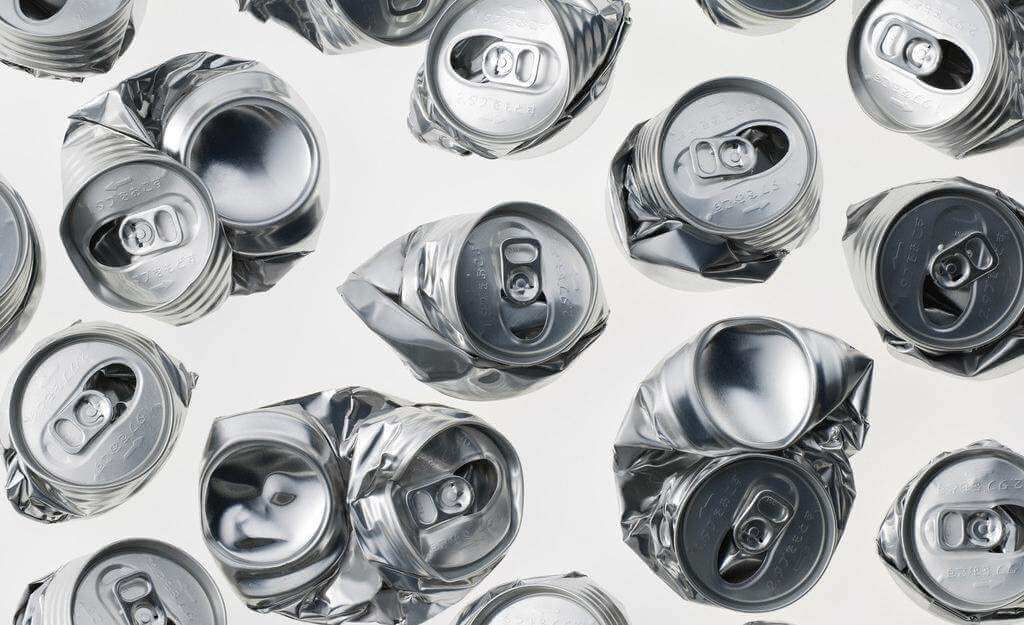
Aluminum dross, a solid waste generated during aluminum melting and processing, has a complex composition, containing a certain amount of metallic aluminum, alumina, and various salts.
Improper handling not only results in a huge waste of aluminum resources but also causes serious pollution to soil and water bodies
With unprecedented global emphasis on resource recycling and environmental protection, the safe, efficient, and resource-oriented disposal of aluminum dross has become a core issue for the sustainable development of the aluminum industry.
Among numerous processing technologies, the rotary kiln calcination process, with its unique advantages, has gradually emerged as a mainstream and key technological path for achieving the harmless and resource-oriented comprehensive utilization of aluminum dross.
1. Basic Principles and Processes of Rotary Kiln Calcination of Aluminum Dross
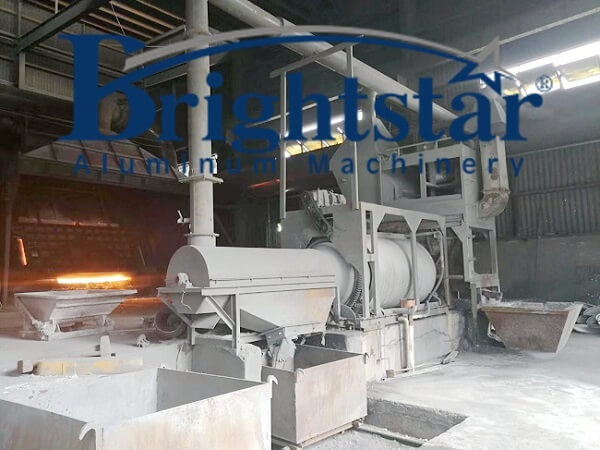
The core of the rotary kiln calcination process lies in utilizing a slowly rotating, inclined cylindrical high-temperature kiln to provide a dynamic and uniform reaction environment for the heat treatment of aluminum dross.
The process involves a complex series of physicochemical changes, primarily aimed at removing harmful impurities and achieving component transformation.
Pretreatment is the first step.
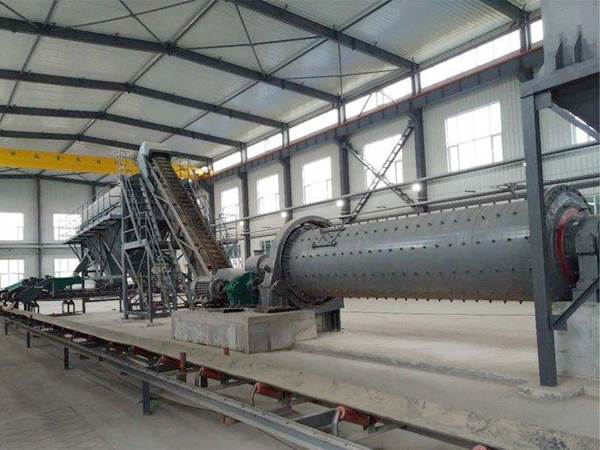
The raw aluminum dross must first undergo screening and crushing with a ball mill and screening machine to obtain a relatively uniform particle size, ensuring the uniformity of subsequent calcination.
More importantly, to improve the recovery rate of metallic aluminum and reduce the load on subsequent processes, processes such as dross processing and ball milling and screening are typically used to pre-recover a portion of the metallic aluminum.
The resulting secondary aluminum dross (i.e., residual dross after aluminum extraction) is the main target for rotary kiln calcination.
The calcination process is carried out continuously inside the rotary kiln.
Pretreated aluminum dross is added from the high end of the kiln tail.
As the kiln rotates slowly (usually 1-4 revolutions per minute) and at a certain tilt angle (2-5%), the material moves towards the low end of the kiln head under gravity.
Simultaneously, fuel (such as natural gas, diesel, or pulverized coal) and combustion air are injected from the kiln head and burned, forming a high-temperature airflow in the opposite direction to the material flow (common in counter-current operation).
Heat is transferred to the material through radiation, convection, and conduction.
During its journey from the kiln tail to the kiln head, the aluminum dross undergoes a series of key reactions:
Drying and Dehydration Section:
The material temperature rises to approximately 200-300℃, and free water and some water of crystallization are evaporated and removed.
Medium-Temperature Reaction Section:
The temperature rises to 500-800℃, and harmful soluble salts such as chlorides (e.g., NaCl, KCl, MgCl2) and fluorides in the aluminum dross begin to volatilize (sublimate) in large quantities and are discharged with the flue gas, achieving harmless removal.
Simultaneously, the small amount of metallic aluminum remaining in the aluminum dross may be further oxidized.
High-temperature calcining section:
In the highest temperature zone at the kiln head (typically controlled at 1200-1450℃), a core mineral phase transformation occurs.
Amorphous or active alumina (such as γ-Al₂O₃) and aluminum compounds, such as aluminum hydroxide, in the alumina dross undergo a phase transformation at high temperatures, ultimately transforming into chemically stable, higher-value-added mineral phases such as α-alumina (α-Al₂O₃) or calcium aluminate.
This process further ensures the complete decomposition or solidification of harmful components.
The calcined dross is discharged from the kiln head and, after cooling, becomes the final product.
The high-temperature flue gas containing volatiles and dust is discharged from the kiln tail and enters the subsequent complex flue gas treatment system.
2. Key Components and Technical Points of the Aluminum Dross Rotary Kiln Calcination Process System
A complete aluminum dross rotary kiln calcination system is far more than just the kiln itself; it is a sophisticated engineering project integrating multiple subsystems.
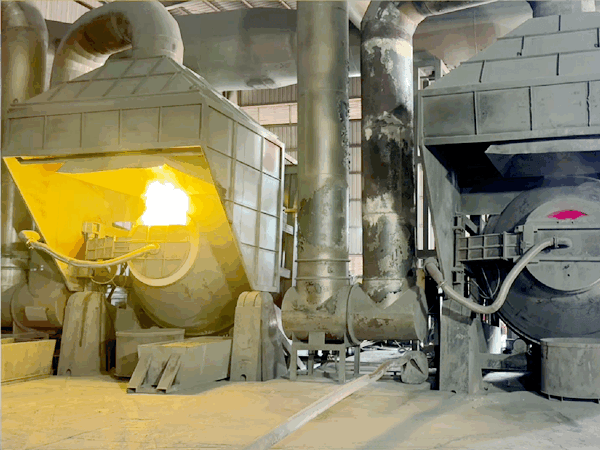
The rotary kiln itself is the core equipment.
Its length-to-diameter ratio, rotational speed, and inclination design directly affect the material residence time (typically 1-4 hours) and thermal regime.
The kiln interior is often sectioned with refractory bricks of different materials to withstand chemical erosion and mechanical wear in different temperature zones.
The sealing devices at the kiln head and tail are crucial to preventing air leakage that could affect energy efficiency and operational stability.
The combustion and heating system is responsible for providing a stable and controllable high-temperature environment.
Advanced low-NOx burners help reduce nitrogen oxide formation.
Precise fuel and combustion air ratios are crucial for controlling the furnace atmosphere (oxidizing or weakly reducing) and temperature profile.
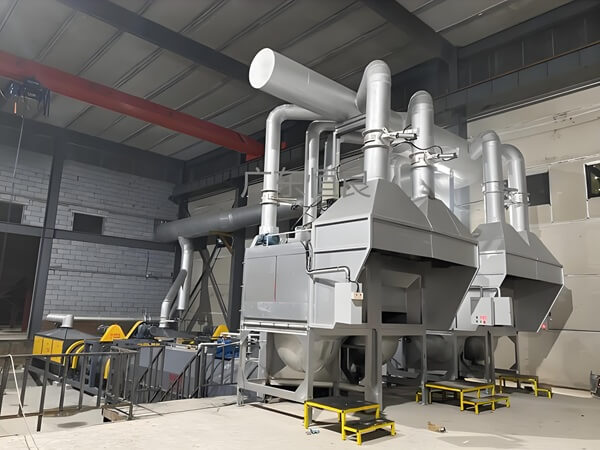
The flue gas treatment system is the lifeline for environmental compliance and also represents a significant technical challenge.
Aluminum dross calcination flue gas has a complex composition, characterized by high dust content, rich chlorides (HCl, alkali metal chloride vapors), fluorides (HF), and potential dioxins and sulfur oxides.
The system typically employs a combined process of “quick cooling + baghouse dust collection + wet scrubbing.”
The high-temperature flue gas is first rapidly cooled to below 200°C by a waste heat boiler or quench tower to avoid the dioxin resynthesis temperature range; then, submicron-sized alkali salt dust is collected by a baghouse dust collector; finally, it enters a wet scrubbing tower (such as a spray tower or packed tower) where acidic gases (HCl, HF, SO2) are neutralized and absorbed with alkaline solutions (such as NaOH).
The scrubbing wastewater requires further treatment to achieve zero discharge or crystallization and salt separation.
Desulfurization and denitrification (SCR or SNCR) units may also be configured according to environmental protection requirements.
The raw material and finished product handling system ensures continuous and stable material conveying, metered feeding, cooling ( dross cooler), storage, and packaging of calcined clinker.
Key process control parameters include: calcination temperature (directly affecting α-Al₂O₃ conversion rate and harmful substance removal rate), kiln atmosphere, material residence time, kiln filling rate, and flue gas oxygen content.
These parameters require real-time monitoring and coordinated adjustment via a DCS distributed control system.
3. Advantages and Resource-Based Products of Rotary Kiln Calcination Process for Aluminum Dross
Compared with traditional methods such as landfilling and fixed-bed roasting, the rotary kiln calcination process for aluminum dross offers significant advantages:
High Resource Utilization:
It transforms hazardous waste into valuable products.
The clinker after calcination, primarily composed of α-Al₂O₃ and calcium aluminate, can be used as a high-quality refractory material raw material, aluminum correcting material for cement kilns, steelmaking refining agent (AD powder), or raw material for the ceramics industry, achieving a leap from “waste” to “treasure.”
Thorough Detoxification:
High temperatures effectively decompose or volatilize harmful elements such as chlorine and fluorine, solidifying heavy metals and resulting in products with low leaching toxicity, meeting environmental protection requirements.
Large Processing Capacity:
It allows for continuous and automated production, with a single production line capable of processing tens to hundreds of thousands of tons annually, suitable for large-scale centralized disposal.
High Thermal Energy Utilization Efficiency:
Waste heat from flue gas can be recovered and utilized through the configuration of preheaters and waste heat boilers, saving energy and reducing consumption.
4. Challenges and Future Development Trends of Rotary Kiln Calcination Process for Aluminum Dross
Despite its technological maturity, this process still faces challenges:
High Technical Complexity:
Especially the flue gas purification system, due to its complex composition and strong corrosiveness, results in high design and maintenance costs and stringent stability requirements.
Raw Material Adaptability:
Aluminum dross comes from diverse sources, resulting in significant compositional fluctuations.
Enhanced process adaptability requires refined pretreatment and intelligent control systems.
High Investment Threshold:
A complete environmentally friendly rotary kiln system requires a substantial initial investment.
Looking ahead, the rotary kiln calcining process for aluminum dross will develop in the following directions:
Intelligent and Precise Control:
Utilizing big data and artificial intelligence models to predict and optimize the calcination process, achieving adaptive control, and improving product quality stability and energy efficiency.
Ultra-Low Emissions and Co-processing:
Developing more efficient and corrosion-resistant new materials and processes for flue gas purification, and exploring co-processing technologies with other solid wastes (such as red mud and carbide slag).
High-Value Products:
Researching the production of high-value-added products such as high-purity alumina and calcium aluminate cement with specific crystal forms and particle sizes through process control, further enhancing economic benefits.
Low-Carbon Transformation:
Exploring alternative fuels such as hydrogen and biomass energy, as well as the application of carbon capture and storage (CCS) technology, to contribute to carbon neutrality in the aluminum industry.
Conclusion
The rotary kiln calcining process for aluminum dross serves as a crucial link between hazardous waste treatment and resource regeneration in the aluminum industry, its importance being self-evident.
It is not merely a waste treatment technology, but also a concrete application of the circular economy concept in the non-ferrous metals sector.
Faced with increasingly severe environmental pressures and resource constraints, the continuous improvement and promotion of this technology is of significant practical and strategic value for ensuring the safe, green, and sustainable development of my country’s aluminum industry chain.
Through technological innovation and industrial upgrading, the rotary kiln calcination process for aluminum dross will undoubtedly contribute a more core force to building “zero-waste cities” and achieving “dual-carbon” goals.