A comprehensive comparison of premixed and diffuse combustion systems of aluminum melting furnace
A comprehensive comparison of premixed and diffuse combustion systems of aluminum melting furnace
In the aluminum alloy melting process, the performance of the combustion system plays a crucial role in production efficiency, energy consumption, environmental impact, and operational safety.
This article provides an in-depth comparative analysis of premixed and diffuse combustion systems in aluminum melting furnaces, exploring their structural composition, working principles, energy consumption, safety performance, nitrogen oxide emissions, and ease of operation.
The aim is to provide aluminum melting companies with a comprehensive and scientific reference for selecting combustion systems, helping them optimize production processes and achieve efficient, green, and safe production goals.
Keywords:
Aluminum alloy melting furnace; premixed combustion system; diffuse combustion system; performance comparison
1. Introduction
Aluminum, due to their excellent properties such as light weight, high strength, and corrosion resistance, are widely used in aerospace, automotive manufacturing, construction, and many other fields.
Aluminum melting is a crucial step in aluminum alloy production, and the combustion system, as the core component of the aluminum alloy melting furnace, directly affects various indicators of the melting process.
Premixed combustion systems and diffuse combustion systems are two commonly used combustion methods in aluminum melting furnaces, each exhibiting its own characteristics and advantages.
With rising energy costs and increasingly stringent environmental protection requirements, a thorough understanding of the performance differences between these two combustion systems is of significant practical importance for aluminum melting enterprises to reduce production costs, minimize environmental pollution, and improve production efficiency.
2. Structural Composition Comparison
2.1 Premixed Combustion System Structure
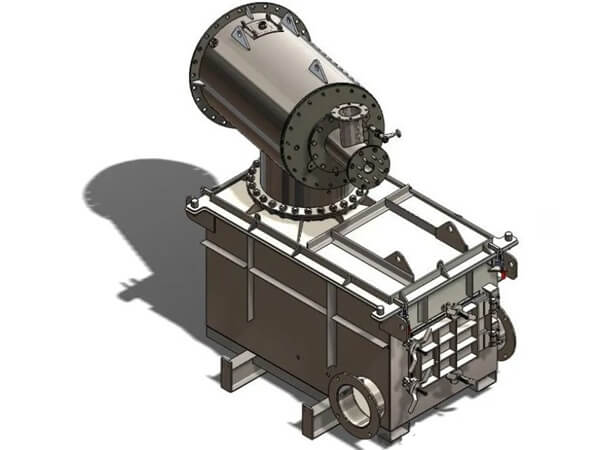
A premixed combustion system typically consists of a gas supply unit, an air supply unit, a premixer, burners, and a control system.
The gas supply unit is responsible for delivering gas to the system and generally includes gas pipelines, valves, and pressure regulators to ensure a stable and safe gas supply.
The air supply unit provides the necessary air for combustion through equipment such as fans, and is also equipped with corresponding pipelines and regulating devices.
The premixer is a key component of the premixed combustion system, where gas and air are thoroughly mixed in a specific ratio to form a homogeneous combustible mixture.
The burners inject the premixed combustible mixture into the furnace for combustion; their design and arrangement affect the shape, length, and combustion effect of the flame.
The control system monitors and regulates parameters such as the flow rate and pressure of the gas and air to ensure the stability and safety of the combustion process.
2.2 Structure of a Diffuse Combustion System
A Diffuse combustion system mainly consists of a gas injection device, an air injection device, burners, and a furnace.
The gas and air injection devices inject gas and air into the furnace in specific ways; unlike premixed systems, they are not pre-mixed before entering the furnace.
The burner design allows for rapid mixing and combustion of gas and air within the furnace; its structural characteristics determine parameters such as the injection angle and velocity of the gas and air, significantly impacting combustion efficiency.
The furnace, as the combustion space, is affected by its shape, size, and internal structure, which influence the mixing of gas and air and the flow of combustion products, thus affecting the entire combustion process.

2.3 Summary of Structural Differences
Premixed combustion systems emphasize thorough mixing of fuel gas and air before they enter the furnace, thus requiring a specialized premixer.
Their structure is relatively complex, and the precision required for the fit between components is high.
The diffuse combustion systems, on the other hand, focus more on achieving rapid mixing and combustion of fuel gas and air within the furnace.
Their structure is relatively simple, but the design of their burners and furnaces has a more critical impact on combustion performance.
| Structural Dimensions | Premixed combustion system | Diffuse combustion system |
| Core Components: | Premixing chamber, air-fuel ratio control system, porous burner head | Coaxial/multi-nozzle burner, in-furnace flow guiding structure |
| Component Complexity: | High (requires precise control of the mixing ratio, many components) | Low (no premixing stage, simplified components) |
| Airflow Stability Requirements | High (pressure fluctuations easily lead to mixing ratio imbalance) | Low (independent channel delivery, strong anti-interference capability) |
| Maintenance Focus: | Premixing chamber cleaning (prevents impurities from clogging) proportional valve calibration; | Burner nozzle cleaning (prevents carbon buildup clogging) |
3. Comparison of Working Principles
3.1 Working Principle of Premixed Combustion System
In a premixed combustion system, fuel gas and air are mixed in a premixer according to a set ratio to form a homogeneous combustible mixture.
When this mixture is injected into the furnace through burners, it is ignited upon contact with an ignition source, initiating the combustion reaction.
Because the mixture is thoroughly mixed before combustion, the combustion reaction proceeds rapidly and uniformly, resulting in a relatively stable flame and a more uniform temperature distribution.
During combustion, the control system adjusts the flow rates of fuel gas and air in real time based on parameters such as temperature and pressure within the furnace to maintain a stable combustion state and meet the requirements of the melting process.
3.2 Working Principle of Diffuse Combustion System
In a diffuse combustion system, fuel gas and air are injected into the furnace at high speeds through their respective injection devices.
The high-speed air jets entrain surrounding fuel gas and combustion products within the furnace, creating a localized low-oxygen atmosphere.
In this high-temperature, low-oxygen atmosphere, the fuel gas gradually combines with oxygen and combusts, accompanied by recombination processes such as pyrolysis.
Unlike premixed combustion, the fuel gas and air mixing process in diffuse combustion is completed within the furnace, making the combustion process relatively complex, and the flame shape and temperature distribution are less uniform than in premixed combustion.
3.3 Summary of Differences in Working Principles
The working principle of a premixed combustion system is based on the rapid and uniform combustion of a premixed combustible mixture, while a diffuse combustion system relies on the entrainment of air and fuel gas within the furnace to achieve mixing and combustion.
The premixed combustion process is relatively simple and highly controllable, while the diffuse combustion process is more complex and requires higher standards for airflow organization and mixing conditions within the furnace.
| Principle Dimension | Premixed combustion system | Diffuse combustion system |
| Mixing Timing | Before Combustion (in the premixing chamber) | During Combustion (in the furnace combustion zone) |
| Mixing Uniformity: | High (≥95%) | Low (≤85%) |
| Melting Rate: Consistent | Consistent | Consistent |
| Flame Pattern: | Short and concentrated | Long and dispersed |
| Furnace temperature uniformity | High temperature near the flame, low temperature further away from the flame | Flame is dispersed throughout the furnace, resulting in uniform temperature. |
| Control methods: | Closed-loop control (oxygen content feedback, high precision) | Automatic control. |
4. Energy Consumption Comparison
4.1 Energy Consumption Analysis of Premixed Combustion Systems
Premixed combustion systems, due to the pre-mixing of fuel gas and air, achieve more complete combustion and theoretically can reach higher combustion efficiency.
Under ideal conditions, their energy utilization rate is relatively high.
However, in actual operation, the presence of the premixer generates resistance, increasing the energy consumption for air and fuel gas delivery.
Furthermore, improper control of the premixing ratio can lead to incomplete combustion, reducing energy utilization and increasing energy consumption.
For example, when the fuel gas ratio is too high, incomplete combustion occurs, producing unburned products such as carbon monoxide, which not only wastes energy but also pollutes the environment.
4.2 Energy Consumption Analysis of Dispersed Combustion Systems
Diffuse combustion systems achieve the mixed combustion of fuel gas and air within the furnace.
The mixing effect and combustion process are significantly influenced by the airflow conditions within the furnace.
Under optimized design and operating conditions, dispersed combustion systems can achieve better combustion results and, due to their unique combustion method, can effectively reduce heat loss during combustion.
For example, the localized low-oxygen atmosphere created by the high-speed air jet entraining fuel gas and combustion products can lower the flame temperature and reduce heat radiation loss.
Furthermore, some dispersed combustion systems employ heat storage technology to recover waste heat from the flue gas, further improving energy utilization and reducing energy consumption.
However, if the airflow organization within the furnace is unreasonable, resulting in uneven mixing of fuel gas and air, incomplete combustion will occur, increasing energy consumption.
4.3 Energy Consumption Comparison Example
An aluminum melting company conducted energy consumption tests on a 10-ton melting furnace using both a premixed combustion system and a diffuse combustion system.
Under the same melting process and production conditions, the premixed combustion system consumed 70 cubic meters of natural gas per ton of aluminum, while the diffuse combustion system consumed 60 cubic meters of natural gas per ton of aluminum.
The comparison shows that the diffuse combustion system performs better in terms of energy consumption in this example, mainly due to its special combustion method and waste heat recovery technology, which enables more efficient energy utilization.
However, it should be noted that energy consumption is also affected by various factors such as the size of the melting furnace, the level of operation, and the quality of fuel; therefore, energy consumption comparison results may vary between different companies and under different operating conditions.
5. Safety Performance Comparison
5.1 Safety Performance of Premixed Combustion Systems
A major safety hazard of premixed combustion systems is backfire.
Since the combustible mixture is formed before entering the furnace, unstable pressure or excessively low flow rate at the burner can cause the flame to propagate towards the premixer, leading to backfire.
Backfire can damage equipment and potentially cause serious accidents such as explosions.
To prevent backfire, premixed combustion systems are typically equipped with backfire preventers and other safety devices, and parameters such as the pressure and flow rate of the fuel gas and air are strictly controlled.
Furthermore, premixed combustion systems have high requirements for the fuel gas-air mixing ratio; if the mixing ratio exceeds the safe range, it will increase the instability and safety risks of the combustion process.
5.2 Safety Performance of Diffuse Combustion Systems
Diffuse combustion systems eliminate the risk of backfire because the fuel gas and air mix within the furnace.
However, the combustion process is relatively complex, and localized high-temperature zones may appear within the furnace.
Inappropriate furnace design or material selection can lead to furnace damage.
Furthermore, during startup and shutdown, careful attention must be paid to the sequence and flow control of fuel gas and air supply to prevent fuel accumulation and potential explosions.
Some diffuse combustion systems also exhibit fuel accumulation and mixing with air to form explosive gases at low temperatures, requiring corresponding measures such as reducing burner power and extending burner switching intervals to mitigate safety risks.
5.3 Summary of Safety Performance Differences
Premixed combustion systems primarily face the safety risk of flashback, requiring strict parameter control and safety devices to ensure safety.
While diffuse combustion systems do not have flashback issues, they present other safety hazards in areas such as furnace structure, start-up and shutdown operations, and low-temperature stages, necessitating targeted preventative measures.
Overall, both combustion systems can meet the safety requirements of aluminum melting under the premise of reasonable design, correct operation, and effective maintenance; however, the types of safety risks and the key areas for prevention differ.
6. Comparison of Nitrogen Oxide Emissions
6.1 Nitrogen Oxide Emissions from Premixed Combustion Systems
Premixed combustion systems have relatively high flame temperatures and a more concentrated combustion process.
Under high-temperature conditions, nitrogen in the air readily reacts with oxygen to produce nitrogen oxides (NOx). Especially when the combustion temperature exceeds 1500℃, the formation of thermal NOx increases significantly.
Furthermore, factors such as the air-fuel mixture ratio and combustion time in a premixed combustion system also affect NOx emissions.
An improper mixture ratio or excessively long combustion time will lead to increased NOx emissions.
6.2 NOx Emissions from Diffuse Combustion Systems
Diffuse combustion systems utilize high-speed air jets to entrain fuel gas and combustion products, creating a localized low-oxygen atmosphere and reducing flame temperature, thereby effectively suppressing the formation of thermal NOx.
Compared to premixed combustion systems, diffuse combustion systems have a larger flame volume and a significantly lower temperature in the high-temperature zone, resulting in a substantial reduction in NOx production.
Studies have shown that NOx emission concentrations from diffuse combustion systems are typically 80% lower than those from premixed combustion systems, demonstrating a clear advantage in meeting increasingly stringent environmental protection requirements.
6.3 Comparative Example of Nitrogen Oxide Emissions
In an environmental monitoring project, nitrogen oxide emissions were monitored in aluminum melting furnaces using premixed combustion systems and diffuse combustion systems.
The results showed that the NOx emission concentration of the premixed combustion system was 300 mg/m³, while the NOx emission concentration of the diffuse combustion system was only 150 mg/m³.
This example fully demonstrates the significant effect of dispersed combustion systems in reducing nitrogen oxide emissions, helping aluminum melting factories reduce environmental pollution and achieve green production.
7. Comparison of Ease of Operation
7.1 Operational Characteristics of Premixed Combustion Systems
Premixed combustion systems are relatively complex to operate, requiring precise control of parameters such as the mixing ratio, flow rate, and pressure of the fuel gas and air.
Strict operating procedures must be followed during startup and shutdown to ensure the safe and stable formation of the combustible mixture and the combustion process.
Furthermore, premixed combustion systems demand high levels of equipment maintenance, requiring regular checks of the premixer, burners, and other components to ensure their proper functioning.
Blockages or malfunctions in the premixer will affect the mixing effect, consequently impacting combustion performance.
7.2 Operational Characteristics of Diffuse Combustion Systems
Operating a diffuse combustion system is relatively simple, primarily focusing on the injection flow rate and pressure of the fuel gas and air.
Since there is no premixing process, start-up and shutdown are relatively convenient.
However, diffuse combustion systems are quite sensitive to the airflow conditions within the furnace.
It is necessary to adjust the injection angle and velocity of the fuel gas and air in a timely manner according to the smelting process and the actual conditions within the furnace to ensure good mixing and combustion.
Furthermore, in terms of equipment maintenance, it is crucial to focus on inspecting the wear of the burners and furnace, and promptly replace any damaged parts.
7.3 Summary of Differences in Operational Ease
Overall, the diffuse combustion system is slightly superior to the premixed combustion system in terms of operational ease.
Diffuse combustion systems are relatively simple to operate, easy to start and stop, and require relatively low technical skills from operators.
While premixed combustion systems can achieve precise combustion control, their operation is complex, requiring higher standards for equipment maintenance and parameter control, thus increasing the difficulty and workload for operators.
8. Conclusion
In summary, premixed combustion systems and dispersed combustion systems each have their own characteristics in aluminum melting furnaces.
Premixed combustion systems have a relatively complex structure, and their working principle is based on the combustion of premixed combustible mixtures.
Theoretically, their combustion efficiency is high, but in actual operation, energy consumption and nitrogen oxide emissions are relatively high due to the influence of the premixing ratio and resistance.
They also pose a risk of backfire and are relatively complex to operate.
Diffuse combustion systems have a simple structure, achieving mixed combustion of fuel gas and air within the furnace.
Through special combustion methods and waste heat recovery technology, they have lower energy consumption, significantly reduced nitrogen oxide emissions, and no backfire problem.
However, they have other safety hazards related to furnace structure and start-up/stop operations, but are relatively convenient to operate.
When selecting a combustion system, aluminum melting factories should comprehensively consider factors such as their production scale, process requirements, energy costs, environmental standards, and operation and maintenance capabilities.
If a company requires precise control of the combustion process and has professional operators and maintenance personnel, a premixed combustion system may be more suitable; while for companies prioritizing energy conservation, environmental friendliness, and ease of operation, a diffuse combustion system is a better choice.
With continuous technological development and innovation, both types of combustion systems are expected to be further optimized and improved in performance in the future, providing more efficient, greener, and safer combustion solutions for the aluminum melting industry.
Reference: Transformation and Application of Dispersion Regenerative Combustion Technology on Aluminum Melting Furnace
[1]王新华,秦龙万,赵德忠,等.弥散式蓄热燃烧技术在铝熔炼炉上的改造及应用[J].云南冶金, 2023, 52(2):131-136.
[1]陈洪成,程海涛,容进新,等.一种铝合金蓄热弥散式熔炼炉:CN201911224283.7[P].CN110887377A[2025-12-20].
[1]赵戎.一种弥散蓄热式铝熔炼炉:CN201621460509.5[P].CN206523045U[2025-12-20].
[1]邓长友,任世瑾,黄超,等.弥散式蓄热燃烧系统使用方法研究与试验[J].世界有色金属, 2024(16):1-4.
[1]邓长友.弥散式燃烧系统性能持久稳定的技术研究[J].信息产业报道, 2024(12):0008-0010.
[1]卜云峰,黄章喜,刘善军,等.一种工业窑炉预混式燃烧系统:CN202510787905.6[P].CN120538047A[2025-12-20].