All you need to know about drying process of aluminum melting furnace
All you need to know about drying process of aluminum melting furnace
As a core piece of equipment in aluminum melting production, the sintering quality of aluminum melting furnace lining directly determines the furnace’s service life and production stability.
Furnace drying is a crucial process for achieving dense sintering of the furnace lining, removing moisture, and eliminating internal stress.
The essence of furnace drying lies in following scientific heating principles, precisely controlling the heating rate and holding time through precise setting of the drying curve, dividing the drying process into stages according to the physicochemical changes of the furnace lining material, and promptly identifying and handling various abnormal situations during the drying process to avoid irreversible damage such as furnace lining cracking and spalling caused by improper operation.
This article will elaborate on the principles and types of furnace drying curve setting, the division of drying stages and key operational points, common abnormal situations during the drying process, and their analysis and handling, providing a comprehensive technical reference for furnace drying operations.
1. Setting the Furnace Drying Curve:
The furnace drying curve is the core technology of furnace drying operations.
It is a temperature-time variation law determined based on factors such as the material properties of the furnace lining refractory material, the construction process, and the moisture content.
Its core setting principle is slow heating, stepped holding, and uniform sintering.
By controlling the heating rate and holding time in different temperature ranges, the physical moisture and crystal water in the furnace lining are gradually discharged, while allowing the refractory material to complete the volume expansion and sintering hardening process, avoiding structural damage to the furnace lining due to thermal stress caused by sudden temperature changes.
The setting of the furnace drying curve must take into account the characteristics of the furnace lining material and the furnace’s operating conditions.
Different furnace conditions (newly constructed, short-term shutdown and restart, long-term shutdown and restart) require different furnace drying curves, and the temperature control of all curves is based on the highest temperature point in the furnace chamber to ensure uniform heating of all parts of the furnace lining.
1.1 Core principles for setting furnace drying curves
⭐Gradient Control of Heating Rate:
The coefficient of thermal expansion and moisture removal rate of the refractory lining vary in different temperature ranges.
Therefore, a gradient heating rate needs to be set in the furnace drying curve.
In the low-temperature stage (below 300℃), the furnace lining mainly removes physical moisture, and the refractory material has not yet begun obvious sintering.
The heating rate needs to be controlled within 10℃/H to prevent the steam pressure generated by rapid moisture vaporization from breaking through the furnace lining.
In the medium-temperature stage (300℃~500℃), the furnace lining begins to remove crystal water, and the refractory material shows initial volume expansion.
The heating rate can be appropriately increased to 15℃/h.
In the high-temperature stage (above 500℃), the refractory material is in the sintering stage.
The heating rate should be controlled within 20℃/h, with a maximum of no more than 25℃/h, to ensure that the refractory material particles are fully fused to form a dense sintered layer.
⭐ Stepped Insulation at Critical Temperature Points:
Based on the moisture drainage pattern and critical phase change points of the furnace lining material, the furnace drying curve needs to set sufficient holding times at critical temperature points.
This is the core principle of furnace drying curve setting.
Physical moisture drainage mainly occurs at 120℃ and 260℃, while crystal water drainage occurs at 340℃ and 540℃.
The sintering critical points of refractory materials are 660℃ and 800℃.
These temperature points all require long-term insulation to ensure complete moisture drainage, prevent residual moisture from vaporizing during subsequent heating and causing furnace lining cracks, and allow the volume expansion of the furnace lining to stabilize, eliminating internal stress.
⭐Temperature Monitoring and Curve Adjustment:
The furnace drying curve is not a fixed technical parameter and needs to be dynamically adjusted based on temperature monitoring data during the actual furnace drying process.
During the drying process, the furnace temperature needs to be monitored using multiple thermocouples and infrared temperature guns.
If the temperature difference between different points in the furnace exceeds 100℃, the holding time needs to be extended.
If pressurized steam or water seepage occurs, heating must be stopped immediately, and the temperature should be maintained at the current level until the abnormality disappears.
Furthermore, there is a certain deviation between the instrument-displayed temperature and the actual furnace lining temperature;
Therefore, the curve needs to be fine-tuned based on the actual conditions such as the furnace surface temperature and flue gas conditions.
⭐Do not reduce the total drying time:
The heating rate and the total drying time are the two core control indicators of the drying curve.
Even if the temperature rises too fast or is too high due to operational deviations at a certain stage, the total drying time should not be reduced arbitrarily.
Instead, the time of the subsequent heat preservation stage should be extended to ensure that the moisture in the furnace lining is fully discharged and the refractory material is fully sintered, so as to avoid leaving equipment hazards due to incomplete drying.
1.2 Furnace drying curve types under different operating conditions
The furnace drying curve of the melting furnace needs to be set differently according to the state of the furnace.
It is mainly divided into three categories: the initial furnace drying curve after new construction (after major repair), the furnace drying curve after short-term shutdown and restart, and the furnace drying curve after long-term shutdown and restart.
The heating rate and holding time of different curves are significantly different. The core principle is that the higher the moisture content of the furnace lining and the longer the shutdown time, the slower the heating rate and the longer the holding time of the furnace drying curve.
*Initial Furnace Drying Curve for Newly Constructed Furnace Lining:
Newly constructed melting furnace linings (including castables and refractory bricks) contain a large amount of physical moisture and crystal water.
Furthermore, the expansion displacement of various parts of the lining is not fixed, and the refractory material is not yet hardened.
Therefore, the core of the initial furnace drying curve is ultra-slow heating and ultra-long heat preservation.
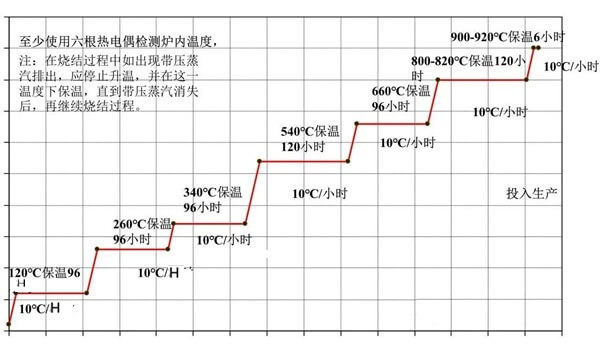
The overall drying cycle is long, with the heating rate based on 10℃/h throughout, and the heat preservation time at key temperature points is 96 hours or more.
Starting from room temperature, the temperature is increased to 120℃ at a rate of 10℃/h and held for 96 hours to remove surface physical moisture from the furnace lining.
The temperature is then increased to 260℃ at a rate of 10℃/h and held for 96 hours to remove internal physical moisture from the furnace lining.
Next, the temperature is increased to 340℃ at a rate of 10℃/h and held for 96 hours to begin removing crystalline water from the refractory material.
Subsequently, the temperature is increased to 540℃ at a rate of 10℃/h and held for 120 hours to completely remove crystalline water, completing the initial volume expansion of the furnace lining.
The temperature is then increased to 660℃ at a rate of 10℃/h and held for 96 hours to achieve initial sintering of the refractory material.
The temperature is then increased to 800~820℃ at a rate of 10℃/h and held for 120 hours to complete the dense sintering of the refractory material.
Finally, the temperature is increased to 900~920℃ at a rate of 10℃/h and held for 6 hours.
Once the furnace lining meets the sintering requirements, it can be cooled to 800~850℃ before production begins.
Temperature control during the entire initial furnace drying process requires the use of at least six thermocouples to ensure uniform temperature at all points in the furnace and that the temperature difference between each thermocouple does not exceed 100°C during the heat preservation stage.
* Short-Term Shutdown and Restart Furnace Drying Curve
A short-term shutdown refers to a shutdown period of no more than 15 days.
During this period, the furnace lining retains a certain temperature, absorbs only a small amount of ambient moisture, has no residual water of crystallization, and the sintered layer of the refractory material does not show obvious cracking.
Therefore, the heating rate of the drying curve can be significantly increased, and the holding time can be significantly shortened.
The core is to rapidly heat the furnace lining to the sintering temperature and restore its performance.
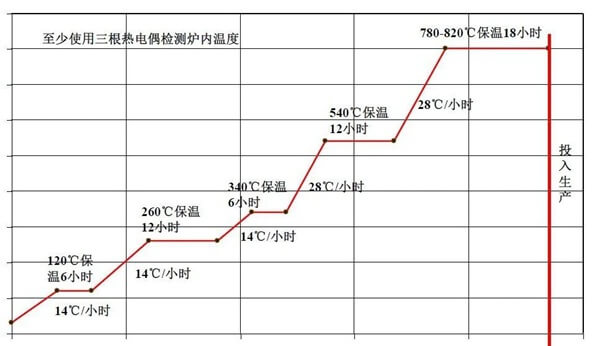
Starting from room temperature, the temperature is increased to 120°C at a rate of 14°C/h and held for 6 hours to remove the moisture adsorbed on the surface of the furnace lining;
The temperature is then increased to 260°C at a rate of 14°C/h and held for 12 hours to further remove the internally adsorbed moisture;
The temperature is then increased to 340°C at a rate of 28°C/h and held for 6 hours to stabilize the volume of the furnace lining;
Subsequently, the temperature is increased to 540°C at a rate of 28°C/h and held for 12 hours to restore the sintering state of the refractory material.
Finally, the temperature is increased to 780~820°C and held for 18 hours, at which point the furnace lining meets the requirements for production and can be directly fed into production.
For short-term shutdowns and restarts, temperature control should use at least three thermocouples, focusing on monitoring temperature changes in the core area of the furnace to prevent excessively rapid local temperature increases.
* Furnace drying curves for restarting a furnace after a long shutdown:
Long-term shutdowns are mainly divided into two categories.
The first is a shutdown period of more than 15 days but no more than 4 months.
During this period, the furnace lining is completely cooled and absorbs a large amount of ambient moisture.
The sintered layer may develop fine cracks. The furnace drying curve should be between the initial furnace drying curve and the short-term shutdown restart curve.
The heating rate should be controlled at 10~15℃/h, and the holding time at key temperature points should be appropriately extended according to the moisture content of the furnace lining.
The second is a shutdown period of more than 4 months.
During this period, the sintered layer of the furnace lining has shown significant shrinkage, and the density of some refractory materials has decreased, which is similar to the state of a newly built furnace lining.
Therefore, the initial furnace drying curve of a newly built furnace should be used directly to ensure that the furnace lining has completed sufficient moisture removal and sintering hardening.
2. Stages and Key Operational Points of Furnace Drying:
The furnace drying process of a melting furnace is not a simple heating process.
Instead, based on the physicochemical changes of the furnace lining material, the switching of heating methods, and the division of temperature ranges, it is divided into three core stages: natural drying, low-temperature drying, and medium-high temperature drying.
Each stage has distinct core tasks, heating methods, and key operational points.
Furthermore, the transitions between stages must meet strict temperature conditions and process requirements to ensure the continuity and scientific nature of the drying operation.
All energy, materials, and tools must be prepared in advance, and dedicated personnel must be on duty 24 hours a day to monitor the process, recording data at least once per hour to ensure that the operation at each stage meets the process requirements.
2.1 Natural drying stage:
The natural drying stage is the pretreatment stage of the furnace drying operation.
The core task is to remove the free moisture on the surface of the furnace lining through natural ventilation, reduce the initial moisture content of the furnace lining, lay the foundation for the subsequent low-temperature drying stage, and avoid direct heating that would cause the moisture on the surface of the furnace lining to vaporize rapidly, creating a temperature difference with the internal moisture and generating internal stress that would cause cracking.
2.1.1 Stage operation requirements:
After the furnace body is built, it needs to be naturally dried in a normal temperature and ventilated environment for no less than half a month.
If it is winter or in a humid area with high humidity and poor air circulation, the natural drying time needs to be appropriately extended to ensure that there are no obvious damp marks on the surface of the furnace lining.
Use an infrared thermometer to check the surface of the furnace body.
The temperature at each point should be consistent with the ambient temperature and there should be no condensation.
2.1.2 Key points of stage operation:
During the natural drying stage, the furnace door must be kept open and the flue unobstructed to ensure sufficient air circulation between the furnace and the outside environment, accelerating moisture evaporation.
It is forbidden to pile damp materials around the furnace body to prevent the furnace lining from absorbing moisture again.
If the ambient humidity exceeds 80%, an exhaust fan can be installed outside the furnace to enhance air circulation and shorten the natural drying time.
After the natural drying is completed, it is necessary to check whether there are powdering, mold growth, or other phenomena on the surface of the furnace lining.
If so, they must be dealt with in time to prevent affecting the quality of subsequent furnace drying.
2.2. Low temperature drying stage
The low-temperature drying stage is the core foundation of the furnace drying operation, with a temperature range from room temperature to 500℃ (340℃ in the core area).
The core task is to remove physical moisture and some crystal water from the furnace lining.
During this stage, the furnace lining has not yet begun to sinter, making it a high-risk period for lining cracking.
Therefore, the requirements for heating methods, heating rates, and temperature control are the most stringent.
The heating method for the low-temperature drying stage differs from that of the medium- and high-temperature stages.
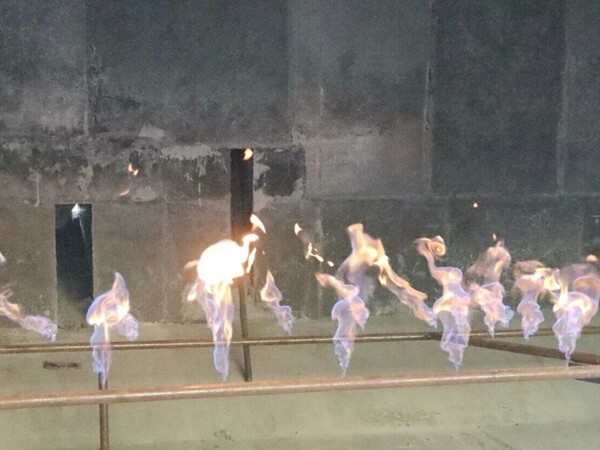
Due to the lower heat requirement, a temporary heating tool made on-site is used as the heating device.
Only when the temperature reaches 340℃ (or when the drying tool cannot meet the heating requirements) can the furnace’s own combustion system be switched on.
2.2.1 Core Operations at Each Stage
Heating Device Operation:
The heating tool is a multi-nozzle combustion device made of steel pipe.
Approximately three heating tools are needed per melting furnace.
It consists of 6 inch and 4-inch pipes, a metal flexible hose, a ball valve, etc.
All nozzles on the steel pipe face upwards to prevent direct contact between the flame and the furnace lining refractory material.
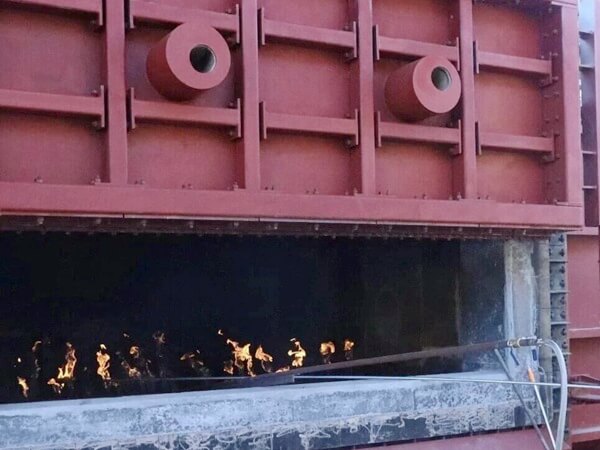
After being ignited outside the furnace, the heating tool is placed on the refractory material at the furnace bottom.
Its position needs to be moved approximately every two hours; below 200℃, this can be extended to every three hours to prevent localized overheating of the refractory material at the furnace bottom.
The heating tool should be arranged in a staggered pattern to ensure uniform temperature within the furnace chamber, resulting in a gentle flame with a large coverage area.
Furnace Door and Ventilation Control:
Below 350℃, the furnace door should be kept open or partially open for drying to maintain ventilation and allow the vaporized steam to escape smoothly, preventing excessive steam pressure inside the furnace.
Above 350℃, the furnace door should be closed to reduce heat loss and create conditions for subsequent crystallization water removal and temperature increase.
Heating Rate Control:
Below 300℃, the heating rate must be strictly controlled within 10℃/h; above 300℃, it can be increased to 15℃/h.
Exceeding the heating rate limit is strictly prohibited throughout the process.
When heating to critical temperature points such as 120℃, 260℃, and 340℃, strict adherence to the furnace drying curve is required for heat preservation to ensure complete moisture removal.
Heating Mode Switching:
When the temperature reaches 340℃, the furnace’s own combustion system can be activated for further heating.
If the heating tool cannot meet the requirement of reaching 340℃, appropriate insulation measures can be taken at the furnace door, or the combustion system can be switched earlier.
However, the heating rate must strictly follow the furnace drying curve; the heating rate must not be increased due to switching heating modes.
2.2.2 Key Points of Stage Operation
The fabrication of the heating tool must be carried out according to standard procedures.
The spacing and diameter of the nozzles must be determined according to the furnace size.
After fabrication, the airtightness must be checked to prevent natural gas leakage.
The connection between the heating tool and the natural gas supply pipe must use a metal or rubber hose and be equipped with a ball valve to facilitate control of the gas flow and adjust the flame size.
During the low-temperature drying stage, 2-3 sheathed thermocouples (K-type, 0-1100℃) should be placed, preferably in the higher temperature position inside the furnace and close to the hot surface of the refractory material.
Temperature monitoring should be conducted using the furnace’s own thermocouples.
Thermocouple temperature signals should be connected to a monitoring instrument for centralized temperature display and recording.
An infrared thermometer should be used to monitor the temperature of any point in the furnace body at any time, including the refractory material inside the furnace, the outer surface of the furnace body, and the flue.
If localized high temperatures are found, the position of the heating tool should be adjusted or the gas flow reduced in a timely manner to ensure uniform heating of the furnace lining.
2.3. Medium and high temperature drying Stage:
The temperature range of the medium and high temperature drying stage is from 500℃ to the furnace’s maximum allowable temperature.
The core task is to remove the remaining water of crystallization in the furnace lining, achieve sintering and hardening of the refractory material, and enable the refractory material to reach the required strength and density.
During this stage, the volume expansion of the furnace lining is basically stable, and the internal stress is gradually eliminated.
This is a critical stage for the formation of a dense sintered layer in the furnace lining.
This stage requires heating using the furnace’s own combustion system, and temperature control is directly completed by the furnace’s control system.
There is no need for manual flame adjustment; only monitoring of temperature changes and the condition of the furnace lining is required.
2.3.1 Key Operational Steps
Pre-combustion Inspection of the Combustion System:
Before putting the furnace’s combustion system into operation, it is necessary to check whether the supply of natural gas, cooling water, and compressed air meets the requirements, whether the fan lubricating oil is properly added, and whether the exhaust fan (if water-cooled) must not be operated with insufficient water.
At the same time, components in the combustion system that are susceptible to temperature and moisture (ignition gun, ignition electrode, flame detector electrode, burner air supply/exhaust pipe, etc.) must be reinstalled to ensure normal operation.
Heating and Sintering Control:
After the combustion system is put into operation at approximately 500℃, the heating rate should be controlled within 20℃/h, with a maximum of 25℃/h.
When the temperature reaches key sintering temperatures such as 540℃ and 660℃, heat preservation should be carried out according to the furnace drying curve requirements to ensure complete drainage of crystallization water and full fusion between refractory particles.
Finally, the temperature should be raised to 800~820℃ (for newly built furnaces) or 780~820℃ (for furnaces with short-term shutdowns) for a long-term heat preservation to complete the dense sintering of the refractory material.
For newly built furnaces, a final heat preservation at 900~920℃ is required to further enhance the strength of the sintered layer.
End of furnace drying and production connection:
After the medium and high temperature drying stage, there is no need to lower the furnace temperature to room temperature.
The furnace temperature can be directly reduced to 800~850℃, and then material feeding and production can be carried out.
After the new furnace drying is completed, it needs to be used continuously for 3~4 months before it can be shut down to allow the inner lining material to be fully sintered and reach a stable state, effectively extending the service life of the furnace lining.
2.3.2 Key Operational Points for Each Stage
During the medium to high temperature drying stage, close monitoring of the expansion and changes in the furnace’s steel structure and masonry is essential.
Check for deformation or obstruction of the furnace door and door frame, abnormal temperature rise on the outer surface of the furnace wall, significant deformation of the furnace shell steel structure, and any detachment or cracks in the internal masonry and castable.
If any problems are found, heating must be stopped immediately, and a professional engineer must develop a solution.
Temperature records must be maintained at least hourly, jointly by both the buyer and seller, to ensure accurate and complete temperature data.
If pressurized steam is detected in the furnace, heating must be stopped immediately, and the furnace must be held at the current temperature until the steam dissipates before resuming heating.
After the furnace drying is completed, the exhaust vents on the furnace body must be sealed and welded securely to prevent leakage of molten aluminum and fumes during production, and to prevent the furnace lining from absorbing external moisture.
3. Analysis and handling of abnormal situations during the furnace drying process
During the furnace drying process, various abnormalities can easily occur due to factors such as the quality of the furnace lining material, the masonry process, the operator’s skill level, and the accuracy of temperature monitoring.
If these abnormalities are not handled promptly or properly, irreversible damage such as cracking, peeling, and pulverization of the furnace lining will occur, severely affecting the furnace’s service life.
Abnormalities during the drying process can be mainly categorized into three types: temperature abnormalities, furnace lining condition abnormalities, and system operation abnormalities.
Each type of abnormality has clear characteristics and causes, requiring targeted handling measures.
Furthermore, all abnormality handling must adhere to the principles of avoiding blindly increasing or decreasing the temperature, extending the holding time, and making dynamic adjustments.
3.1 Analysis and handling of abnormal temperature conditions
Temperature abnormality is the most common abnormal situation in the furnace drying process.
It is mainly manifested as excessively rapid heating rate, excessive temperature difference between various points in the furnace, excessive deviation between actual temperature and set temperature, and local temperature being too high.
Temperature abnormality will directly lead to uneven heating of the furnace lining, generate local thermal stress, and then cause cracking.
It is one of the main hidden dangers in furnace drying operation.
3.1.1 Excessively Rapid Heating Rate
*Problems
The furnace temperature rise rate displayed by the monitoring instrument exceeds the rate specified in the furnace drying curve, such as exceeding 10℃/h in the low-temperature stage and exceeding 25℃/h in the medium-high temperature stage; the furnace surface temperature rises rapidly, and the difference between it and the furnace temperature significantly exceeds the normal range.
*Causes:
During manual operation, the gas flow rate of the heating tool is adjusted too high, resulting in excessively high flame intensity; after switching to the furnace’s own combustion system, the temperature setting of the control system is too high, and the burner’s flame intensity is too high; the furnace door is closed too early, preventing timely heat dissipation and causing a sudden temperature rise.
*Remedial Measures:
Immediately reduce the gas supply and decrease the flame intensity of the burner or heating tool.
If the combustion system is automatically controlled, the heating parameters need to be reset and the heating rate reduced.
If the furnace door is closed too early, it can be opened appropriately for ventilation to dissipate some heat, but care must be taken to avoid a sudden drop in temperature caused by opening the furnace door too wide.
If the heating rate is too fast, it cannot be compensated for by increasing the heating rate in subsequent stages.
Instead, the holding time should be extended at subsequent critical temperature points to ensure that the moisture in the furnace lining is fully discharged and to eliminate the internal stress caused by the excessively rapid heating.
The total furnace drying time must not be reduced.
3.1.2 Excessive Temperature Difference at Various Points within the Furnace
*Problem
Temperature differences displayed by various thermocouples exceed 100℃, such as the temperature of the thermocouple at the furnace top being significantly higher than that at the furnace bottom, or the temperature on one side of the furnace being significantly higher than that on the other; infrared thermometers show significant temperature differences in the refractory material at different locations within the furnace.
*Causes:
Improper placement of the heating tool, failing to stagger their placement,
Leading to excessive localized heating within the furnace;
Delayed movement of the heating tool, resulting in prolonged heating of the refractory material at the furnace bottom;
Abnormal burner operation in the furnace’s combustion system, with some burners exhibiting excessively high or low flame intensity, resulting in uneven flame distribution within the furnace.
*Remedial Measures:
Immediately adjust the placement of the heating tool, moving them from the high-temperature zone to the low-temperature zone, ensuring that the heating tools are staggered and that the flame covers the entire furnace.
Shorten the time interval between moving the clay guns from 2 hours to 1 hour, and promptly change the flame heating position.
If the combustion system has already been put into operation, check the working status of the burners, adjust the firepower of each burner, and ensure uniform flame distribution; extend the heat preservation time at the current temperature until the temperature difference at each point in the furnace drops below 100℃, and then continue to raise the temperature.
3.1.3 Excessive Deviation Between Actual and Set Temperatures
*Problem
The temperature displayed on the instrument is significantly higher or lower than the set temperature of the furnace drying curve.
For example, the set temperature is 120℃, but the actual instrument reading is 150℃, or only 90℃.
The actual temperature of the furnace lining does not match the instrument reading; for example, the instrument reading is normal, but the furnace surface shows obvious overheating or undercooling.
*Causes:
Improper thermocouple placement, not close to the refractory hot surface, or the thermocouple in contact with a heat source, leading to temperature measurement deviation; uncalibrated thermocouples, temperature measuring instruments, etc., resulting in insufficient accuracy; excessive heat loss inside the furnace, such as air leakage in the flue or poor furnace door sealing, leading to a lower actual temperature.
*Handling Measures:
If the temperature is too high, immediately reduce the gas flow, provide appropriate ventilation, and maintain the temperature at the current level; do not take any cooling measures.
If the temperature is too low, immediately check the furnace body’s sealing condition, seal any leaks in the flue, close the furnace door (it can be partially open in low-temperature stages below 350℃), slowly increase the gas flow, and gradually raise the temperature to the set temperature.
Do not drastically increase the heating rate.
Recheck the thermocouple placement, relocate any thermocouples in contact with the heat source, ensuring they are close to the refractory hot surface but not in direct contact with the flame.
Calibrate the temperature measuring instruments to ensure the accuracy of temperature measurement.
If the instruments are damaged, replace them promptly.
3.1.4 Localized High Temperature
*Problem
The temperature in a specific area of the furnace (e.g., furnace bottom, furnace wall corner) is significantly higher than other areas.
Infrared thermometers show that the temperature in this area exceeds the normal range; slight reddening of the refractory lining is observed in some areas.
*Causes:
The nozzle of the heating tool is misaligned, allowing the flame to directly irradiate a localized area of the furnace lining.
The lining thickness is uneven in some areas, causing the thinner sections to heat up too quickly.
The foreign matter is present in the furnace, and the combustion of this foreign matter leads to higher temperatures.
*Remedial Measures:
Immediately adjust the position and nozzle orientation of the heating tool to ensure the flame is upward and does not directly contact the furnace lining.
Closely monitor the locally high-temperature areas, continuously monitoring temperature changes with an infrared thermometer,
And appropriately reduce the flame intensity in those areas;
If foreign matter is present in the furnace, remove it promptly, ensuring safety, to prevent further heating from the burning of foreign matter.
Extend the heat preservation time at the current temperature to allow the heat from the locally high-temperature areas to gradually dissipate, ensuring uniform heating of the furnace lining.
3.2 Analysis and Handling of Abnormal Furnace Lining Conditions
Abnormal furnace lining conditions are the most dangerous abnormalities during the furnace drying process.
They directly reflect the damage to the structural integrity of the furnace lining.
The main problems are cracks and peeling of the furnace lining, water or pressurized steam escaping from the surface of the furnace lining, powdering and mold growth of the furnace lining, etc.
If abnormal furnace lining conditions are not dealt with in time, they will lead to complete damage to the furnace lining structure, making it unusable and even causing safety accidents.
3.2.1 Cracks and spalling appear in the furnace lining.
*Problems:
Through observation at the furnace door, fine cracks or obvious fissures appear on the surface of the internal masonry and castable refractory, with small pieces of refractory material spalling off; cracks appear on the outer surface of the furnace body, and even powder seeps out from the cracks.
*Causes:
Excessive heating rate leads to uneven heating of the furnace lining, generating thermal stress exceeding the tensile strength of the refractory material.
Insufficient holding time at critical temperature points allows the steam pressure from the vaporization of residual moisture to rupture the furnace lining.
Improper furnace lining construction, with excessively large gaps between masonry sections and insufficient compaction of the castable refractory;
Insufficient natural drying time results in excessively high moisture content in the furnace lining, causing rapid vaporization of moisture upon direct heating.
*Remedial Measures:
Immediately stop heating and maintain the current temperature to reduce the temperature gradient of the furnace lining, eliminate some internal stress, and prevent the cracks from expanding further.
Inspect the size and depth of the cracks. If they are minor cracks, extend the holding time to allow them to heal naturally, and further reduce the heating rate during subsequent heating.
If there are obvious cracks or refractory material spalling, a professional engineer must conduct an on-site assessment.
Minor cases can be repaired after the furnace drying process, while severe cases require stopping the drying process and rebuilding the furnace lining.
During subsequent heating, the heating rate must be strictly controlled, and the holding time at all critical temperature points should be appropriately extended to ensure that the moisture in the furnace lining is completely drained.
3.2.2 Water and pressurized steam are seeping from the surface of the furnace lining.
*Problem:
Obvious water droplets or seepage are visible on the furnace lining surface.
The flue gas contains a large amount of white mist; pressurized steam is ejected from the furnace, accompanied by a slight hissing sound.
*Causes:
Insufficient natural drying time leaves a large amount of residual physical moisture in the furnace lining.
Excessively rapid heating during the low-temperature stage prevents timely removal of moisture from the lining, causing it to rapidly vaporize into steam at high temperatures.
The water-cement ratio of the castable refractory used during furnace lining construction is too high, resulting in excessive moisture content.
*Handling Measures:
This is the most common abnormality in the drainage of furnace lining moisture during the furnace drying process.
Heating must be stopped immediately, and the furnace should be kept at the current temperature until the leakage of water and pressurized steam completely disappears.
Heating must not be continued, otherwise the steam pressure will break through the furnace lining, causing severe cracking.
During the heat preservation process, ventilation inside the furnace must be maintained (open the furnace door below 350℃) to allow steam to escape smoothly.
After the abnormal phenomenon disappears, heating should be resumed at a lower rate (e.g., 5℃/h), and the heat preservation time should be further extended at subsequent critical temperature points to ensure that any remaining moisture in the furnace lining is completely drained.
3.2.3 Furnace lining powdering and mold growth
*Problems:
White or green mold spots (furry growth) appear on the furnace lining surface.
Some refractory materials show signs of powdering, with powder flakes falling off when touched; the strength of the furnace lining is significantly reduced, and powder crumbles even with slight contact.
*Causes:
The natural drying stage was not carried out promptly after the furnace body was constructed, leaving the castable refractory in a damp, poorly ventilated environment for an extended period, causing a hydration reaction.
The preparations before furnace drying were inadequate, with damp materials piled around the furnace body, causing the lining to absorb moisture again.
The refractory materials were of substandard quality, with poor resistance to hydration, making them prone to powdering in a damp environment.
*Handling measures:
If the powdering and mold growth are minor, the natural drying time can be extended, and the ventilation inside the furnace can be strengthened.
The furnace can be dried before starting the baking process.
The initial heating rate should be controlled within 5℃/h to gradually remove the moisture from the furnace lining.
If the powdering and mold growth are severe and the strength of the furnace lining is greatly reduced, the powdered and moldy areas need to be completely removed, and the refractory coating should be reapplied or the refractory material should be poured.
The furnace can be dried again after the new refractory material has dried naturally.
Before drying the furnace, the damp materials around the furnace body should be cleaned to ensure that the furnace body is in a dry and ventilated environment.
3.3 Analysis and handling of system malfunctions
Abnormal system operation mainly refers to the abnormal operation of equipment such as heating system, flue gas system, and temperature measurement system during the furnace drying process.
It is mainly manifested as natural gas leakage in the heating tool, burner extinguishing in the combustion system, blockage or air leakage in the flue gas system, and malfunction of temperature measuring instruments.
Abnormal system operation will directly lead to the interruption of the furnace drying process or cause the temperature control to fail, which in turn leads to abnormal temperature and abnormal furnace lining conditions.
It is necessary to deal with it in time to ensure the normal operation of the furnace drying system.
3.3.1 Natural gas leak of heating tool
*Problem:
A distinct natural gas odor is detected around the furnace.
A hissing sound of gas leakage is heard at the connection between the heating tool and the hose; in severe cases, bubbles may be visible.
*Causes:
The heating tool is poorly manufactured; the welds between the steel pipes are not secure.
The connection between the heating tool and the metal/rubber hose is loose, and the sealing ring is damaged.
The ball valve is not sealing properly, resulting in gas leakage.
*Remedial Measures:
Immediately shut off the main natural gas valve, stop the furnace drying operation, strictly prohibit open flames, open the furnace door and workshop ventilation equipment to accelerate the diffusion of natural gas and prevent an explosion.
After the natural gas odor has completely disappeared, inspect the leaking points of the heating tool.
Leaks at welded joints must be repaired; leaks at hose connections require replacement of the sealing ring and retightening.
Leaking ball valves require replacement of the ball valve; after repairing the leaks, conduct an airtightness test to ensure there are no leaks before reopening the natural gas valve and continuing the furnace drying operation.
3.3.2 Combustion System Burner Flameout and Uneven Flame Distribution
*Problems:
After being engaged in the furnace’s combustion system, some burners suddenly extinguish, causing a rapid drop in furnace temperature.
The flame intensity varies significantly among burners, with notable differences in flame height and intensity, resulting in uneven furnace temperature distribution.
*Causes:
Unstable natural gas pressure or insufficient gas supply.
Interruption of cooling water or compressed air supply, causing burners to extinguish due to excessive temperature or insufficient pressure.
Malfunction of the burner’s ignition electrode or flame detection electrode, preventing normal ignition or flame detection.
Internal blockage of the burner, hindering gas flow.
*Handling Measures:
After a burner goes out, immediately close the gas valve of that burner, check the supply of natural gas, cooling water, and compressed air to ensure that the pressure and flow rate of each medium meet the requirements.
Check the working status of the ignition electrode and flame detector electrode, clean the dust accumulated on the electrode surface, and replace the electrode in time if it is damaged.
Clean the blockage inside the burner to ensure smooth gas flow.
When restarting, follow the operating procedures, ventilate first and then ignite to prevent gas accumulation in the furnace from causing an explosion.
If the burner firepower is uneven, adjust the gas and air supply of each burner to ensure consistent flame intensity and uniform furnace temperature distribution.
3.3.3 Blockage or Air Leakage in the Flue Gas Exhaust System
*Problems:
Poor flue gas exhaust, backflow of flue gas into the furnace, and flue gas leaks at the furnace tail and flue gas connections, resulting in large amounts of dust in the workshop.
Slow furnace temperature rise, even with increased fuel flow, the temperature fails to reach the set value.
*Causes:
Accumulation of large amounts of dust and debris in the flue gas exhaust system causes blockage.
Poor sealing at the flue gas flange connections, resulting in air leaks.
Insufficient chimney draft, preventing smooth flue gas exhaust; malfunction of the exhaust fan, with excessively low speed or complete shutdown.
*Handling Measures:
If the exhaust system is blocked, the furnace baking operation must be stopped.
Open the inspection port of the flue and remove the dust and debris inside to ensure that the exhaust passage is unobstructed.
If the flue is leaking air, seal the gaps at the flange connection with sealing material to prevent cold air from entering the flue and reduce the exhaust temperature and draft.
Check the working status of the exhaust fan. If the fan is faulty, it must be repaired or replaced in time to ensure that the fan is operating normally and providing sufficient draft.
After the exhaust system is restored to normal, readjust the furnace drying parameters, slowly raise the temperature to the temperature before the interruption, and continue the furnace drying operation.
3.3.4 Temperature Measuring Instrument Failure
*Problem:
The thermocouple displays a fixed temperature or no display.
The temperature measuring instrument displays an error code.
The infrared thermometer cannot measure temperature normally; temperature data fluctuates drastically and without any discernible pattern.
*Causes:
Thermocouple damage, broken wires, or a broken protective sheath.
Power failure or poor wiring contact of the temperature measuring instrument.
A dead battery or a contaminated lens of the infrared thermometer, or an uncalibrated instrument.
*Troubleshooting:
Immediately check the thermocouple connection lines.
If a broken wire is found, reconnect it.
If the thermocouple is damaged or the protective sheath is broken, replace it immediately.
Check the power supply and wiring of the temperature measuring instrument to ensure good contact.
If the instrument reports an error, troubleshoot according to the instruction manual.
If the problem cannot be resolved, replace the temperature measuring instrument.
Replace the battery of the infrared thermometer, clean the lens surface, and calibrate the instrument to ensure measurement accuracy.
After repairing the temperature measuring instrument, recheck the furnace temperature.
Using the actual measured temperature as a benchmark, adjust the furnace drying curve and continue the furnace drying operation.
4. Preventive measures for abnormal situations during furnace drying:
Most abnormal situations during furnace drying can be prevented by making preparations in advance, strictly following operating procedures, and strengthening process monitoring.
Preventive measures are the key to ensuring the smooth progress of furnace drying operations.
The core is to conduct a comprehensive inspection before furnace drying, strictly follow operating procedures, strengthen temperature and status monitoring throughout the process, and equip the furnace with professional operators and maintenance personnel.
4.1 Comprehensive Inspection and Preparation Before Furnace Drying:
Before drying, remove all debris from the furnace.
Check the exhaust pipes, flues, and chimney for blockages, water accumulation, and leaks.
Address any issues immediately.
Calibrate temperature measuring instruments (thermocouples, monitoring instruments, infrared thermometers) to ensure accuracy.
Check the natural gas, cooling water, and compressed air supply systems to ensure stable pressure and flow, and prevent leaks.
Perform an airtightness test on the heating tool.
Conduct a no-load test run on the furnace’s combustion and exhaust systems to ensure proper equipment operation.
4.2. Strictly Adhere to Furnace Drying Operation Procedures:
During the drying process, strictly follow the drying curve requirements, controlling the heating rate and holding time.
Do not arbitrarily increase the heating rate or reduce the holding time.
The fabrication, arrangement, and movement of the heating tool must be carried out according to standard procedures to avoid direct flame contact with the furnace lining.
Switching heating modes and opening/closing the furnace door must meet temperature requirements.
Do not close the furnace door below 350℃.
Complete all checks before putting the combustion system into operation.
4.3. Strengthen monitoring and recording throughout the entire process:
Assign dedicated personnel to 24-hour duty to monitor temperature, furnace lining condition, and system operation throughout the entire process, recording temperature data at least hourly and addressing any abnormalities immediately;
Utilize multi-point thermocouples and infrared thermometers to achieve comprehensive monitoring of furnace temperature, promptly detecting temperature deviations and localized high temperatures;
Regularly inspect the surface condition of the furnace lining, expansion changes in the furnace steel structure and masonry, and the operational status of each system to ensure early detection and handling.
4.4. Equip with professional operators and technicians:
Operators and technicians for furnace drying operations must undergo professional training, be familiar with the requirements of the furnace drying curve and operating procedures, and master the identification and handling methods for various abnormal situations;
Professional engineers must provide on-site guidance during the furnace drying process to professionally assess and handle complex abnormal situations, preventing the escalation of abnormalities due to improper operation.
5. Conclusion
The furnace drying of melting furnace is a systematic and professional process.
The scientific setting of the drying curve is the core guideline, standardized operation during the drying stage is the foundation, and timely analysis and handling of abnormal situations are quality assurance
These three aspects complement each other and are indispensable.
The ultimate goal of furnace drying is to achieve thorough drying and dense sintering of the furnace lining, eliminate internal stress, and improve the strength and density of the lining, laying the foundation for the long-term stable operation of the smelting furnace.
In actual furnace drying operations, the erroneous concept of “emphasizing production while neglecting furnace drying” must be abandoned.
The significant impact of furnace drying on the furnace’s service life must be fully recognized.
The furnace drying operation must be completed in stages and steps strictly according to the requirements of the drying curve.
At the same time, the concept of “prevention first, combined with control” must be established.
Various preventative measures should be taken in advance, process monitoring should be strengthened, and various abnormal situations should be identified and handled promptly to avoid damage to the furnace lining due to incomplete drying or improper operation.
Only by combining scientific process requirements with standardized operation can the quality of furnace drying operations be ensured, the service life of the melting furnace be extended, production and maintenance costs be reduced, and the continuity and stability of aluminum alloy melting production be guaranteed.
Reference:
1.王祝堂. 变形镁合金的熔炼[J]. 中国有色网, 2015-07-31
2.安全管理网. 烘炉、洗炉及清炉安全操作规程[S]. 2015-10.
3.李国正. 熔化炉培训作业指导书[Z]. 2022.
4. 行业技术资料. 铝熔炼炉烘炉方案和烘炉曲线[S]. 2025-05-05
5. 熔炼炉炉衬烘炉曲线的制定[EB/OL]. 2012-01-06.